When the glass won't stay clear
You light the fireplace and the flames look dull behind a haze. You wipe the outside of the glass and nothing changes, because the film is on the inside, the side that faces the fire. On a gas unit it is often a white or rainbow-tinted coating. On a wood-burning insert or stove it is more often brown or black. Either way, the glass is collecting something the fire leaves behind, and the type of film helps narrow down why.
Common signs of cloudy fireplace glass
What homeowners usually notice
- A white, chalky or milky film on the inside of a gas fireplace or insert
- A faint rainbow sheen that shows when light hits the glass
- Brown or black streaks that build up quickly on wood-stove or insert glass
- Dark soot concentrated in one spot or along one edge
- A haze that stays after cleaning and feels slightly rough
- Fogging or droplets right after lighting that clear as the unit warms
What can cause it
The cause depends on the type of appliance and how it is burning. These are possibilities, and looking at the unit itself is what confirms which one applies.
Gas fireplaces and gas inserts
- Normal combustion film: burning gas leaves a light mineral residue that builds up over time, even when everything works correctly.
- Etching: when that film is left on the glass through many heating cycles, it can bake into the surface and turn into a permanent haze that cleaning won't lift.
- Soot from the flame touching something: logs that have shifted, a misadjusted air setting or a burner problem can let the flame hit the logs or glass and leave black deposits.
- Startup condensation: moisture can fog the glass for a few minutes after lighting, and it normally clears as the unit heats up.
White film on a gas unit is often part of routine upkeep, and signs that a gas fireplace is due for cleaning tend to show up on the glass first.
Wood-burning inserts and stoves
- Wet or unseasoned wood: it burns cooler and smokier, which coats the glass with creosote and soot.
- Fires kept low and smoldering: turning the air down too far for long periods leaves more residue behind.
- Draft problems: when the flue isn't pulling well, smoke lingers in the firebox and settles on the glass. If smoke also drifts into the room, the causes behind a smoky fireplace are worth reading.
- A worn door gasket: air leaking in around the edges can leave dark buildup along the frame.
Inserts and freestanding stoves handle airflow differently, which is part of why their glass behaves differently. The comparison of a fireplace insert vs a freestanding wood stove covers that background.
How urgent is it?
A light white haze or some brown film on wood-stove glass is usually a maintenance issue, not an emergency. It makes the fire harder to see and, on gas units, can etch the glass if it's left too long. Some signs mean you should stop using the fireplace until it has been checked.
Stop using the fireplace if you see these
Cracks, chips or a glass panel that seems loose in its frame. Heavy black soot that appears suddenly on a gas unit. Smoke coming into the room. Flames that look very different from usual. Don't light it again until the cause is found and fixed.
If you smell gas
Don't light the fireplace or use switches. Leave the home, then call your gas utility or 911 from outside. A gas fireplace smell needs attention before anything else, including the glass.
What usually fixes cloudy fireplace glass
How the problem is typically handled
Look at the glass and the unit
The type of film, where it sits and whether it comes off show whether this is buildup, etching or a sign of a burning problem.
Clean the glass properly
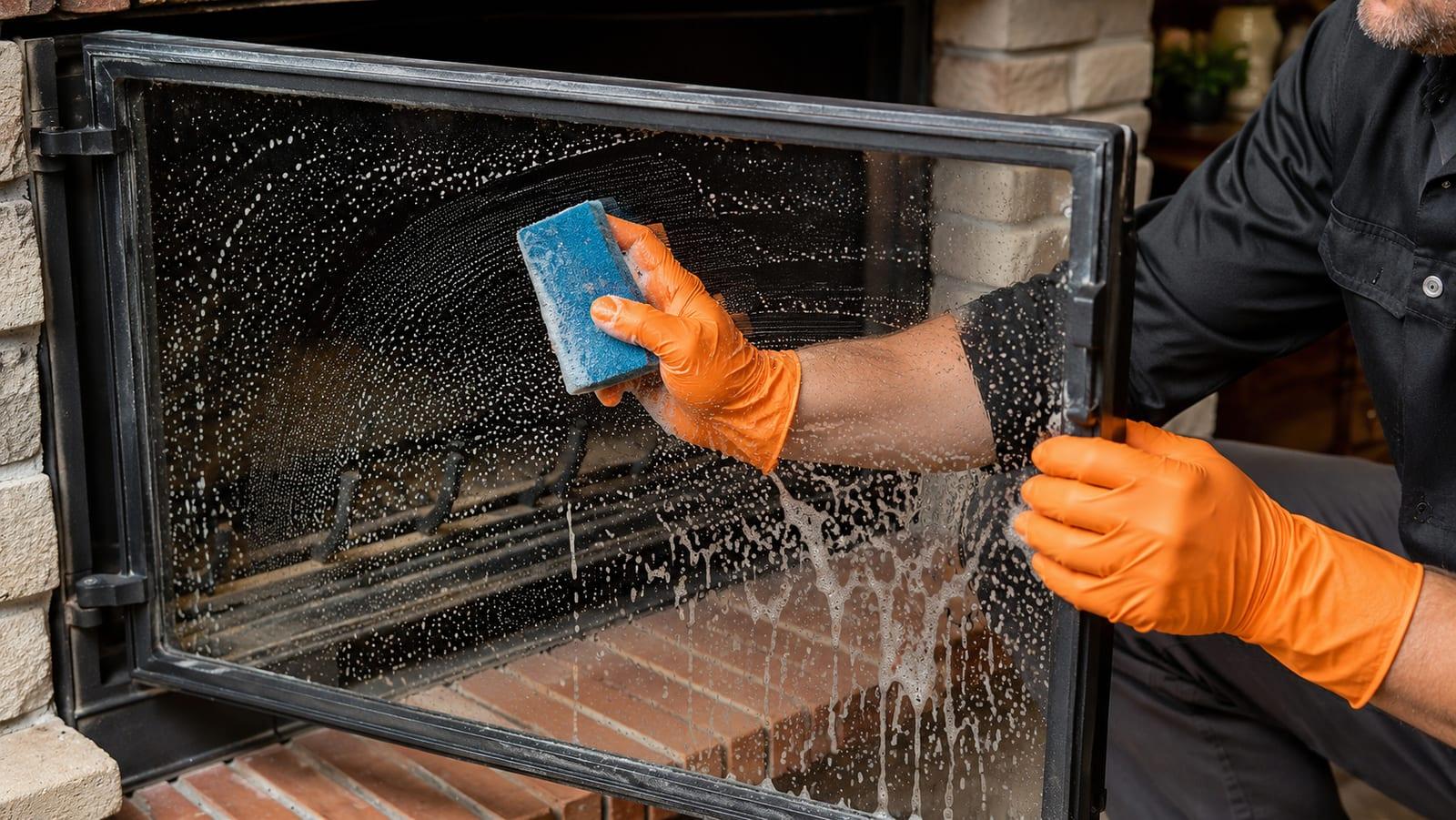
Residue is removed with methods and products suited to fireplace glass, with the panel cool and, on gas units, handled safely.
Replace what can't be cleaned
Glass that is etched, cracked or chipped, or a gasket that no longer seals, is replaced rather than cleaned.
Correct the cause
If soot came from shifted logs, an air setting, a burner issue or poor draft, that's addressed so the glass doesn't cloud up again right away.
For haze and soot that still come off, professional fireplace glass cleaning is the usual fix. When the haze has etched in, or the glass or door seal is damaged, replacing the fireplace glass and repairing the door is the better route. Gas fireplace and gas appliance work is offered, and we work on all major brands.
What not to do
- Don't clean the glass while it's warm, and never spray cold liquid on hot glass.
- Don't scrub with steel wool, razor blades or abrasive powders that can scratch the surface.
- Don't assume a household glass cleaner is safe; many fireplace makers recommend cleaners made for fireplace glass.
- Don't remove the glass on a gas unit unless the gas is off and the unit is fully cool, and follow the owner's manual if you do.
- Don't keep running a fireplace with cracked or chipped glass.