On this page
What fireplace glass cleaning covers
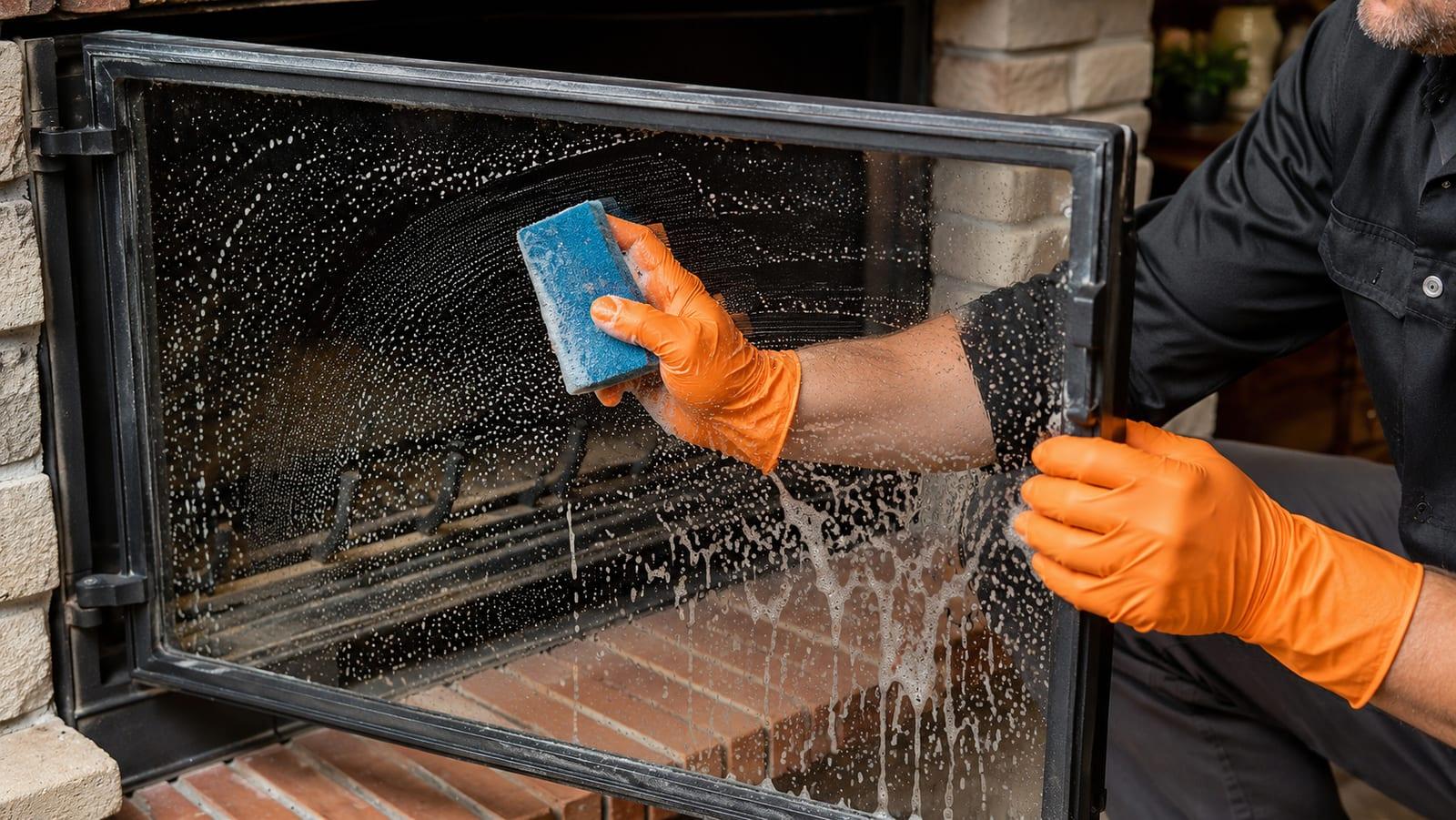
Fireplace glass cleaning removes the residue that combustion leaves on the inside of the glass. That residue is dark soot and sticky creosote film on wood-burning units, and a whitish or gray haze on gas units. The outside of the glass is easy to wipe. The inside is the hard part. On many gas fireplaces and inserts, the panel has to come out of its frame, and the glass is a heat-rated material that ordinary household methods can scratch or etch.
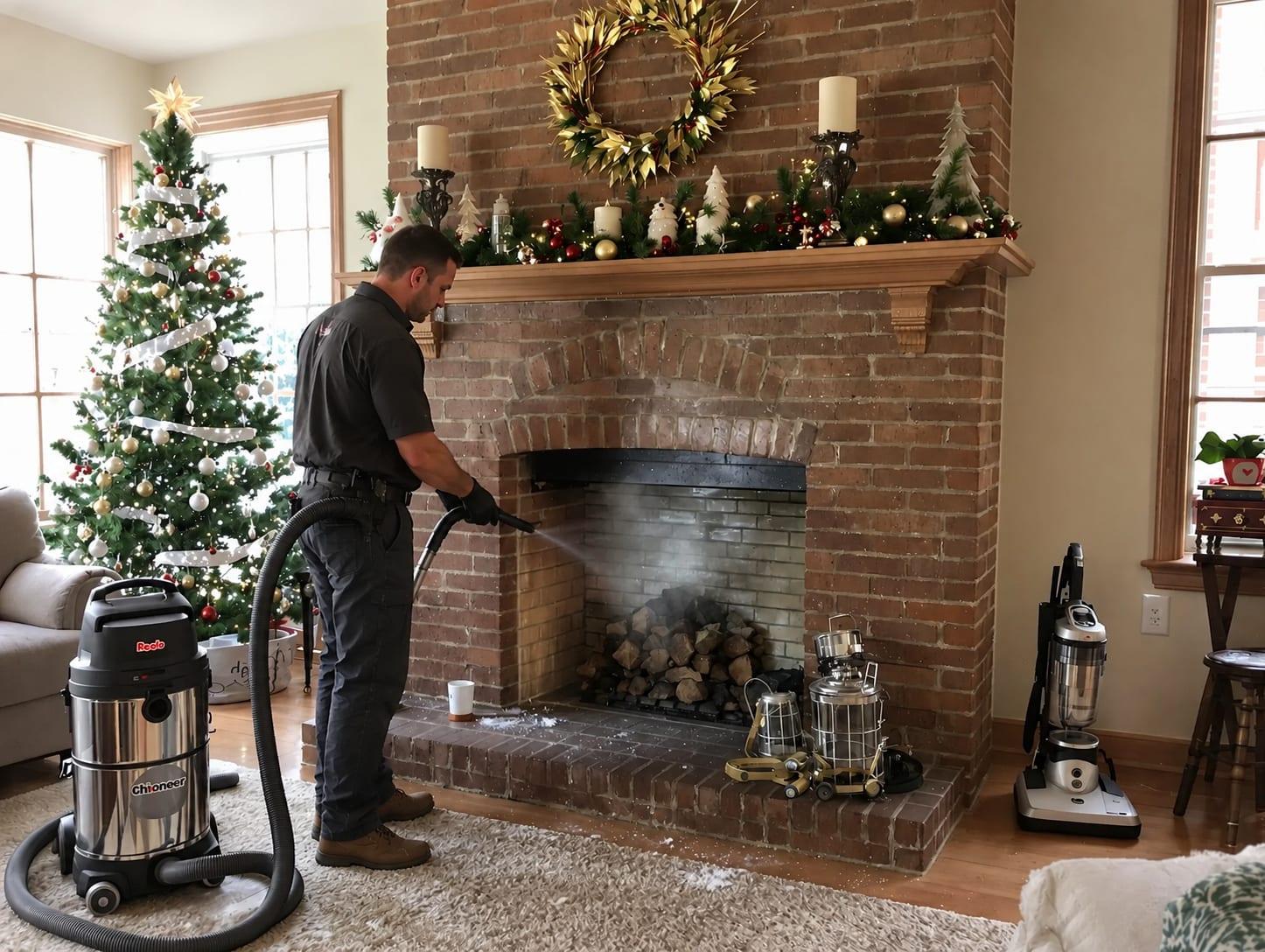
A visit covers more than a wipe-down. We look at the condition of the glass, the gasket that seals it and the clips or latches that hold it. A clean panel that doesn't seal properly isn't doing its job.
The glass we work on
- Gas fireplace glass panels, which usually build up a white or cloudy film rather than black soot.
- Glass doors on wood-burning and gas fireplace inserts.
- Wood stove door glass, where creosote and soot bake on during slow, low-air fires.
- Glass doors on open masonry fireplaces.
Different units use different glass and mounting hardware, and the cleaning method has to suit each one. We work on all major brands of fireplaces, inserts and stoves.
Signs the glass needs cleaning
Most people notice the glass first because they can no longer see the flame well. These are the common signs:
- A white, gray or rainbow-tinted haze on gas fireplace glass that a household wipe doesn't remove. Our page on what causes cloudy fireplace glass explains where that film comes from.
- Black or brown streaks on insert or stove glass that come back within a few fires.
- A sticky, tar-like film on wood stove glass, which usually means creosote rather than dry soot.
- Residue concentrated along one edge or corner, which can point to a worn gasket or a door that isn't sealing evenly.
- Glass you haven't been able to clean because you aren't sure how the panel comes out.
Cloudy glass on a gas unit is sometimes one sign of a broader maintenance need. If the logs, burner or vent also look dirty, read our guide to gas fireplace needs cleaning before you book.
Cracked or chipped glass is a different problem
Stop using the fireplace or stove if the glass is cracked, chipped or loose in its frame. The glass is part of what keeps combustion gases and heat inside the unit. Cleaning won't fix damaged glass, but we also handle fireplace glass replacement and door repair.
How a glass cleaning visit works
What happens during the visit
Confirm the unit is cool and safe
The glass has to be fully cool before anyone handles it. On gas units we turn the appliance off before removing a panel.
Protect the area
We lay down covers around the hearth, because soot and creosote flakes can stain flooring and furniture.
Remove or open the glass
Depending on the design, the panel comes out of its frame or the door is opened for access. We follow the way that unit is built rather than forcing clips or latches.
Inspect the glass and gasket
We check for cracks, chips, etching and a worn or flattened gasket before cleaning, so you know what condition the glass is in.
Clean with non-abrasive methods
We use cleaners suited to fireplace glass and avoid abrasives that would scratch the surface.
Reinstall and check the seal
The glass goes back in with its fasteners secured. On gas units we relight the fireplace and watch the flame so you can see it working normally.
If the glass is dirty because the whole unit needs attention, we can combine the visit with our fireplace cleaning service or with fireplace insert cleaning.
Safety and keeping the glass clear
How quickly the glass gets dirty again tells you something about how the fire is burning. On wood-burning units, fast blackening usually comes from damp or unseasoned wood, fires kept smoldering with the air turned down, or weak draft. On gas units, heavy haze can build up when the appliance hasn't been serviced in a while, or when venting isn't clearing combustion byproducts the way it should. Fireplace vent cleaning addresses that side of the problem.
If you clean the glass yourself between visits
- Wait until the glass is completely cool.
- Turn a gas fireplace off before touching or removing the panel.
- Use a cleaner made for fireplace glass and follow the manufacturer's instructions.
- Avoid ammonia-based window sprays, scouring pads and razor blades, which can damage heat-rated glass.
- Check that the gasket is intact before you put the glass back.
- Don't run the unit with the glass missing, loose or cracked.
A white film left on gas fireplace glass can eventually etch into the surface, and once that happens no cleaner will bring it back. Cleaning the film off while it is still a surface deposit protects the glass.
Booking fireplace glass cleaning
Call or request an estimate. Tell us the type of unit, whether it burns gas or wood, and what the glass looks like, and include a photo if you can. We also take commercial and property-manager jobs, and we offer fireplace glass cleaning.