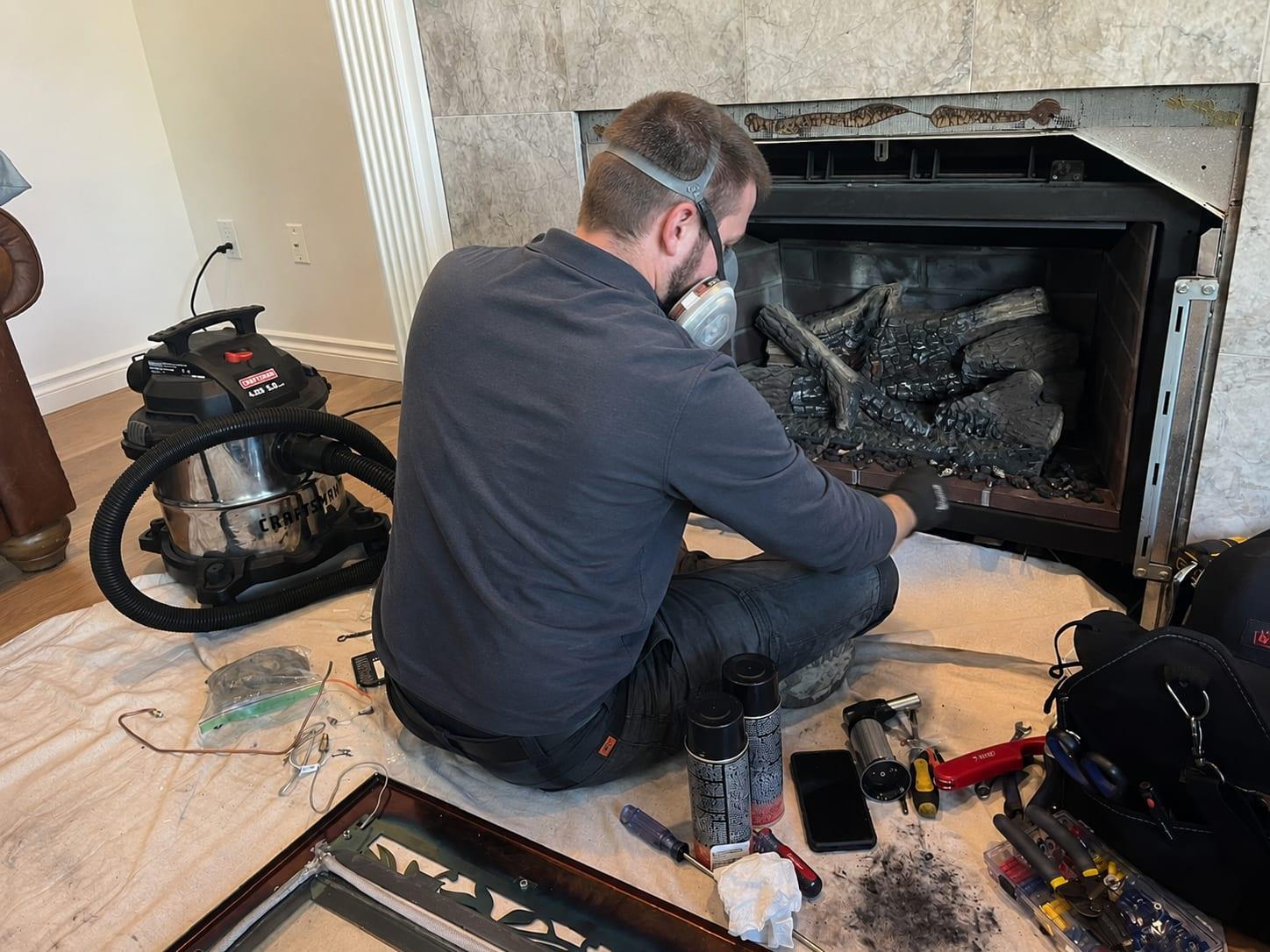
You switch on the fireplace and notice an odor that wasn't there before. It might be faint and dusty, sharp and sulfur-like, or stale like car exhaust. Some of these smells are a nuisance. Others mean the fireplace should not run again until someone has looked at it. The steps below start with the one that matters most.
If you smell gas
A rotten-egg or sulfur smell can mean gas is escaping. Leave the building right away. Don't flip light switches, use phones, or light anything while you're inside. Once you're outside, call the gas utility or 911, and don't go back in until they tell you it's safe.
Common signs that come with a gas fireplace smell
- A rotten-egg or sulfur odor near the fireplace, sometimes with a hissing sound
- A dusty, burnt smell the first few times the fireplace runs after a long break
- A sooty smell along with black marks on the logs, or a film or cloudy fireplace glass
- Yellow, orange or lazy flames instead of a steady flame
- An exhaust-like or stuffy smell in the room, or moisture on nearby windows
- Headaches, dizziness or nausea in people in the house while the fireplace is on. If anyone has a headache, dizziness or nausea while an appliance runs, turn it off if you can, get everyone outside and call 911.
- If a carbon monoxide alarm sounds, get everyone outside and call 911.
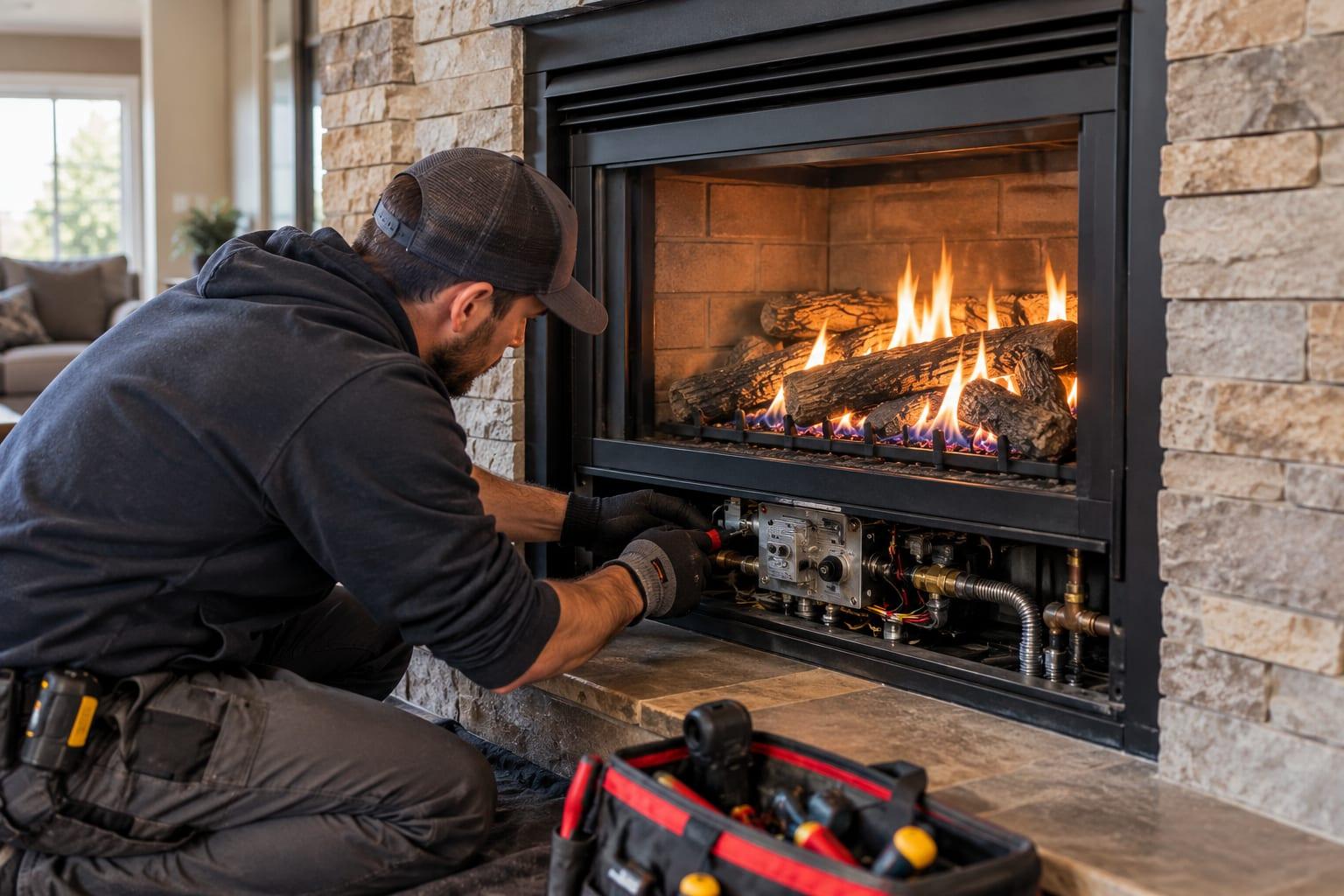
Possible causes of the smell
Each of these is a possibility, not a diagnosis. The same smell can have more than one source, and only an inspection of the fireplace, its gas connection and its vent confirms which one you're dealing with.
What may be behind the odor
01Gas escaping at a valve, fitting or connection
- What you may notice
- Rotten-egg or sulfur smell, sometimes a hiss, whether or not the fireplace is running.
- How it’s confirmed
- This is not a homeowner check. After the gas utility or emergency responders have made the home safe, a technician checks the valve, fittings and connection to the fireplace and repairs whatever failed.
02Dust and debris burning off
- What you may notice
- A dusty or burnt smell at the start of the season that fades as the fireplace runs.
- How it’s confirmed
- The burner, logs, pilot assembly and firebox are cleaned and checked so built-up dust and debris stop burning off each time.
03Soot from poor combustion or misplaced logs
- What you may notice
- A sooty smell, yellow or lazy flames, dark marks on the logs, film on the glass.
- How it’s confirmed
- The technician compares the log layout with the manufacturer's arrangement, checks the burner ports and air mixture, and cleans away the soot.
04A blocked, damaged or disconnected vent
- What you may notice
- An exhaust-like or stuffy smell, condensation, flames that behave oddly, or a carbon monoxide alarm.
- How it’s confirmed
- The vent run, termination, cap and flue are inspected for nests, debris, damage or loose sections, and the draft is checked.
05Odors drawn in from the room or an old chimney
- What you may notice
- A smell like cleaning products, candles or pet hair, or a smoky smell in a fireplace that used to burn wood.
- How it’s confirmed
- The firebox and flue are inspected and cleaned; where residue from wood-burning days remains in the chimney, chimney odor removal deals with it.
06Combustion odor from a vent-free unit
- What you may notice
- A smell that lingers in the room, moisture on windows, stuffy air while the unit runs.
- How it’s confirmed
- The burner, oxygen depletion sensor and pilot are checked, and the unit's operation is compared with the manufacturer's requirements.
How urgent it is, and when to stop using the fireplace
A gas smell or a carbon monoxide alarm is an emergency. A smell that keeps coming back, or comes with soot or odd flames, means the fireplace should stay off until it has been checked. A dusty smell that fades soon after the first fire of the season is usually the least urgent. Carbon monoxide has no smell of its own, so a working CO alarm matters more than your nose.
| What you notice | What to do |
|---|---|
| Rotten-egg or sulfur smell | Leave the building and call the gas utility or 911 from outside. |
| If a carbon monoxide alarm sounds, get everyone outside and call 911. | Get everyone outside into fresh air and call 911. |
| Exhaust or stuffy smell, condensation, odd flames | Turn the fireplace off and leave it off until it has been inspected. |
| Sooty smell, dark logs, filmy glass | Stop using the fireplace and have it cleaned and checked. |
| Dusty smell on the first fire that fades | Watch it; if the smell keeps coming back, have the unit cleaned. |
What usually fixes a gas fireplace smell
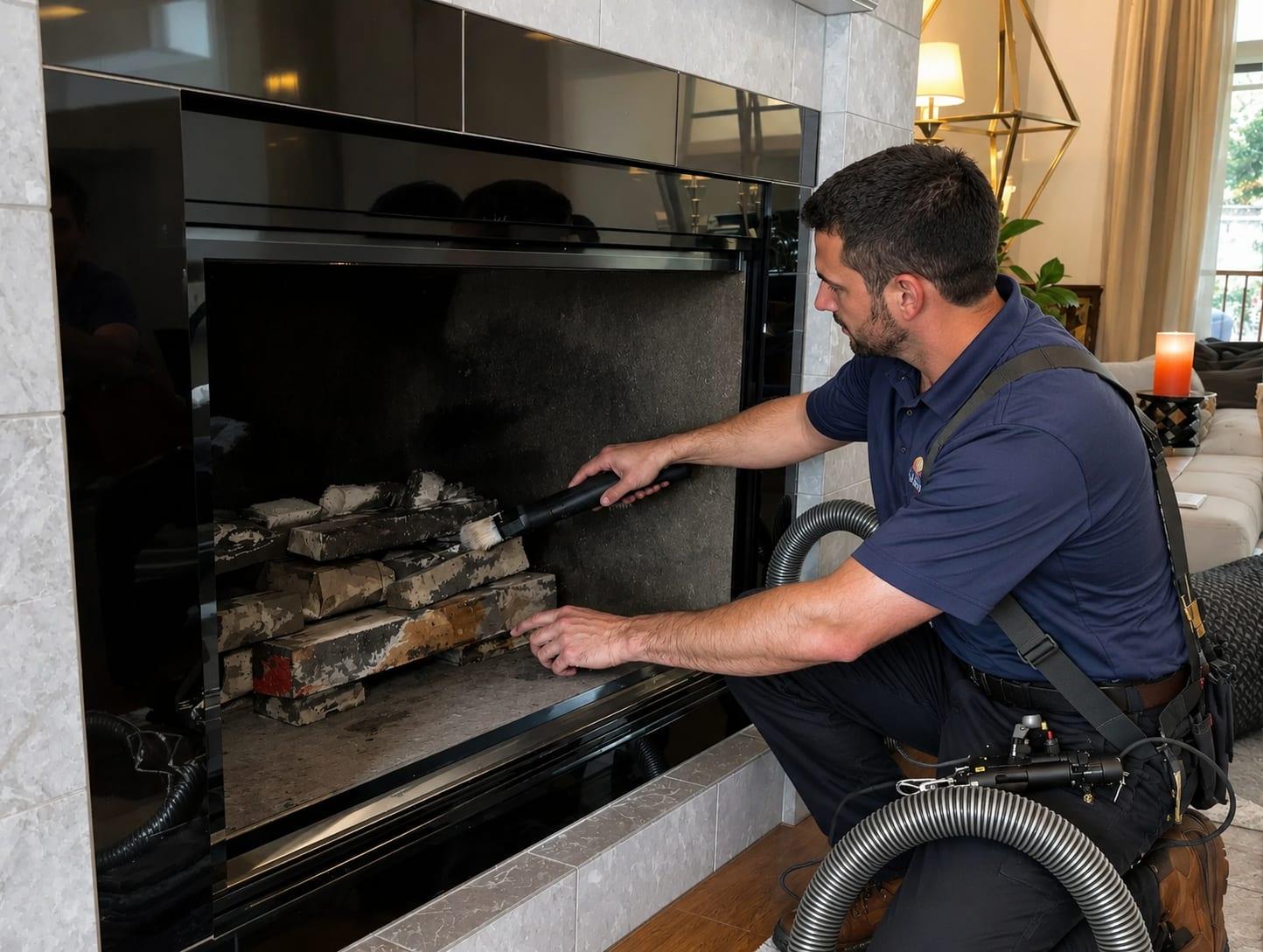
The fix depends on the cause. A leak at a valve or fitting, a damaged vent or a faulty sensor calls for gas fireplace repair. Smells from dust, soot or a dirty burner are usually handled with routine gas fireplace maintenance: cleaning the burner, logs and glass, setting the logs back in their correct positions, and checking the pilot and vent. If you aren't sure whether your unit is due, these signs a gas fireplace needs cleaning are a good place to start.
How the problem is tracked down and fixed
Make the home safe first
If gas was smelled, the gas utility or emergency responders clear the home before any fireplace work begins.
Inspect the fireplace and vent
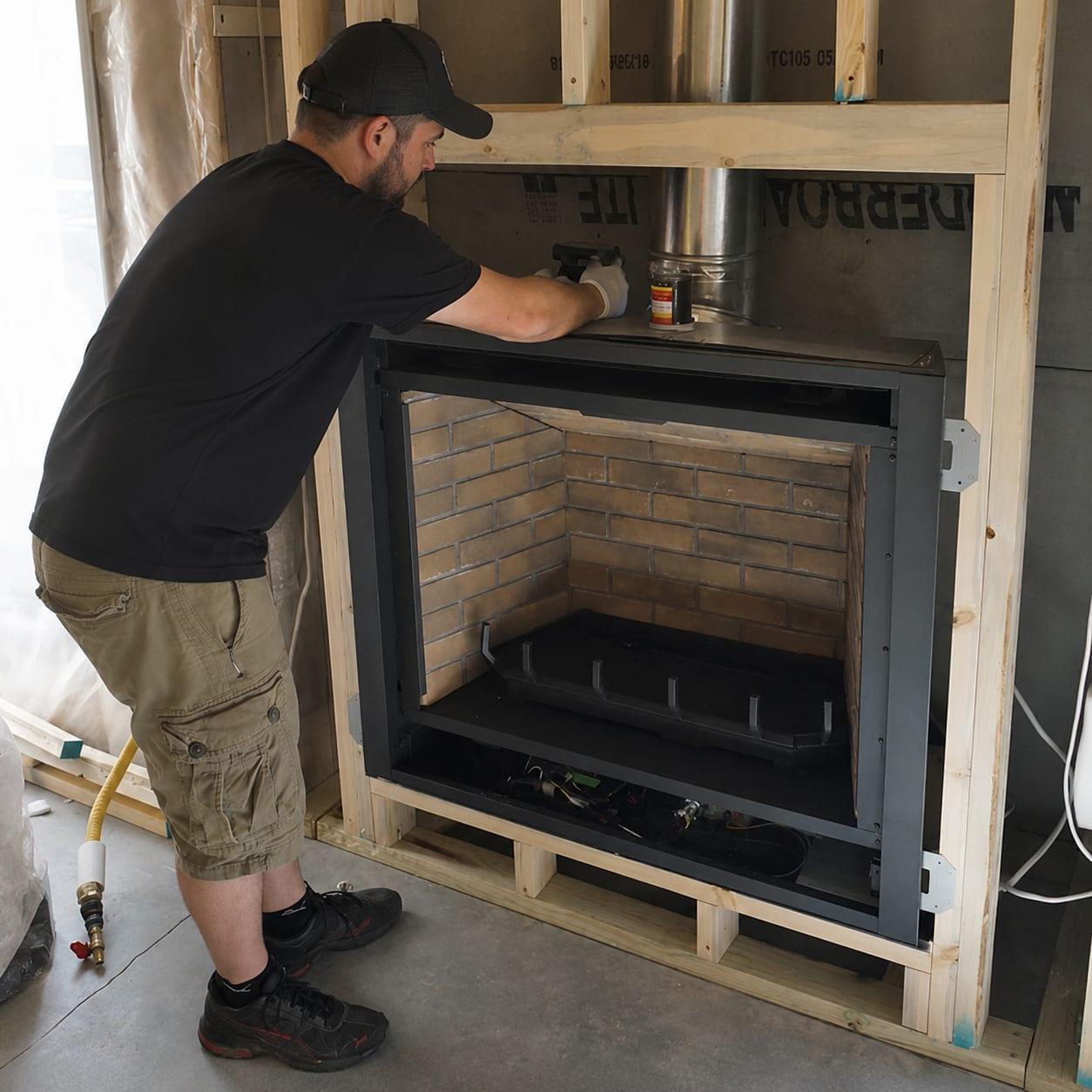
The technician checks the valve, connections, burner, logs, pilot assembly, glass seal and the full vent run.
Clean or repair what's causing the odor
That might mean cleaning and resetting the logs, clearing the vent, or replacing a failed part.
Test-fire and confirm
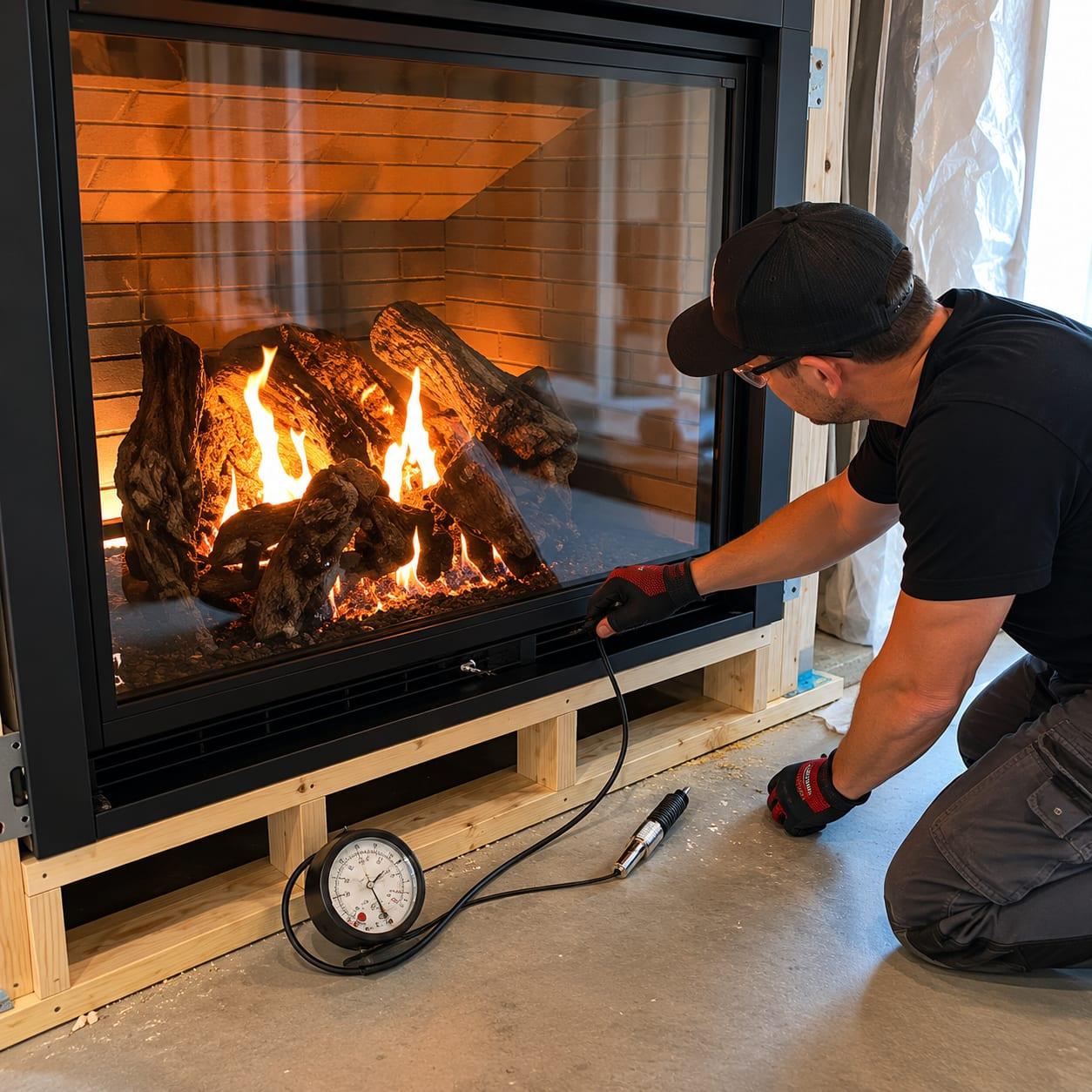
The fireplace is run and the flame, draft and connections are checked before it goes back into use.
What not to do
- Don't try to find a gas leak yourself or tighten fittings on the gas line.
- Don't relight the pilot or turn the fireplace back on after smelling gas.
- Don't unplug, remove or ignore a carbon monoxide alarm that goes off.
- Don't keep running a fireplace that leaves soot, has yellow lazy flames or smells of exhaust.
- Don't block the fireplace's vent or cover the glass to hide a smell.
Related problems and reading
Smells sometimes show up alongside other trouble. If the pilot or burner also won't stay on, read about a gas fireplace that won't light. If you're weighing a replacement for an older unit, it can help to start by comparing electric and gas fireplace inserts.
Get the smell checked
We work on all major brands of gas fireplaces and inserts.