On this page
What chimney installation involves
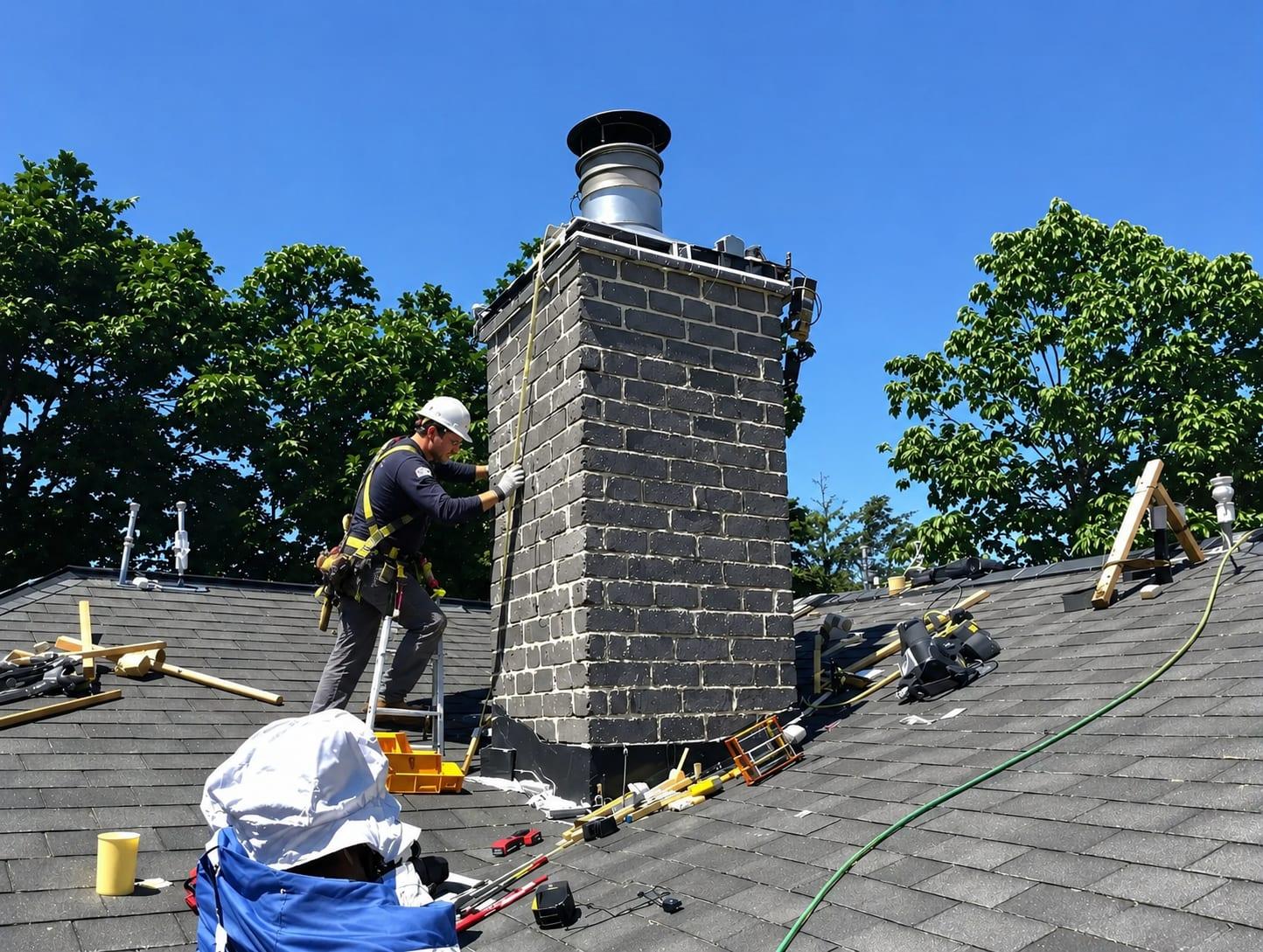
Chimney installation means building or fitting a complete venting path that runs from a fireplace, stove or insert up through the house and out above the roof. That can be a masonry chimney built course by course on its own footing, or a factory-built system of insulated metal pipe inside a framed chase. Our guide to masonry vs prefab chimney construction lays out how the two differ in weight, upkeep and the appliances each one suits.

Whichever type fits your home, the job covers the same parts: the flue that carries smoke and gases, the connection to the appliance, the roof penetration and its flashing, and the top of the chimney that sheds water. A new chimney is often installed alongside a new appliance, so many homeowners plan it together with fireplace installation.
When a home needs a new chimney
Most installation jobs start with one of these situations:
- You're adding a wood stove, pellet stove, insert or fireplace to a room that has no chimney.
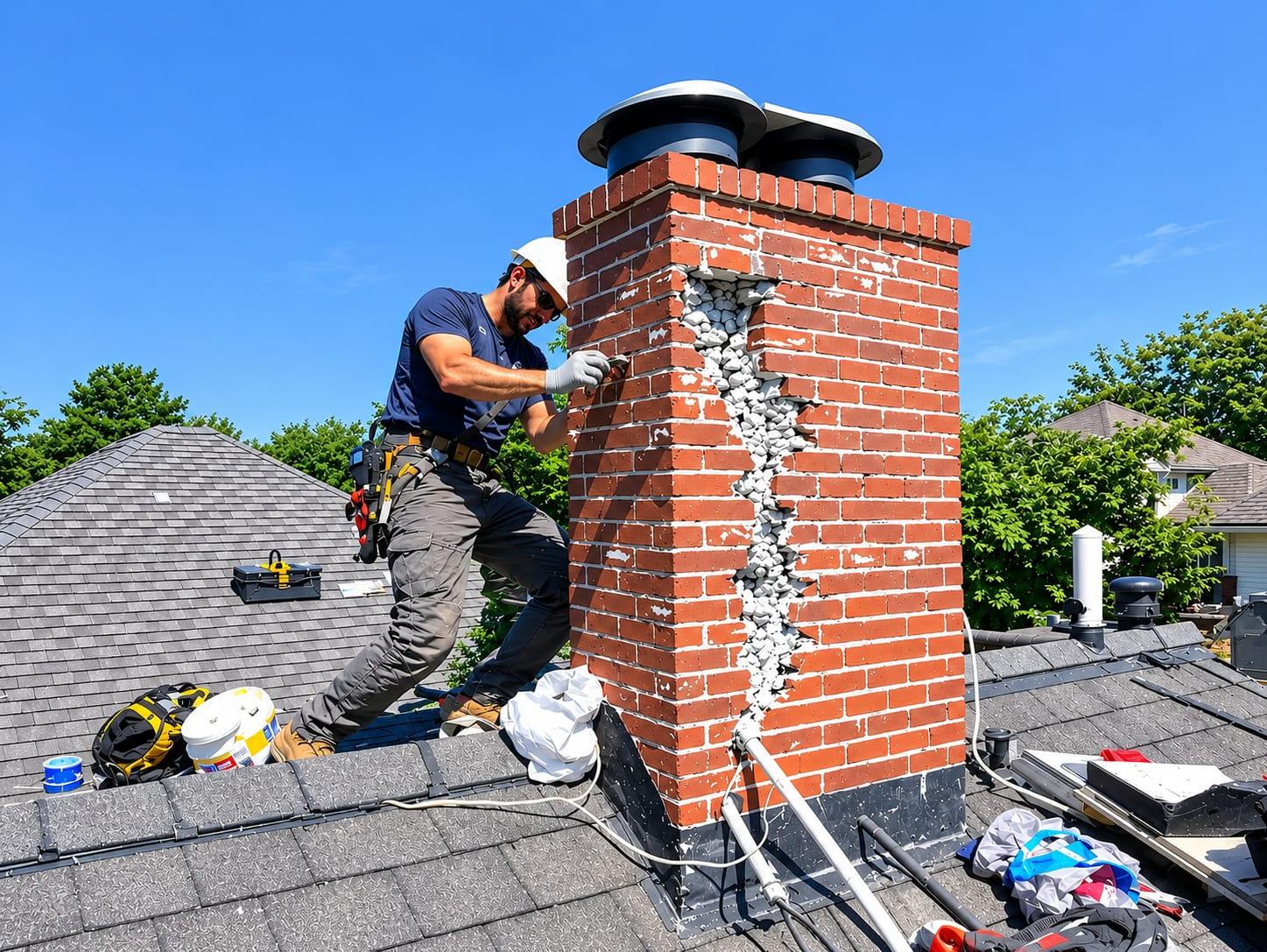
- The existing chimney has deteriorated so far that patching it no longer makes sense. Our guide on the warning signs that a chimney needs immediate repair covers what to watch for.
- A factory-built chimney has rusted, separated or lost its chase cover and needs replacing as a system.
- You're switching fuel type or appliance, and the new unit needs venting the old chimney can't provide.
- A storm or fire has damaged the chimney beyond what repair can fix.
Not every problem calls for a new chimney. If the structure is standing and the trouble is limited to cracked mortar, a worn crown or a damaged top section, chimney repair or a partial rebuild is usually the right job instead. Our guide to cracked chimney crowns, their causes and repairs explains one of the most common of those problems. And if the chimney is sound but smoky or dirty, a sweep is the job you need.
Components, materials and fuel types
| Component | What it does | Common options |
|---|---|---|
| Flue | Carries smoke and combustion gases out of the house | Clay tile, stainless steel liner, factory-built insulated pipe |
| Chimney structure | Encloses and supports the flue | Brick or block masonry, or a framed chase finished to match the house |
| Roof flashing | Seals the joint where the chimney meets the roof | Step and counter flashing for masonry; flashing and storm collar for metal pipe |
| Crown or chase cover | Sheds water off the top of the chimney | Poured or formed masonry crown; metal chase cover |
| Cap | Keeps rain, animals and debris out of the flue | Masonry caps, single- or multi-flue caps, caps with screening |
| Appliance connection | Joins the stove, insert or fireplace to the flue | Connector pipe, damper, thimble or the fireplace's own collar |
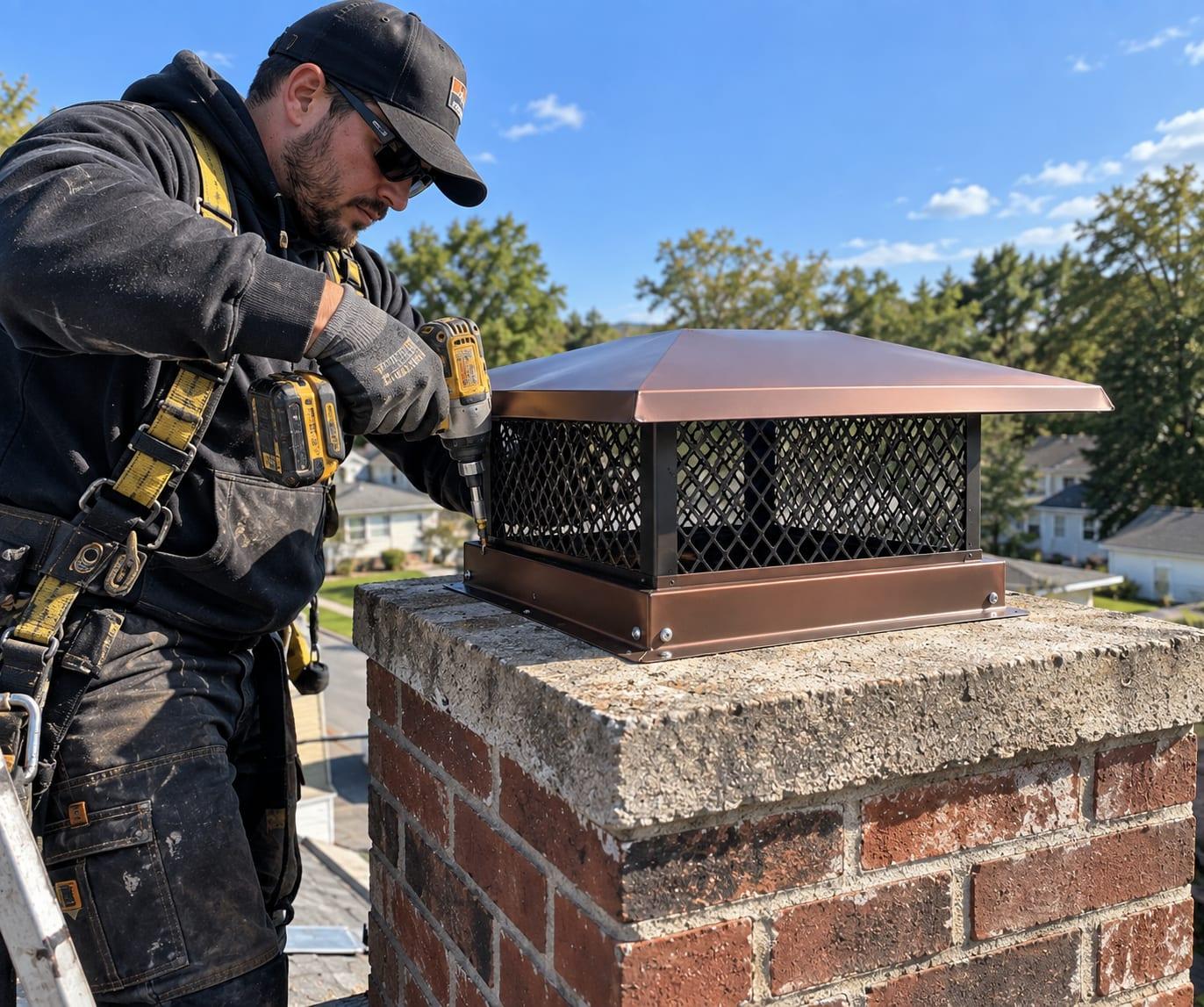
The cap is the last piece on top of a new chimney, and it's a job we also do on its own. Learn how chimney cap installation works if an existing chimney is missing one.
Matching the chimney to the fuel
- Wood-burning fireplaces and stoves need a flue built for high temperatures and for the creosote wood smoke leaves behind.
- Gas fireplaces and appliances usually vent through a direct-vent or B-vent system sized to the unit rather than a full wood-rated chimney.
- Pellet stoves use pellet vent pipe, which can often run through a wall or up through the roof.
Chimney flashing installation
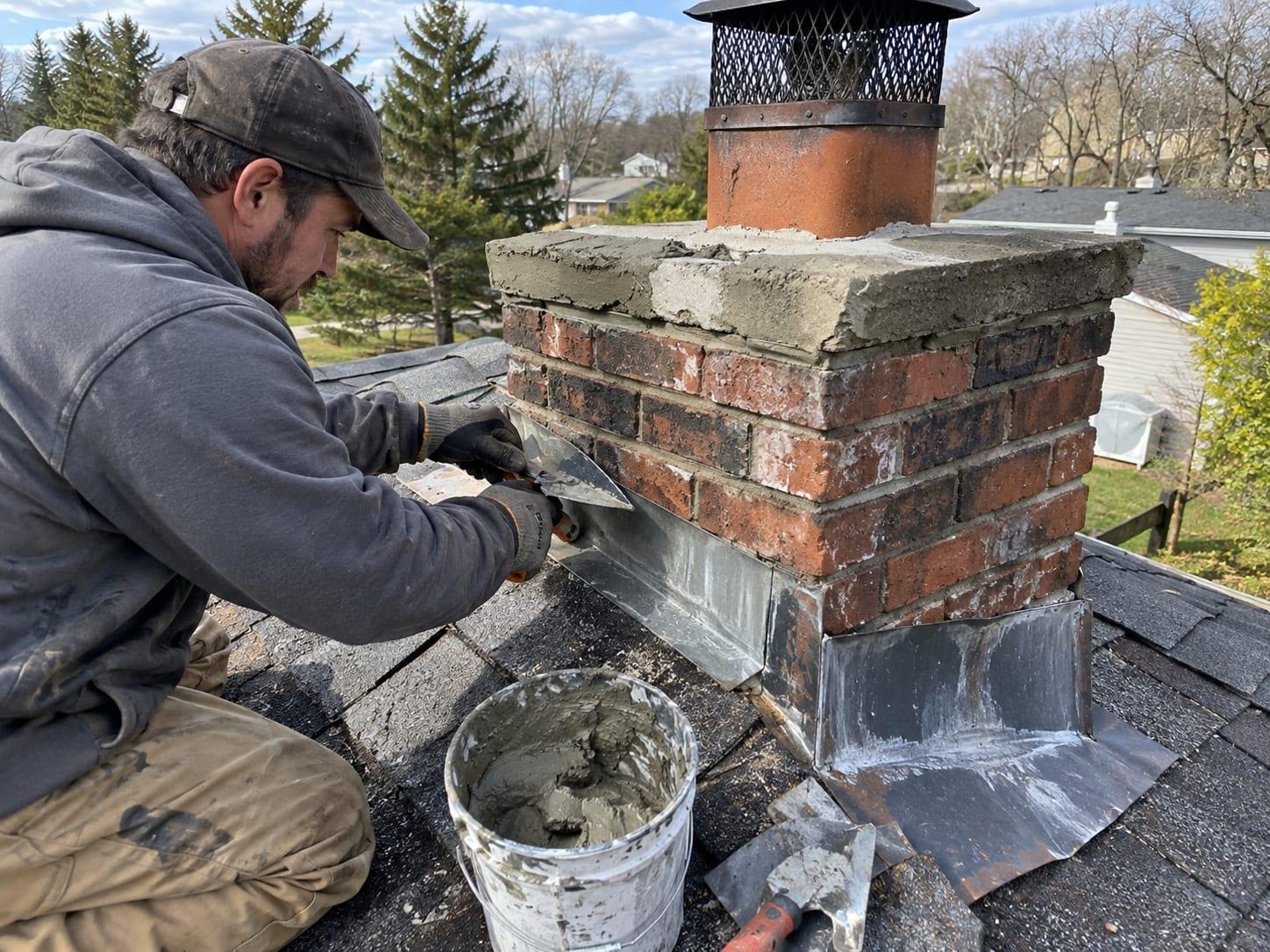
The point where a chimney passes through the roof is one of the most common places for leaks to start, so flashing is installed as part of the chimney, not as an afterthought. On a masonry chimney, step flashing is woven in with the roofing along the sides and counter flashing is set into the mortar joints to lap over it. Wider chimneys on a sloped roof also get a cricket on the uphill side so water and debris are steered around the chimney instead of pooling behind it.
On a factory-built chimney, the pipe runs through a flashing made for that system, with a storm collar sealing the gap above it. Using the flashing parts listed for the chimney system matters, because they are designed to allow the pipe to expand and contract with heat without breaking the seal.
Chimney vent installation
Gas fireplaces, gas inserts and other gas appliances usually don't need a full masonry chimney. They need a vent that matches the appliance. Gas fireplace and gas appliance work is offered, and we work on all major brands. A direct-vent unit uses a pipe that draws combustion air in and sends exhaust out, and it can often terminate through an outside wall. Other gas units vent vertically through the roof with B-vent pipe.
In every case, the vent type, diameter, length and termination have to follow what the appliance manufacturer specifies. A vent that's mismatched to the unit can lead to poor burning, condensation or exhaust spilling back into the room.
Flue installation and sizing
The flue is the heart of the system, and its size matters as much as its material. A flue that's too large for the appliance lets smoke cool and drift slowly, which weakens draft and builds up creosote faster. One that's too small can't carry all the exhaust, and smoke spills into the room. We size the flue to the appliance it serves. If the chimney itself is sound and only the flue has failed, our chimney liner installation service is usually the smaller and more practical fix.
What the visit involves, step by step
From estimate to first fire
Free estimate visit
We look at the appliance you have or plan to buy, the route a chimney would take through the house, and the roof where it would come out. Then we talk through fuel type and how you plan to use it.
Planning the system
We choose masonry or factory-built construction, size the flue, and work out the height above the roof and the clearances to framing and other combustibles that the appliance and the chimney system require.
Protecting the home
Floors, furniture and the work area are covered, and the path in and out of the house is kept clear.
Building or assembling the chimney
The structure goes up, and the flue is installed and connected to the appliance or to the fireplace it will serve.
Sealing the roof and top
Flashing is installed at the roof line, and the crown or chase cover and the cap are added to keep water and animals out.
Final check and walkthrough
We check the connections, clearances and draft, then show you how to operate the damper or controls and what upkeep the new system needs.
Safety and upkeep after installation
A new chimney still needs regular care. Plan on a yearly inspection, and have wood-burning and pellet chimneys swept as buildup collects. Gas vents should be checked as part of routine appliance service, since nests, debris or a loose joint can block exhaust without any obvious sign inside the house.
Keep carbon monoxide alarms working
Any home with a fuel-burning fireplace, stove or insert should have working carbon monoxide alarms near sleeping areas and on each level. Test them regularly and replace batteries on schedule.
Booking chimney installation
To get started, call or request an estimate. Estimates are free, and we'll walk through the options that fit your home and appliance before any work begins. 24-hour service runs seven days a week, and emergency calls are accepted.
Commercial and property-manager work is offered too, so building owners and managers in San Jose can book chimney installation the same way homeowners do.
Free estimates.
Tell us what you want to heat with and where, and we'll plan a chimney or vent that fits the appliance and the house.