On this page
What fireplace installation involves
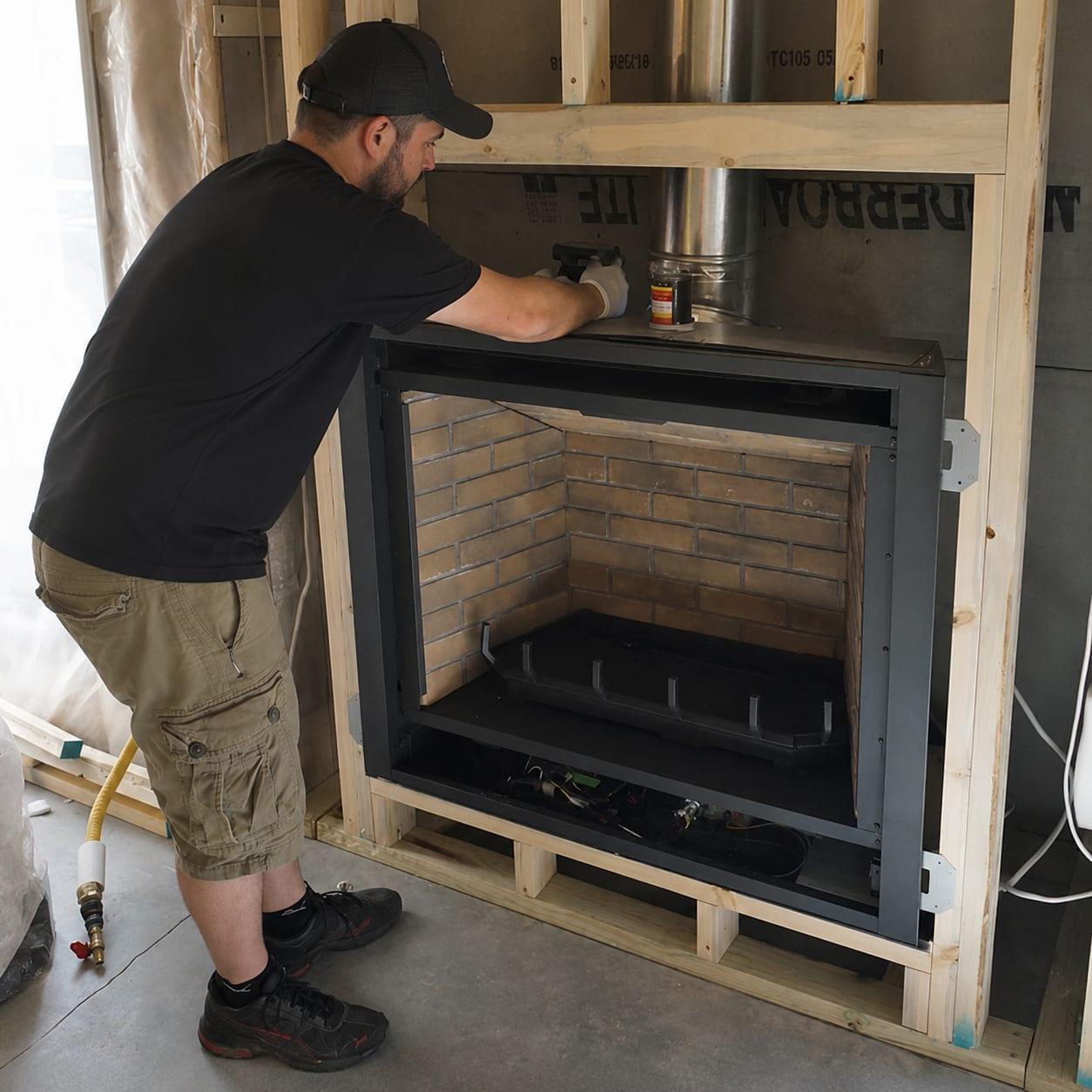
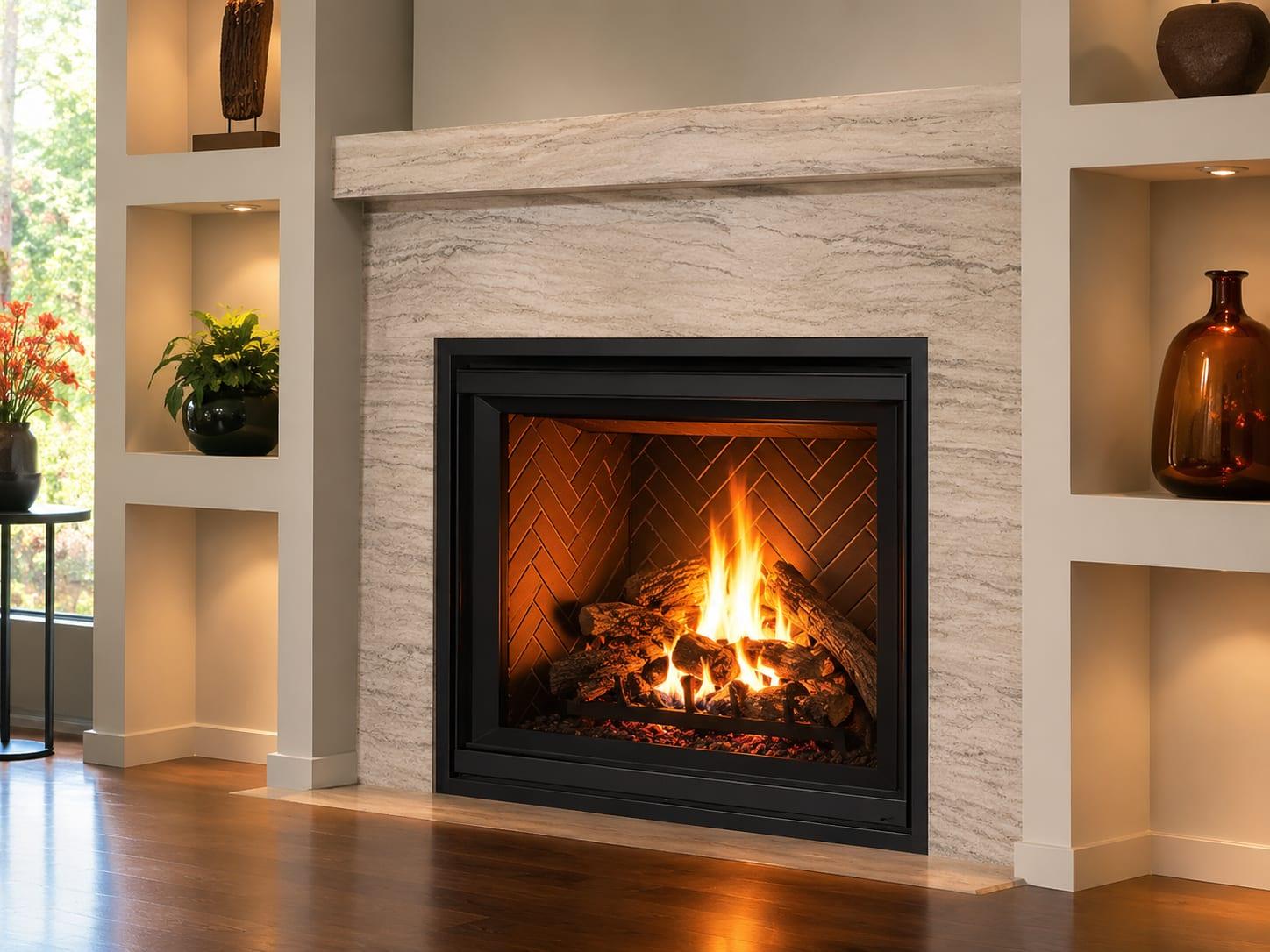
Fireplace installation means putting a working fireplace where there wasn't one, or where the old one is being removed for good. Installing a fireplace involves more than mounting a unit on the wall. It includes the firebox or appliance, the hearth and the clearances to anything that can burn, the flue or vent that carries combustion gases out, and the damper that seals that flue when the fire is out. Each part has to suit the fuel and the specific unit, because the manufacturer's installation instructions set the clearances and venting for that model.
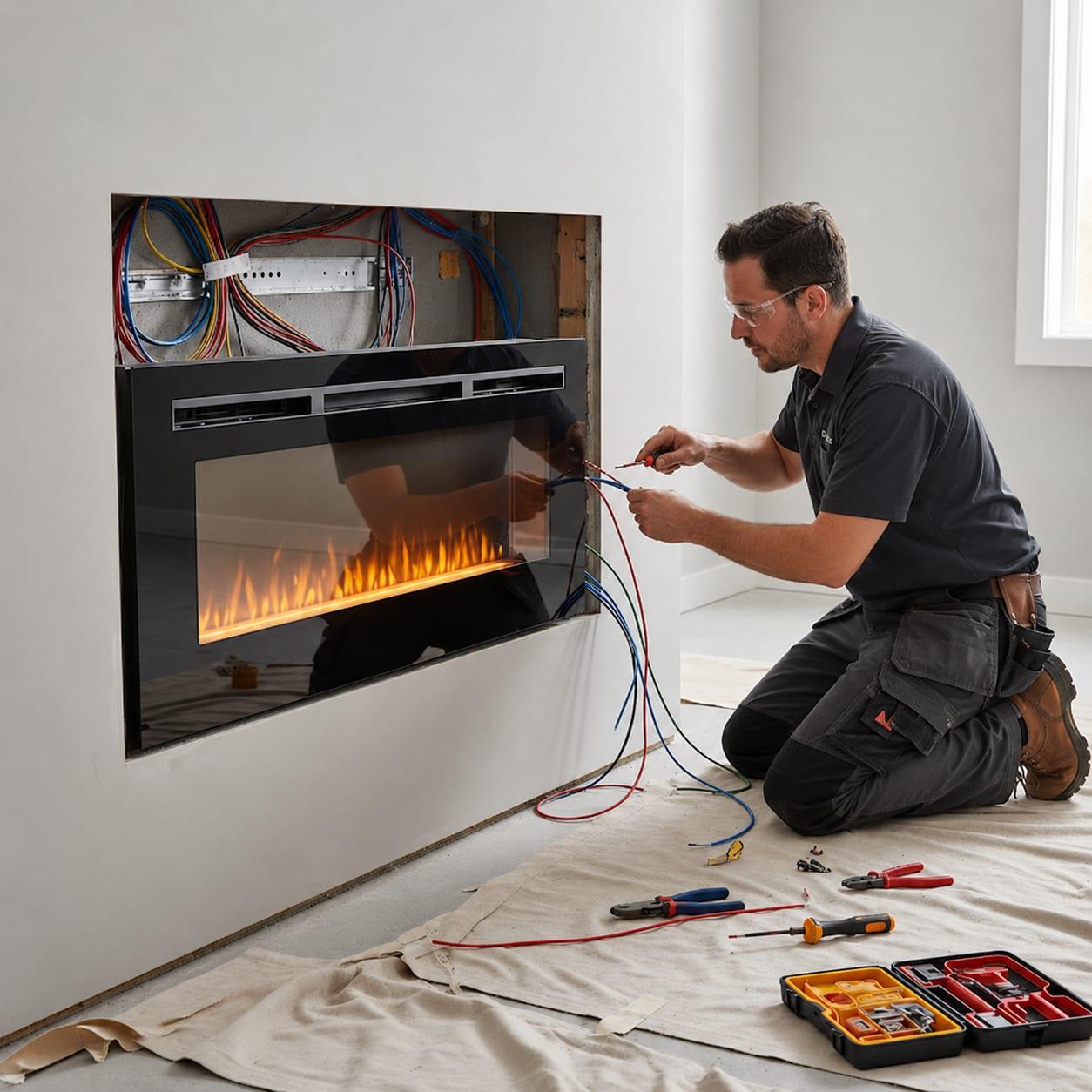
For an existing masonry opening, a sealed unit often makes more sense than a full new fireplace, and that job is fireplace insert installation. For a traditional built-in hearth, our brick fireplace repair and installation service covers the masonry side. We also do gas fireplace installation and electric fireplace installation, and we work with all major brands.
When a new fireplace is the right job
A new installation is usually the right call in these situations:
- The room has never had a fireplace and you want one, whether for heat, for looks, or both.
- A remodel is moving walls, and the old fireplace no longer fits the layout.
- The existing firebox or factory-built unit is damaged beyond sensible repair and needs to come out.
- You want a style the current opening can't take, such as a wall-hung or ceiling-suspended unit.
- A wood-burning fireplace is wanted in a home that has no chimney at all.
A new installation isn't always needed. If the fireplace works but smokes, smells or looks dirty, cleaning or repair usually comes first. If you want to keep the existing firebox and only change the fuel it burns, that job is a fireplace conversion.
Fuel types and the parts that come with them
The fuel you choose decides most of what has to be built. The table below shows how the main fuel types differ.
| Fuel type | Venting | What else is needed |
|---|---|---|
| Wood (open flame) | A full flue, either masonry or a listed factory-built chimney | A hearth extension, a damper, and clearances to combustibles |
| Gas | A vent for most units, sized to the appliance | A gas supply line to the fireplace |
| Ethanol (bioethanol) | No flue | A stable mount and adequate room ventilation |
| Electric | No flue | A suitable outlet or circuit |
If you're still choosing between a sealed unit and a freestanding appliance, our guide to fireplace insert vs freestanding wood stove compares them. For fuel choices on an existing opening, read electric vs gas fireplace insert.
Fireplace flue installation
The flue has to match the fireplace. A flue that is too small for a wood-burning opening won't draw, and a flue that is too large can draft poorly and build up creosote faster. A factory-built fireplace uses the chimney pipe listed for that model, assembled to the manufacturer's clearances. A masonry fireplace needs a properly sized flue liner. We plan the route through the walls, ceiling and roof before any work starts, including where the chimney will exit and how it will be flashed.
Fireplace damper installation
The damper closes the flue when no fire is burning, which keeps warm room air in and outside air, rain and debris out. On a wood-burning fireplace it is usually a throat damper just above the firebox or a top-sealing damper at the top of the chimney. We fit the damper during the build and check that it opens fully, seals when closed and is easy to reach. Gas and ethanol units handle this differently or don't need a damper at all, depending on the model.
Fireplace styles we install
Ethanol fireplace repair and installation
Ethanol fireplaces burn liquid bioethanol in a burner, so they need no chimney or flue. That makes them useful in apartments, condos and rooms where a chimney isn't practical. Installation focuses on a secure mount or stand, clearance from curtains, shelves and other combustibles, and a room with enough ventilation for the unit. On the repair side, we deal with leaking or damaged fuel reservoirs, burners that won't light or won't snuff out cleanly, and sliding lids or closing tools that no longer seal.
Ethanol safety
Never refill an ethanol burner while it is lit or still warm, and keep the fuel stored away from the fireplace. Spilled or overfilled fuel is the most common cause of trouble with these units.
Floating fireplace installation and repair
A floating fireplace is mounted so it appears to hover, either hung on the wall with nothing beneath it or cantilevered off a hearth. These units can be electric, ethanol or gas, and the fuel decides whether a vent run is needed. The main job is structural: the wall has to carry the weight, and the anchors and framing behind the finish must be sized for it. Repair work includes loose or sagging mounts, damaged trim and surround, and problems with the burner or heating element itself.
Hanging and suspended fireplace installation
Hanging and suspended fireplaces hang from the ceiling, often with the flue doubling as the support, and some models rotate. Because the whole unit's weight is carried overhead, we check the ceiling and roof framing before anything is ordered, then plan the flue path, the roof exit and the clearances around the hood. These units often require a floor-protection plate or a clear zone beneath them, depending on the model.
Open flame fireplace repair and installation
An open-flame fireplace is the traditional wood-burning hearth with an open front and a real fire. A new installation needs a correctly sized firebox and flue, a damper, a hearth extension in front of the opening, and clearance to the mantel and surrounding trim. On existing open fireplaces, we repair cracked fireboxes, failed dampers, poor draft and damaged hearths. For a fireplace built mainly as a design feature, our decorative fireplace installation work may be a better fit.
What the installation visit involves, step by step
Free estimate visit
We look at the room, the wall or ceiling where the fireplace will go, the floor, the roof and any existing chimney. We then talk through the fuel types and styles that actually suit the space.
Planning the unit and the venting
Once you choose a unit, we lay out the flue or vent route, the clearances the manufacturer requires, the hearth, and any framing or gas line work.
Preparing the space
We protect floors and furniture, then open walls, ceilings or the roof where the flue or support framing has to run.
Installing the fireplace, flue and damper
We set the unit, assemble and seal the flue, fit the damper where the design uses one, and build the hearth and surround.
Testing and walkthrough
We check draft and operation and leak-test any gas connection. Then we show you how to light, use and shut down the fireplace safely.
Keeping a new fireplace safe
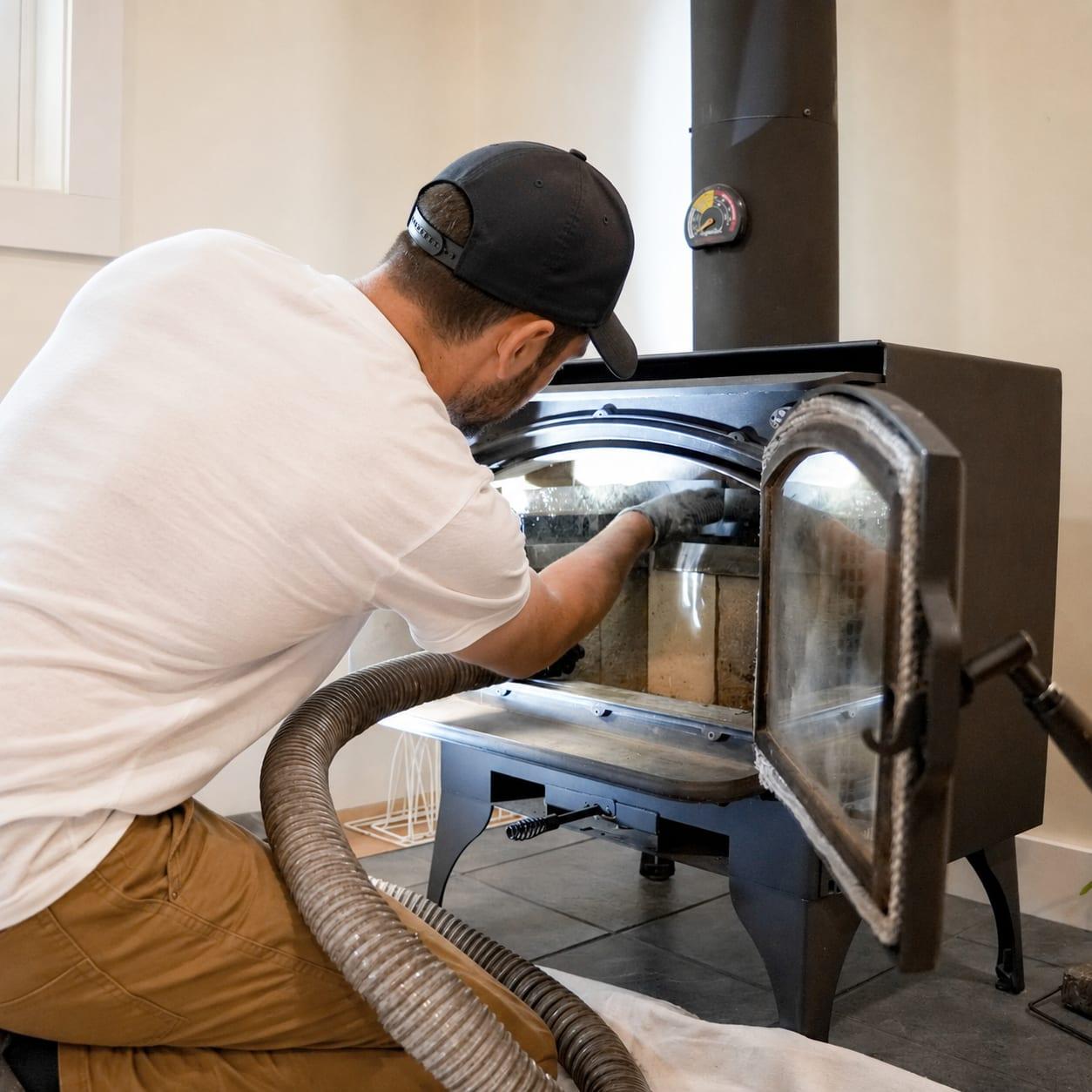
A new fireplace still needs routine care. Wood-burning flues collect creosote and should be inspected and swept as they're used. Gas units need periodic service and cleaning as well, and our guide on when a gas fireplace needs cleaning explains the signs to watch for. Keep the hearth area clear, use a screen or doors on open fires, and fit a carbon monoxide alarm near any fuel-burning fireplace. Check your fireplace's manual first: some glass doors must stay fully open while a fire burns.
Booking your fireplace installation
Call or request an estimate to get started. Commercial and property-manager work is offered too. Outside San Jose, we handle fireplace installation for homes in Mountain View and fireplace installation in Milpitas as well.
Related work covered on this page
- Ethanol Fireplace Repair and Installation
- Floating Fireplace Installation and repair
- Hanging & Suspended Fireplace Installation
- Open Flame Fireplace Repair and Installation