On this page
What electric fireplace repair involves
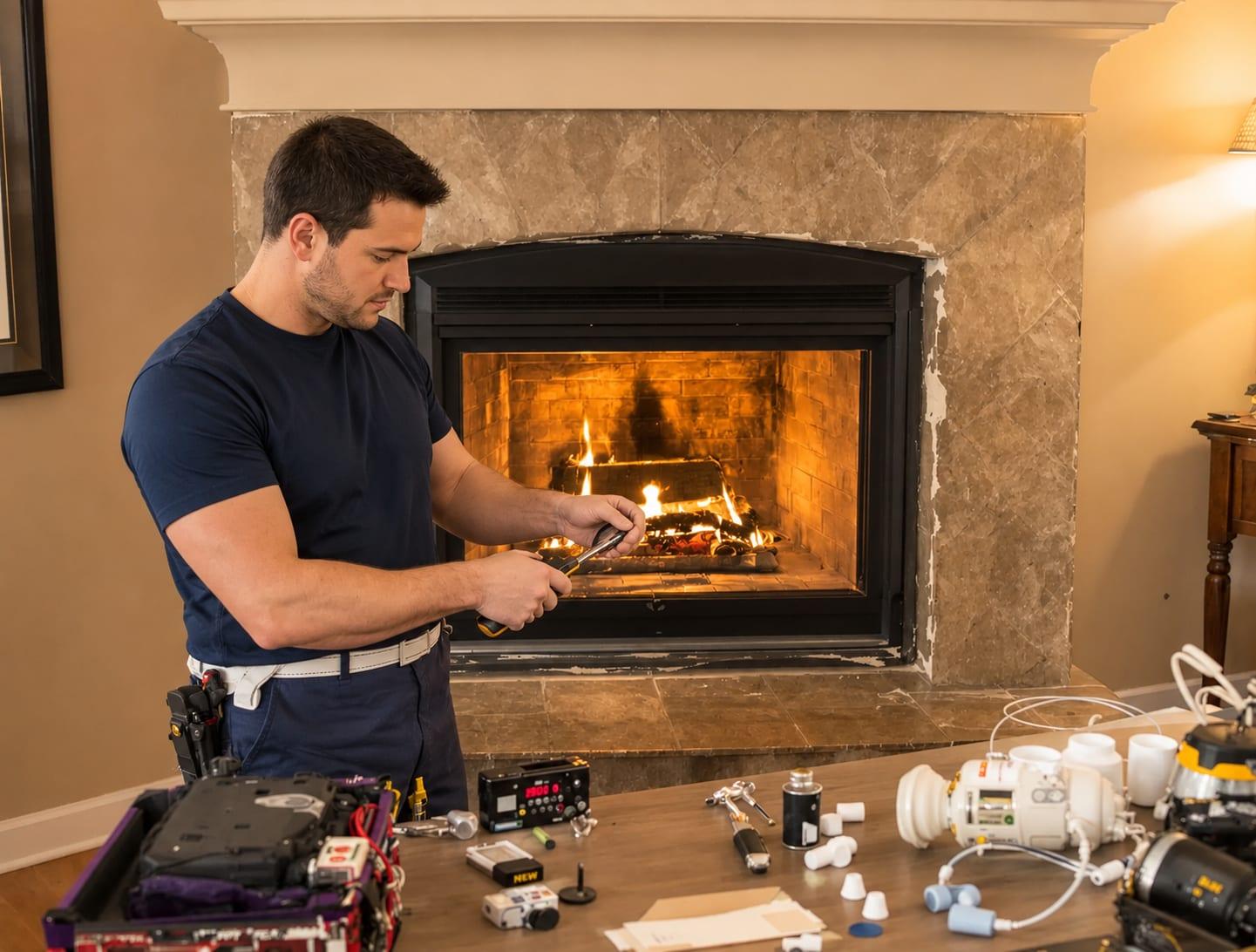
An electric fireplace is an appliance, not a combustion system. There is no flue, no gas valve and no firebox to clean. Repair means tracing an electrical or mechanical fault to the part that caused it. The usual suspects are the heating element, the blower fan, the thermostat, the control board, the flame-effect lights or motor, and the wiring and switches that connect them.
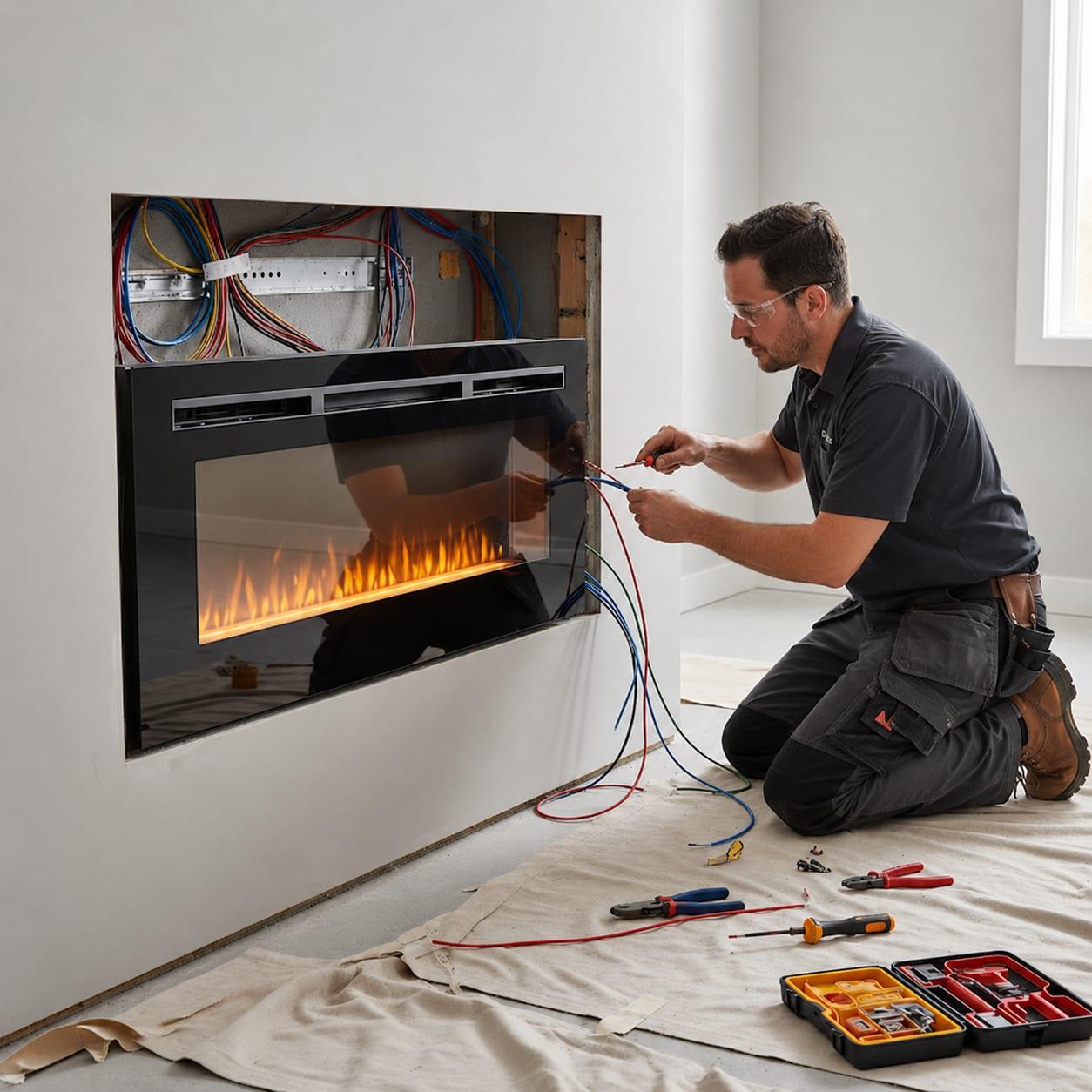
Most of the work is testing. A unit that shows flames but blows cold air has a different fault from one that is completely dead, and both differ from one that runs for ten minutes and then shuts off. Replacing parts by guesswork costs you parts you didn't need, so we confirm the fault before recommending anything.
Signs your electric fireplace needs repair
| What you notice | Where the fault often is |
|---|---|
| Flames show, but no heat comes out | Heating element, thermostat or a heat-limit safety switch |
| Nothing happens at all | Outlet or circuit, main switch, internal fuse or control board |
| Heat works, but the flame effect is dark or frozen | LED strip, flame motor or the flame-effect circuit |
| Grinding, rattling or squealing during heat mode | Blower fan, motor bearings or debris in the fan housing |
| Shuts off on its own after running a while | Overheat protection tripping because of blocked vents, a failing fan or a faulty sensor |
| Breaker trips when the heater starts | A circuit shared with other heavy loads, or a short inside the unit |
| Remote or wall panel stopped responding | Receiver, control board or the panel itself |
Turn it off and unplug it if you see these
A persistent smell of hot plastic or burning wiring, scorch marks near the outlet or cord, a cord or plug that feels hot, or visible sparking means the unit should stay off until it has been checked. A faint dusty smell on the first run of the season is different, and it usually fades within a short time.
What happens during the visit
How the repair visit runs
Confirm the power supply
We check the outlet, the plug and the breaker first, because a supply problem can look exactly like a failed unit.
Identify the unit
We note the make and model so any replacement part is the correct one, and check how the unit is mounted, whether it is wall-mounted, freestanding or set into an existing fireplace opening.
Run it through its modes
We test flame effect, low heat, high heat and the controls separately to narrow down which circuit is misbehaving.
Open and test components
With the unit disconnected, we inspect and test the element, fan, thermostat, safety switches, wiring and board, and clear dust and lint from the intake and fan.
Explain what we found
You hear which part failed, whether a replacement part is available for your model, and whether repair is the sensible choice compared with replacing the unit.
Repair and retest
Once you approve the work, we replace or repair the faulty part and run the fireplace through every mode again before we leave.
When replacement makes more sense than repair
Some older or lower-cost units are built with parts the manufacturer no longer supplies, and some have a combined board and element assembly that has to be swapped as one piece. If that is the case with yours, we tell you before any work starts. If a new unit is the better route, we can handle the installation of a new fireplace. If you want to put an electric or other insert into an existing masonry opening, our fireplace insert installation service covers fitting and finishing it.
Safety and upkeep between repairs
- Plug the fireplace directly into a wall outlet. Most manufacturers advise against extension cords and power strips for heater units.
- Keep the front and the air intake clear. Blocked vents are a common reason a unit overheats and shuts itself off.
- Vacuum dust from the intake and outlet grilles gently with the unit unplugged, especially before the first use of the season.
- Don't run the heater on a circuit already carrying a space heater, microwave or other heavy load.
An electric insert sitting in an old masonry fireplace doesn't use the chimney above it, but the chimney is still part of the house. Water coming in at the crown or flashing can stain the surround and reach the outlet area. If water reaches wiring or a ceiling is sagging, keep clear of that area and switch off its power at the breaker if it's safe to do so. If you see that, our chimney repair work covers the masonry and leak side of the problem.
Booking an electric fireplace repair
Call or request an estimate and tell us what the fireplace is doing: no heat, no flames, noise, shutting off or tripping the breaker. A photo of the model label, usually found behind a lower panel or on the side or back of the unit, helps us arrive with the right information.