On this page
What fireplace insert installation involves
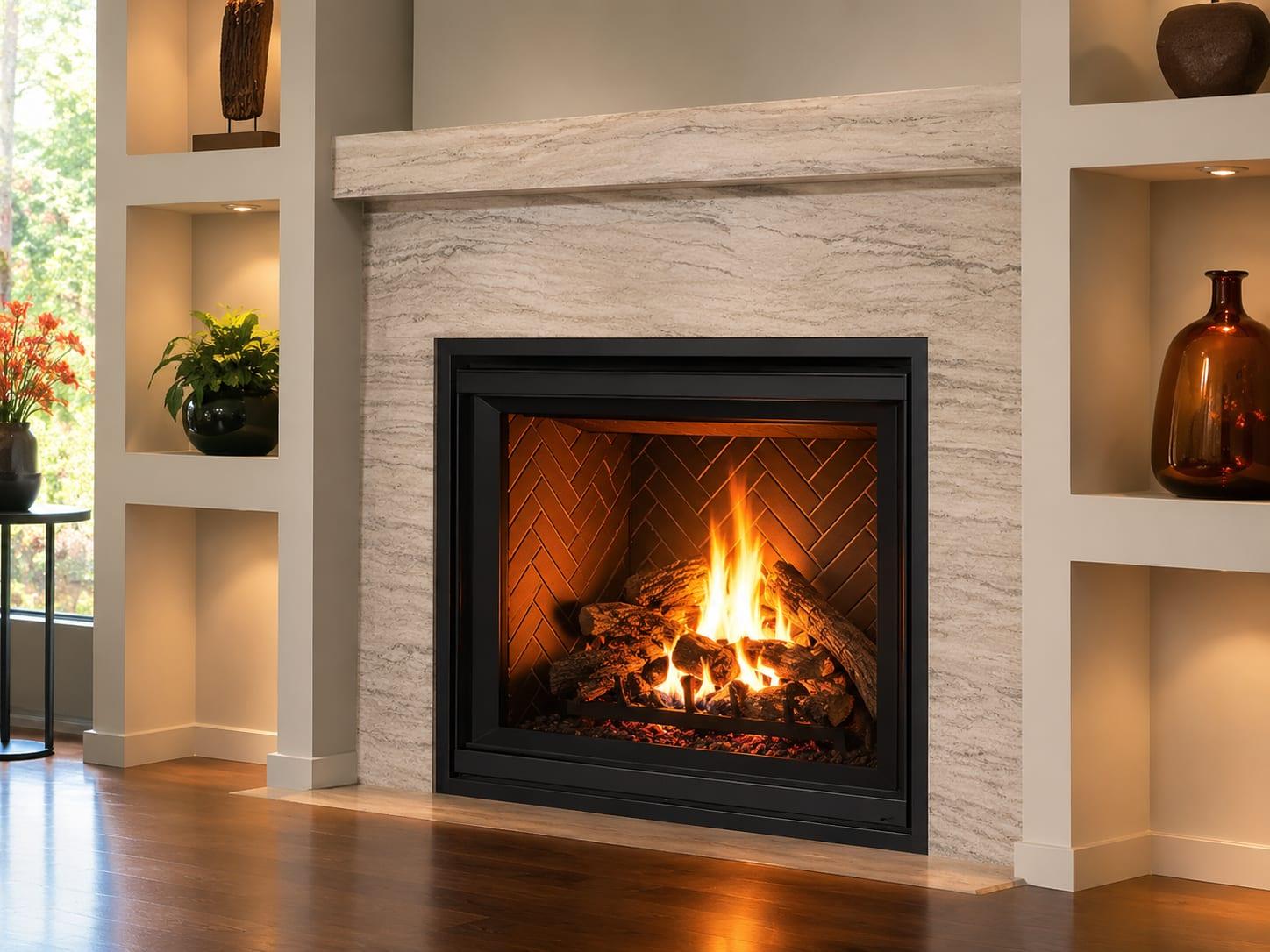
An insert is a self-contained heating unit built to slide into an existing fireplace opening. The job has more parts than the insert itself. A liner sized to the insert's outlet runs the full height of the chimney and connects at the top to a cap. A surround panel covers the gap between the insert and the old fireplace face. For a gas insert, a gas supply has to reach the unit, and running that gas line can be part of the same job.
Before anything is ordered, the existing chimney and firebox are checked. An insert depends on a sound chimney to vent safely. Cracks, loose masonry or a damaged crown are better found at the start than after the unit is in place.
| Feature | Wood insert | Gas insert |
|---|---|---|
| Fuel | Split, seasoned firewood | Natural gas or propane through a supply line |
| Venting | Liner run to the top of the chimney | Vent system specified by the manufacturer, usually through the existing chimney |
| Upkeep | Ash removal and regular liner cleaning | Periodic service of the burner, glass and venting |
| Feel of the fire | Real wood flame and crackle | Flame at the turn of a switch or remote |
Fuel
- Wood insert
- Split, seasoned firewood
- Gas insert
- Natural gas or propane through a supply line
Venting
- Wood insert
- Liner run to the top of the chimney
- Gas insert
- Vent system specified by the manufacturer, usually through the existing chimney
Upkeep
- Wood insert
- Ash removal and regular liner cleaning
- Gas insert
- Periodic service of the burner, glass and venting
Feel of the fire
- Wood insert
- Real wood flame and crackle
- Gas insert
- Flame at the turn of a switch or remote
When an insert is the right choice
- The room stays cold, or gets colder, when the fireplace is burning
- An open fireplace smokes into the room or lets cold air in when it's not in use
- An older insert is cracked, warped or no longer seals
- You want the fireplace to heat the room, not just look nice
- The chimney needs relining anyway, and an insert with its own liner solves both problems
Other jobs fit other goals. If the room has no fireplace at all, installing a new fireplace is where to start. If the fireplace works and you only want glass doors in front of it, fireplace door installation is the simpler job. An insert that works but smokes or draws poorly may just need cleaning the existing insert.
What the visit involves
Step by step
Assess the fireplace and chimney
The technician checks the firebox, damper area, flue and chimney exterior for condition and for anything that would block a liner.
Measure and choose
The technician measures the opening's width, height and depth, and you compare insert options and fuel types that fit it.
Prepare the opening
The damper is removed or secured as needed, and the firebox is cleaned so the insert sits correctly.
Install the liner
The liner is run down the chimney, connected to the insert's outlet, and capped at the top.
Set the insert and surround
The insert slides into place and is leveled, then the surround is fitted. A gas unit is connected to its supply.
Test and walk through
The insert is fired and checked for proper draft and operation. You're shown how to run it and what upkeep it needs.
Booking an insert installation
Call or request an estimate. It helps to share photos of the fireplace opening and chimney and to say whether you'd like wood or gas. Commercial and property-manager work is offered for buildings and rentals with existing fireplaces.
Signs of a chimney fire
A loud roaring sound, a glowing connector pipe, dense smoke or sparks from the top of the chimney can mean a chimney fire. Get everyone out and call 911; have the system inspected before the next fire.
Signs it's time for fireplace insert installation
- An open fireplace that loses most of its heat up the chimney
- A drafty fireplace even with the damper shut
- A wish to burn less wood or switch to gas
- An old insert past repair
What the technician checks
- Flue condition and liner size
- Gas supply on gas units
- Permit requirements
- Hearth extension
- Firebox opening and depth
- Clearances to the mantel and trim
How to prepare
- Clear a few feet around the unit and the area under any connector pipe.
- Write down what you've noticed — smoke at the door, a hard-to-control fire, noises or smells.
- Make sure the roof or the attic access can be reached if the flue needs to be checked from above.
- Let the stove or insert go out and cool completely — ideally no fire for a full day before the visit.