On this page
What fireplace door installation involves
The job is fitting a framed glass door assembly to the front of the fireplace opening. On a masonry fireplace, the frame either sits inside the opening or overlaps the brick or stone face. It is held with mounting clips or a lintel bar and sealed against the surround with a gasket.
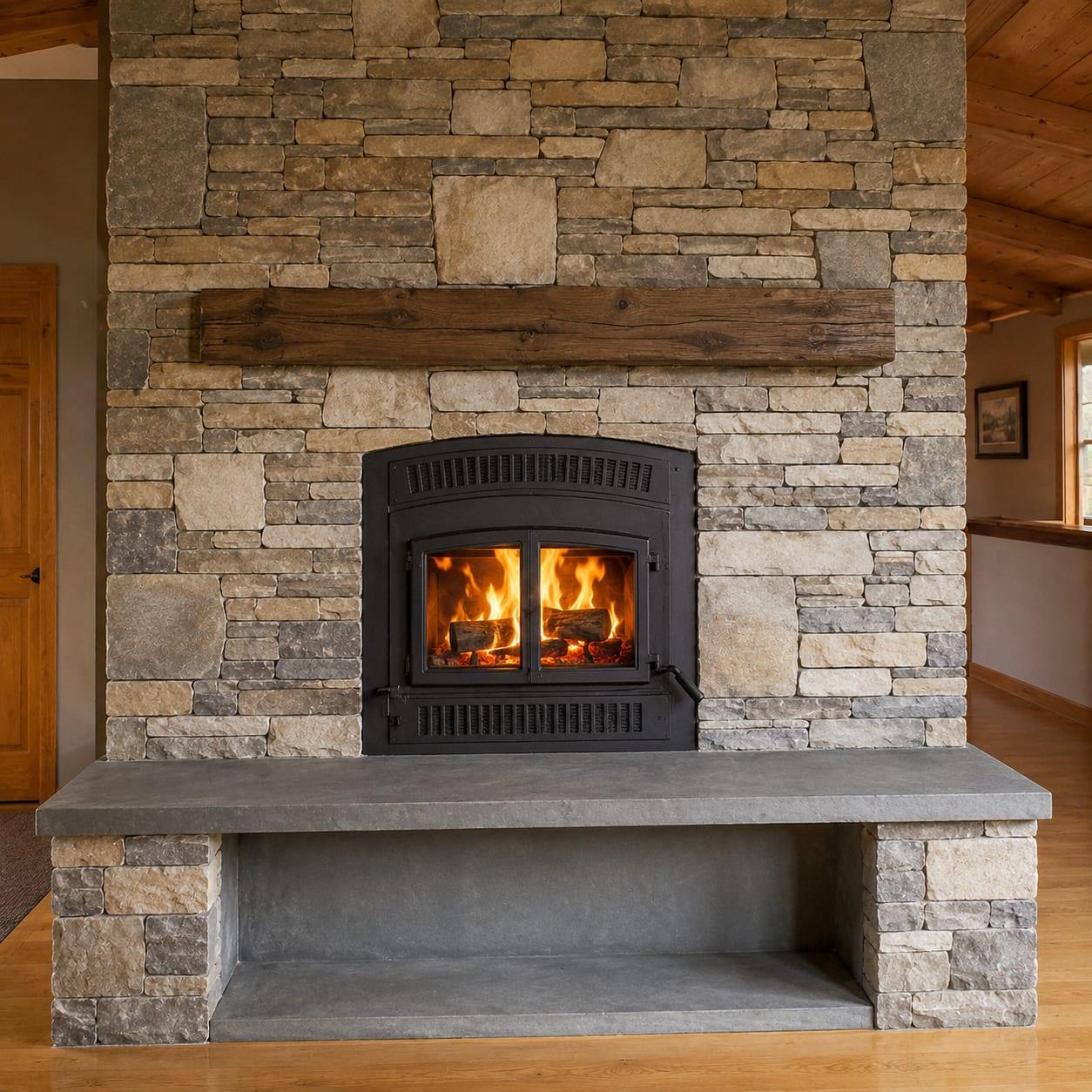
Prefab, or factory-built, fireplaces follow a stricter rule. The doors must be ones the fireplace manufacturer lists for that model, because the unit's airflow and clearances were tested with specific doors.
Choices that shape the install
- Frame style: inside-fit frames suit a clean, square opening, while overlap frames cover an uneven face or an out-of-square opening
- Glass: tempered glass is standard on many doors, and ceramic glass tolerates much higher temperatures
- Door type: bifold or cabinet-style doors, with or without a mesh spark screen behind the glass
- Air control: an adjustable vent along the bottom of the frame feeds the fire when the doors are closed
- Finish: frame color and trim chosen to suit the brick, stone or tile around the opening
Getting ready for the visit
- Keep pets in another room while the work area is open.
- Make sure the technician can reach the roof or attic access if it's needed.
- Clear a few feet of space in front of the hearth or appliance.
- Write down what you've noticed and when it happens — smells, smoke, sounds or stains.
What we look at
- Opening or framing dimensions
- Hearth extension and protection
- Vent or liner route and length
- Required clearances to combustibles
- Gas supply or electrical needs
When to book fireplace door installation
- An open fireplace that sends most of its heat up the chimney
- A switch from wood to gas or electric
- A remodel that adds or moves a fireplace
- A worn-out insert or stove
If you smell gas
Leave the home right away, don't use switches or phones inside, and call your gas utility or 911 from outside.
When homeowners need new fireplace doors
- The damper doesn't seal tightly, so warm room air escapes up the chimney or cold drafts come down
- Sparks or rolling logs are a worry around pets, children or rugs
- Existing doors are warped, rusted, loose in the opening or won't close
- The fireplace is being refaced and the old doors no longer fit
- You want the opening to look finished when no fire is burning
New doors aren't always the answer. When the frame is sound and only a pane is cracked, a hinge is loose or a gasket is worn, fireplace glass replacement and door repair keeps the existing set. If the real goal is more heat, glass doors won't deliver it, and installing a fireplace insert is the upgrade that does. For a home that doesn't have a working fireplace yet, the place to start is fireplace installation.
What the visit involves, step by step
Measuring, fitting and checking
Identify the fireplace
We determine whether it's masonry or prefab. For prefab units, the make and model decide which doors can go on it.
Measure the opening
We measure the width at the top and bottom, the height on both sides and the face around the opening. Uneven brick is common, and the frame has to cover the gaps.
Choose the doors
Frame style, glass, door type and finish are chosen based on the measurements and how you use the fireplace. Doors ordered to size are installed once they arrive.
Prepare the opening
Soot and loose debris are cleaned off the face so the gasket can seal against it.
Mount and seal
The frame is fastened with the correct clips or lintel bar, and the gasket is seated evenly all the way around.
Check operation
We open and close the doors, spark screens and air control to confirm smooth movement and an even seal.
Booking door installation
Request an estimate, and if you can, include a straight-on photo of the fireplace with rough width and height measurements. Those details show early whether an inside-fit or overlap frame will work. Commercial and property-manager work is offered too, including doors for fireplaces in rentals and shared spaces.