On this page
What a gas fireplace inspection covers
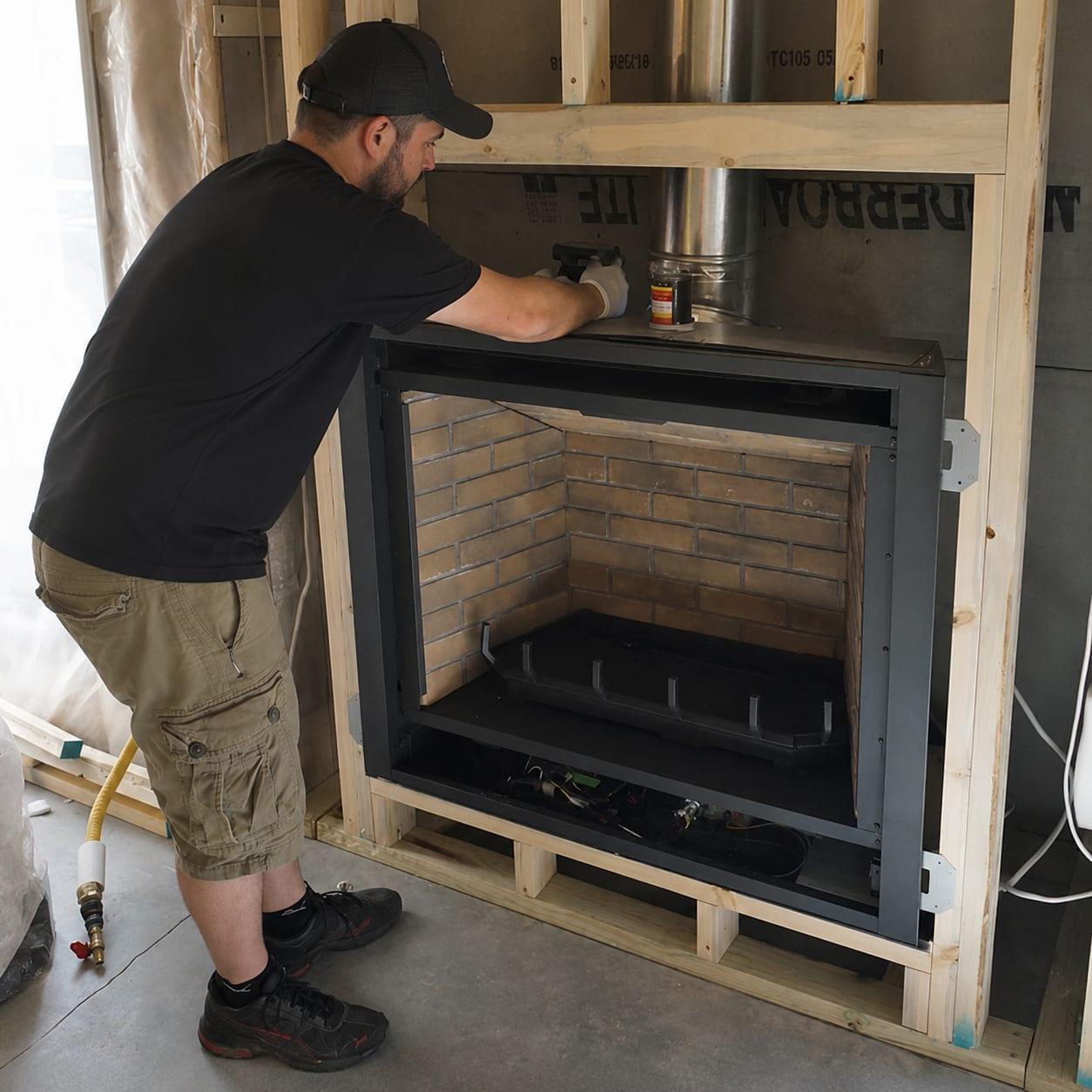
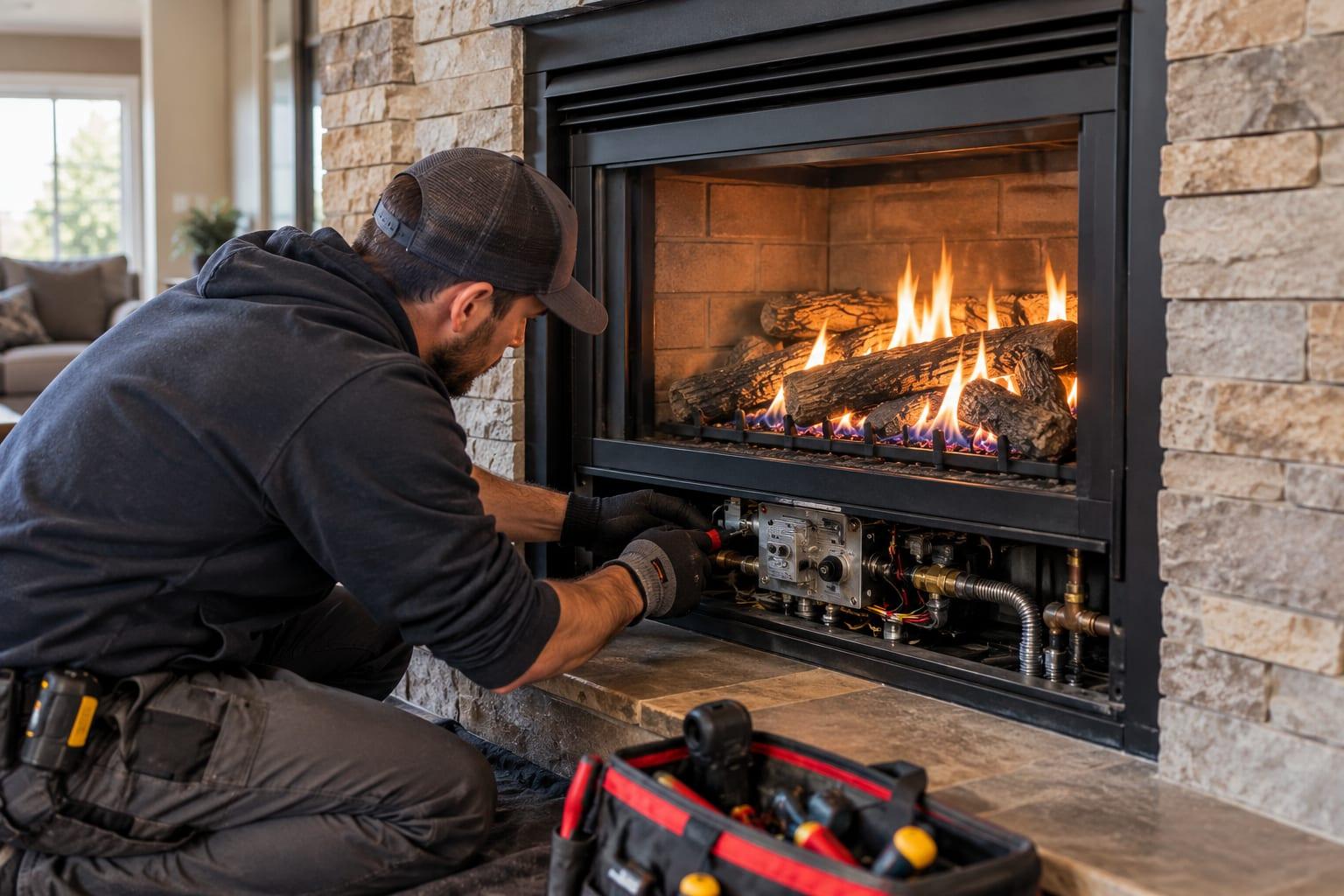
A gas fireplace inspection is a hands-on look at the whole appliance, not only the part you see from the room. We check the burner and log set, the pilot and ignition, the gas valve and controls, the accessible gas connections, and the glass front and its seal. We also follow the vent from the firebox to where it ends outside. The goal is to catch leaks, blockages, damage and poor combustion while they are still small, before they become a safety problem or a fireplace that won't light on the first cold night.
If you smell gas
Leave the building right away and take everyone with you. Don't flip light switches, use phones or light anything inside. Once you are outside, call your gas utility or 911. Don't go back in or try to find the source yourself.
Signs your gas fireplace should be inspected
- Yellow, lazy or sooty flames in place of a steady flame with a blue base, which can point to blocked burner ports, misplaced logs or an air supply problem.
- Black soot on the glass or the logs, or on the wall or mantel above the opening.
- A pilot that won't stay lit, or an igniter that clicks without lighting the burner.
- Delayed ignition, where the burner catches with a whoosh or a small bang.
- A heavy film on the glass that comes back soon after cleaning.
- Stuffy air, headaches or an unusual smell while the fireplace runs. If anyone has a headache, dizziness or nausea while an appliance runs, turn it off if you can, get everyone outside and call 911. A raw gas smell is a different situation: follow the steps in the warning above.
An inspection also makes sense when nothing seems wrong. Good times are before the first fire of the season, when you buy or move into a home with a gas fireplace, and after a unit has sat unused for a long time. Book one too after storm damage or roof work near the vent, or before you rent a property out.
How the inspection visit works
Talk through what you've noticed
We ask about symptoms, how often the fireplace runs, and any recent changes such as new logs, a remodel or work on the roof.
Check the outside vent
We look at the termination cap for damage, debris, nests and anything blocking it.
Shut off and open the unit
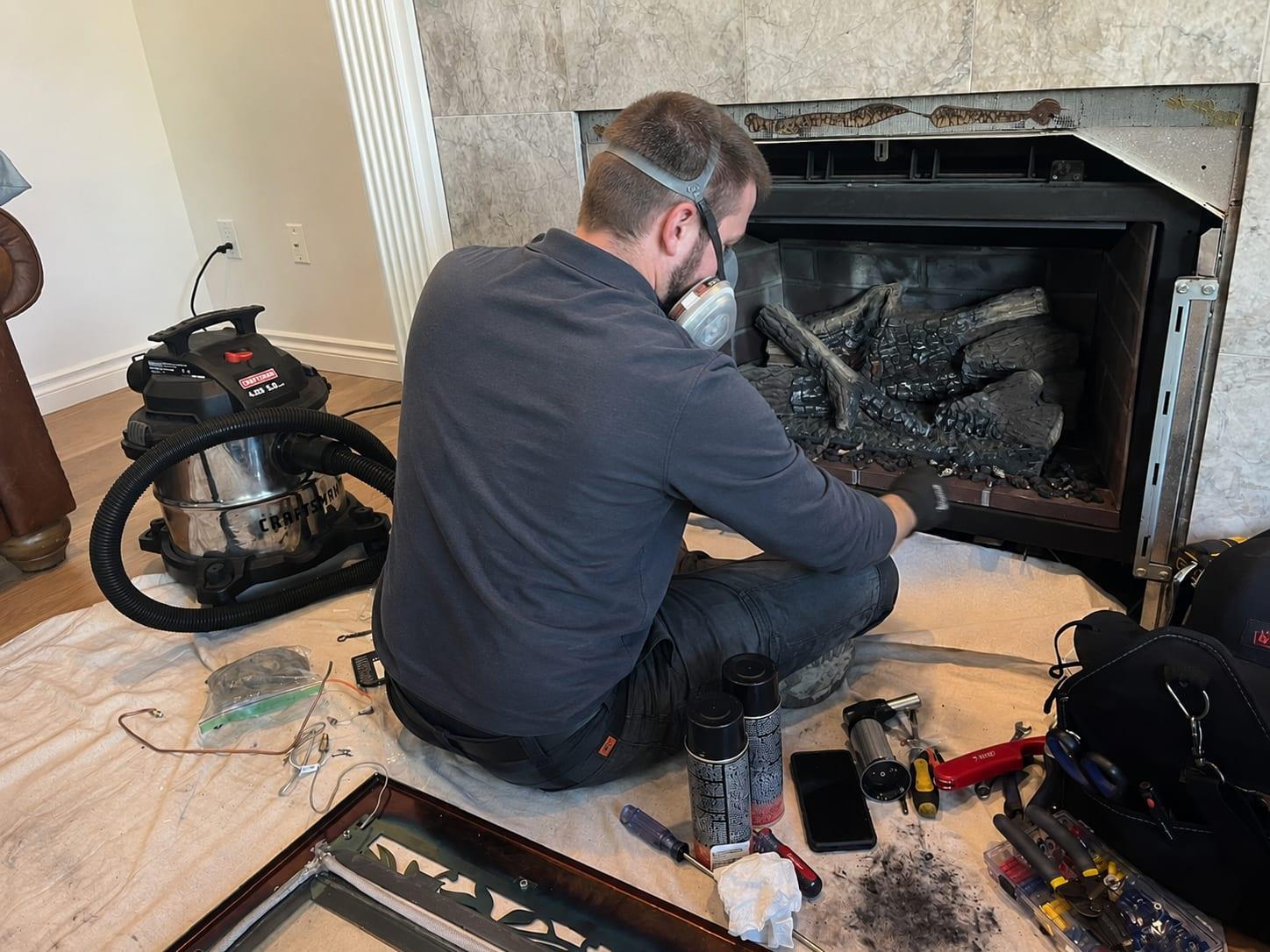
With the gas to the appliance off and the unit cool, we remove the glass. We check the gasket, the glass, the logs or media, the burner and its ports.
Check the pilot, ignition and controls
We look over the pilot assembly, the flame sensor, the igniter, the valve, and the wall switch or remote.
Test the gas connections
We check the accessible fittings and connections at the appliance for leaks.
Fire it and watch it run
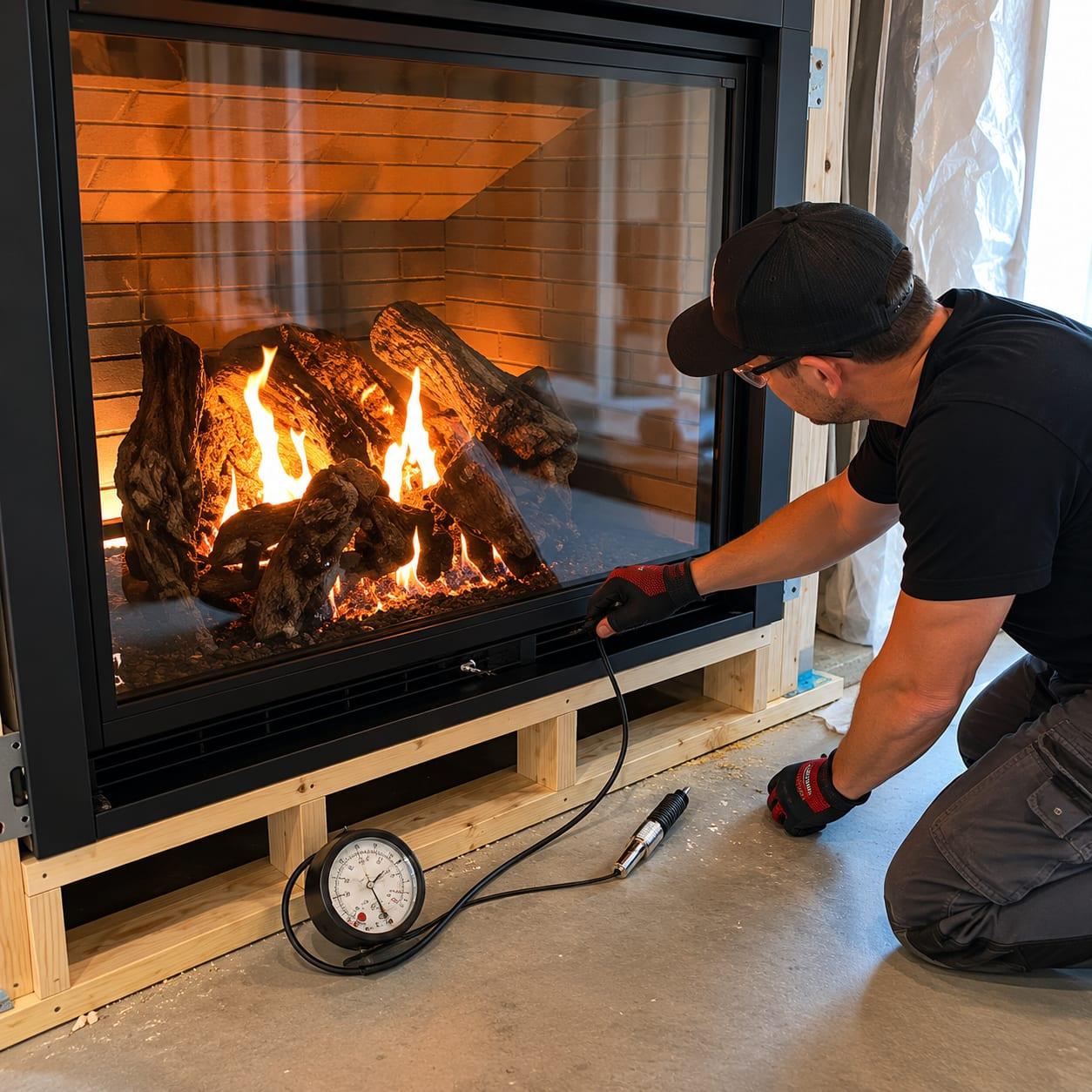
We look at ignition, flame pattern and color. On units that draw room air, we also check whether exhaust is spilling back into the room.
Go over the findings
We explain what is in good shape and what needs attention. If work is needed, the estimate is free.
Gas fireplace types and what gets checked
| Type | How it vents | Extra attention goes to |
|---|---|---|
| Direct-vent | Sealed glass front; vents through a wall or roof | Glass seal, vent joints, outdoor termination |
| B-vent (natural vent) | Uses room air; exhaust rises through a vent pipe | Draft, spillage into the room, vent pipe condition |
| Vent-free | No flue; exhaust stays in the room | Burner condition, oxygen depletion sensor, how the unit is used |
| Gas logs in a masonry fireplace | Exhaust goes up the existing chimney | Damper kept open, clear flue, chimney condition |
When gas logs sit in an existing masonry fireplace, the chimney carries the exhaust. If that flue, liner and masonry haven't been looked at, a chimney inspection service covers them. We work on all major brands of gas fireplaces, so the make on the rating plate is rarely an issue.
Safety and upkeep between inspections
Keep working carbon monoxide alarms in the home, including near bedrooms. The glass front gets hot enough to burn skin, so a safety screen is worth having if there are small children or pets. Keep furniture, decorations and anything flammable well clear of the opening. Never burn wood, paper or anything else in a gas unit.
If a carbon monoxide alarm sounds
Get everyone out of the house and call 911 from outside. Leave the fireplace off until it has been checked.
An inspection tells you the condition of the fireplace. Routine cleaning of the burner, pilot and glass falls under our gas fireplace maintenance service. When the inspection turns up a failed part, gas fireplace repair is the right next job. For warning signs you can spot yourself, read our guide to telling when a gas fireplace needs cleaning.
Booking a gas fireplace inspection
Our 24-hour service runs seven days a week, and emergency calls are accepted. We also take on commercial and property-manager work for owners who look after several fireplaces.
When you call or request an estimate, tell us the make of the fireplace if you know it, how it vents, and what you've noticed. Beyond San Jose, we also offer gas fireplace inspection in Palo Alto, gas fireplace inspection for homes in Menlo Park and gas fireplace inspection in Hayward.
Free estimates.
Call or request an estimate to book a gas fireplace inspection.