Gas fireplace inspection in brief
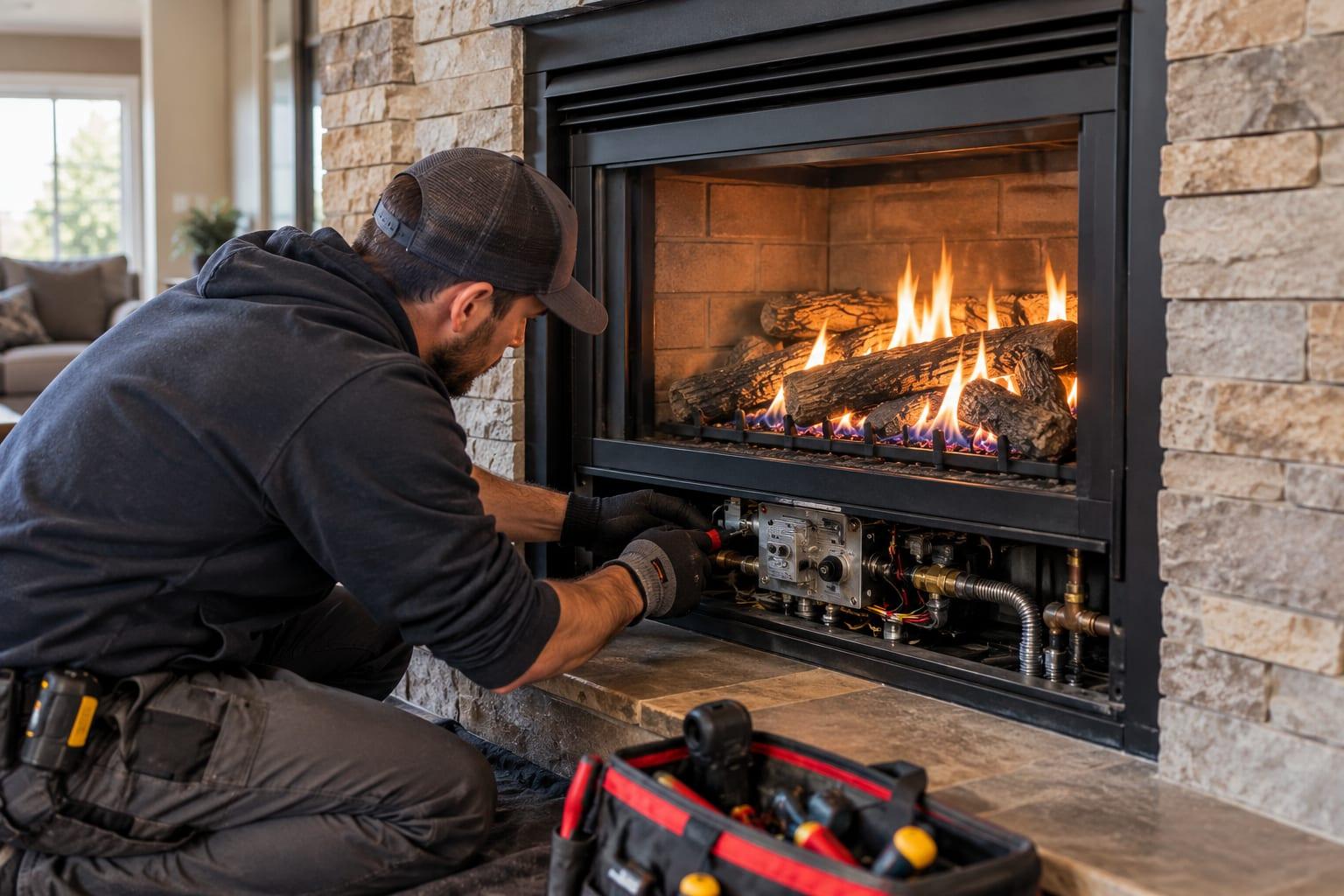
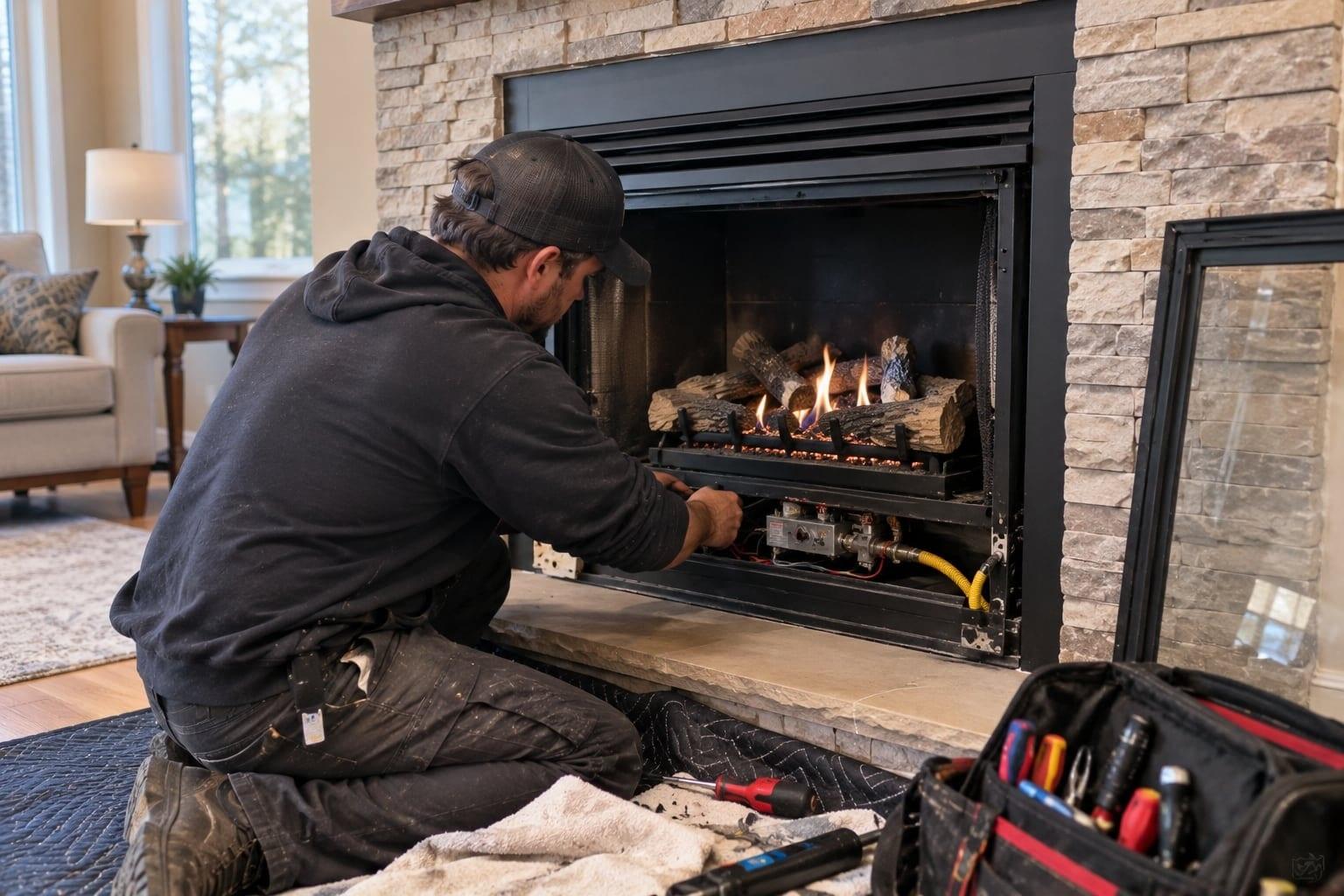
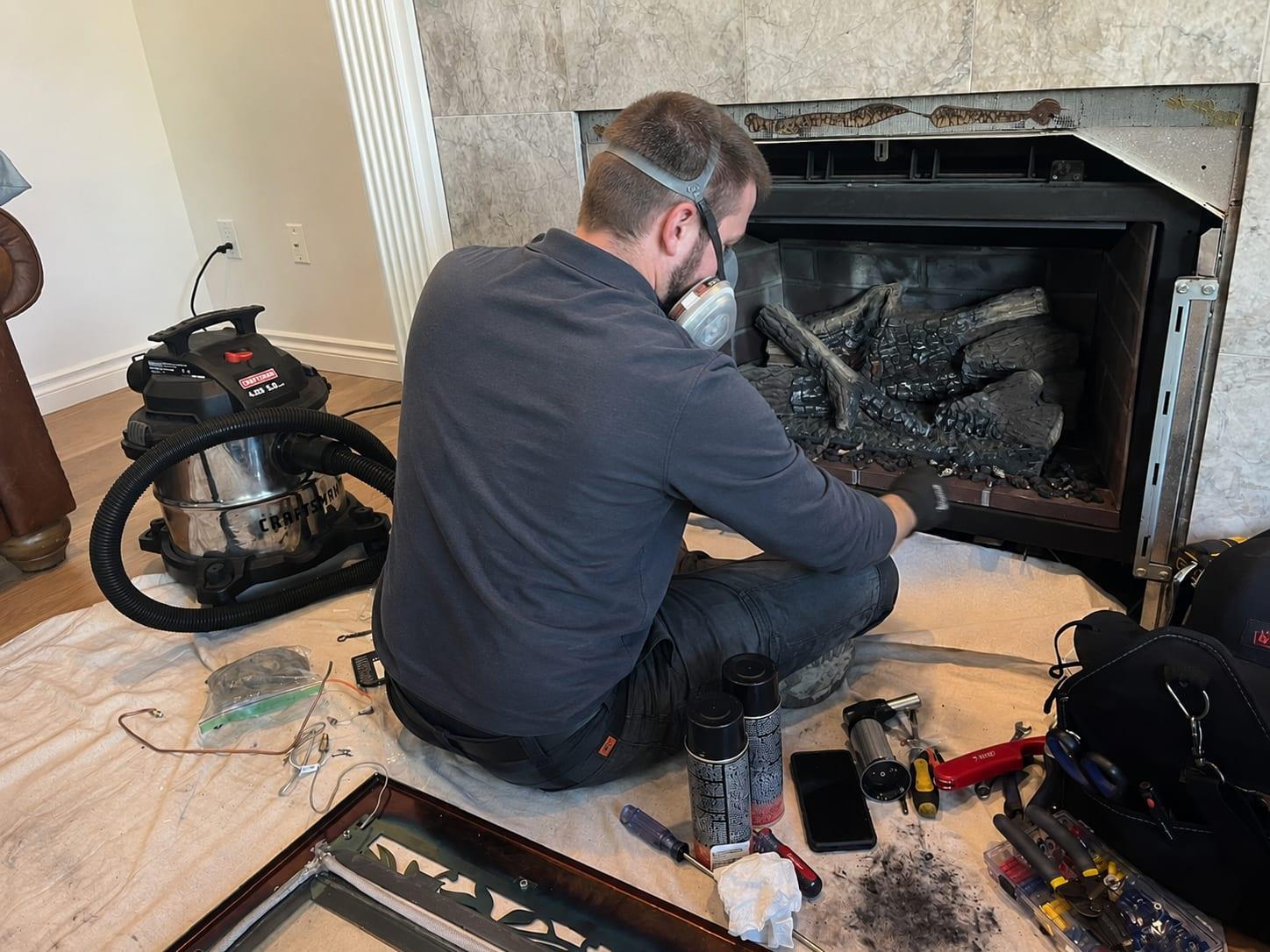
The inspection covers the gas fireplace from the shutoff valve to where the exhaust leaves the house. That means the gas connection and valve, the burner and pilot or ignition, log or media placement, the glass and its seal, the firebox, and the venting. On units that vent through a masonry chimney, it also covers the flue and the chimney top. You get a clear account of what is working, what needs attention and what can wait. For the full scope, read how gas fireplace inspection works.
What Hayward's local facts mean for your inspection
A large share of older homes
About 35% of the housing units in Hayward were built before 1960, according to the U.S. Census Bureau's American Community Survey 2019–2023 5-year estimates (table B25034, Year Structure Built). In a house that age, a gas fireplace is often an addition to the original design. It may be gas logs set in a wood-burning firebox or an insert in an old masonry opening. Either setup leaves more places where the old fireplace and the newer gas equipment meet, and those places need checking.
What gets extra attention in an older home with a gas setup
- Whether gas logs sit in an open firebox with the damper fixed open the way gas logs require
- How an insert's vent connects to the old flue, and whether the flue is lined
- Cracked firebox walls or loose mortar behind the logs or insert
- The condition of the chimney top and crown, where water and debris get in
- Gas line routing through older walls and hearths
If the inspection turns up cracked brick, failing mortar or a damaged crown, that is masonry work rather than a gas issue.
Fire department guidance on chimney outlets
Guidance from the Hayward Fire Department, published on hayward-ca.gov, reads: "Install a spark arrestor on chimney and/or stovepipe outlets. • The spark arrester must be constructed of heavy wire mesh with openings not to exceed ½ inch."
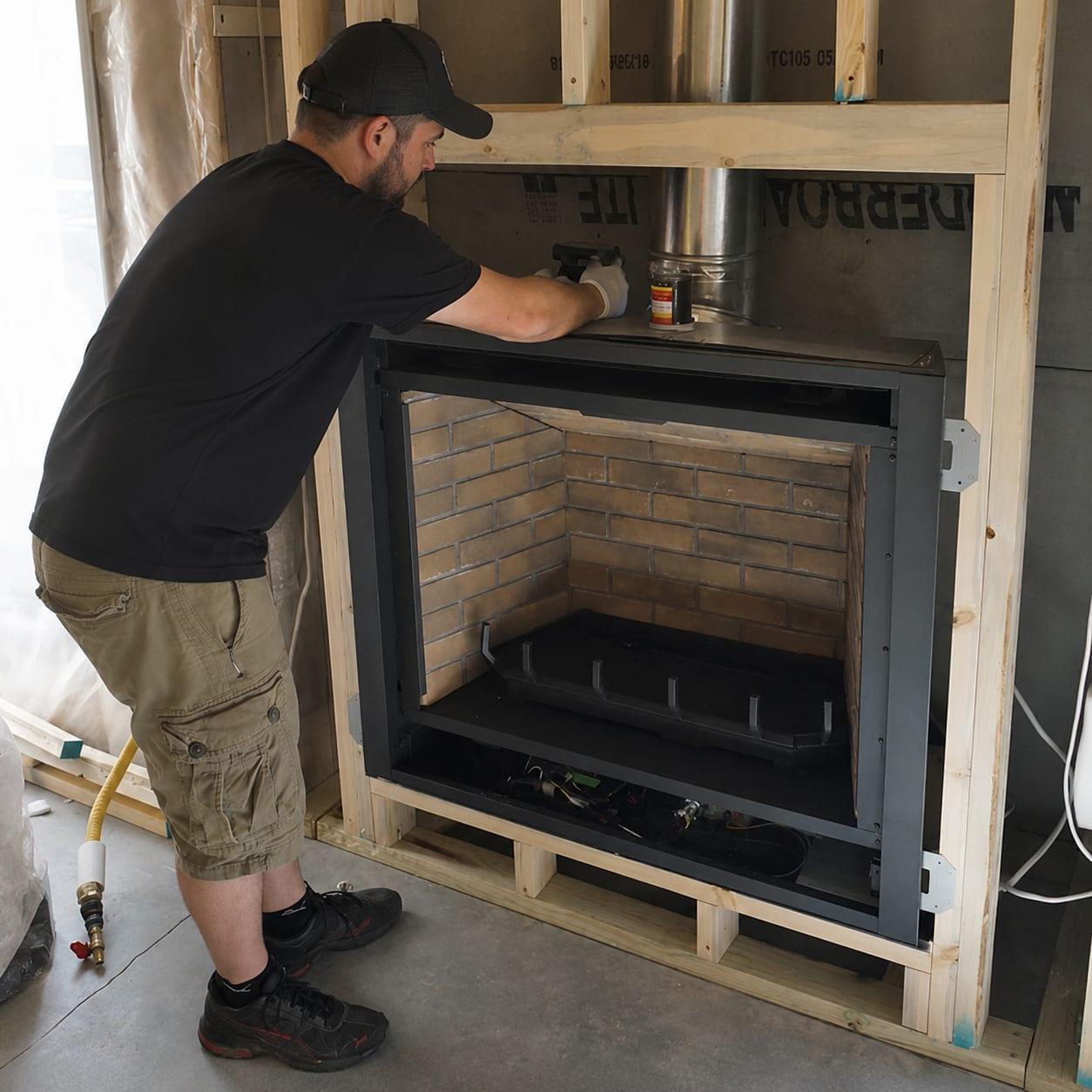
For a gas fireplace, how this applies depends on how the unit vents. A gas fireplace or gas logs venting up a masonry chimney still have a chimney outlet, so the inspection looks at what is on top of it. We check whether a cap or screen is there, whether the mesh is intact, and whether it is clogged with debris. A factory-built direct-vent unit ends in its own termination cap designed for that appliance. Mesh should not be added to that cap without checking the unit's venting requirements first, because a blocked or restricted termination can affect how the fireplace burns.
If the chimney top needs work
When the inspection shows a missing, damaged or clogged cap or screen, we can install or replace it. You get a written estimate before any work begins.
When to book an inspection, and when something else fits better
- Book an inspection before first use in a home you just bought, after the fireplace has sat unused for a long stretch, or if the flame looks lazy, sooty or uneven.
- Book an inspection if the pilot won't stay lit, the glass seems loose, or you notice an odor when the unit runs.
- Cleaning may be the better first step if the glass has a white or dark film or the logs look coated. Our guide on signs a gas fireplace needs cleaning explains what to look for.
- Masonry repair fits better when the problem you can see is the chimney itself: spalling brick, gaps in mortar or a cracked crown.
Booking a gas fireplace inspection in Hayward
For everything else we handle for homes in the area, start with our Hayward service area page. For a closer look at the work itself, visit our gas fireplace inspection service page. When you're ready, call or request an estimate.
Sources (2)
The sources of the Hayward facts on this page.
- 1U.S. Census Bureau, American Community Survey 2019–2023 5-year estimates, table B25034 (Year Structure Built)
- 2hayward-ca.gov