On this page
What gas log installation involves
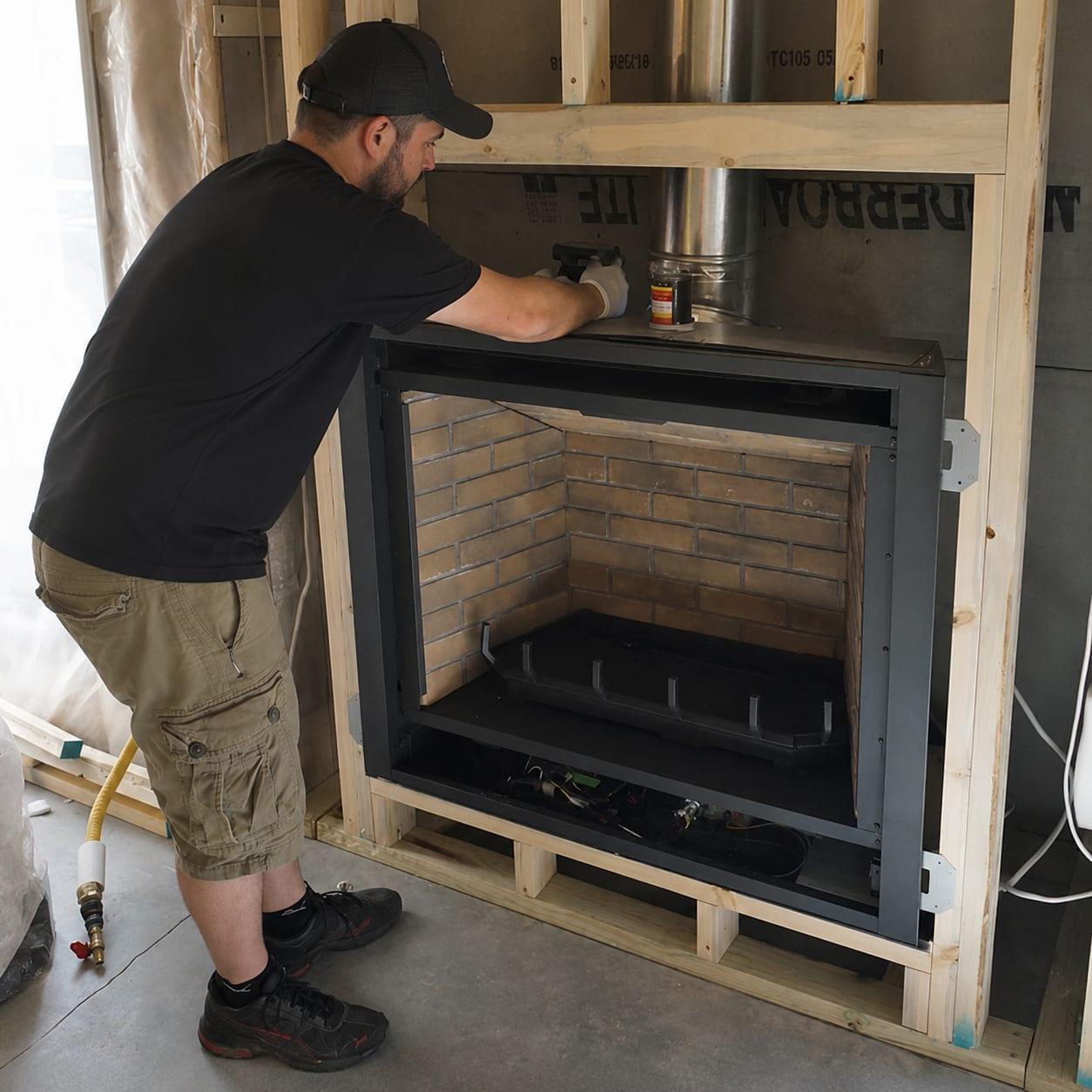
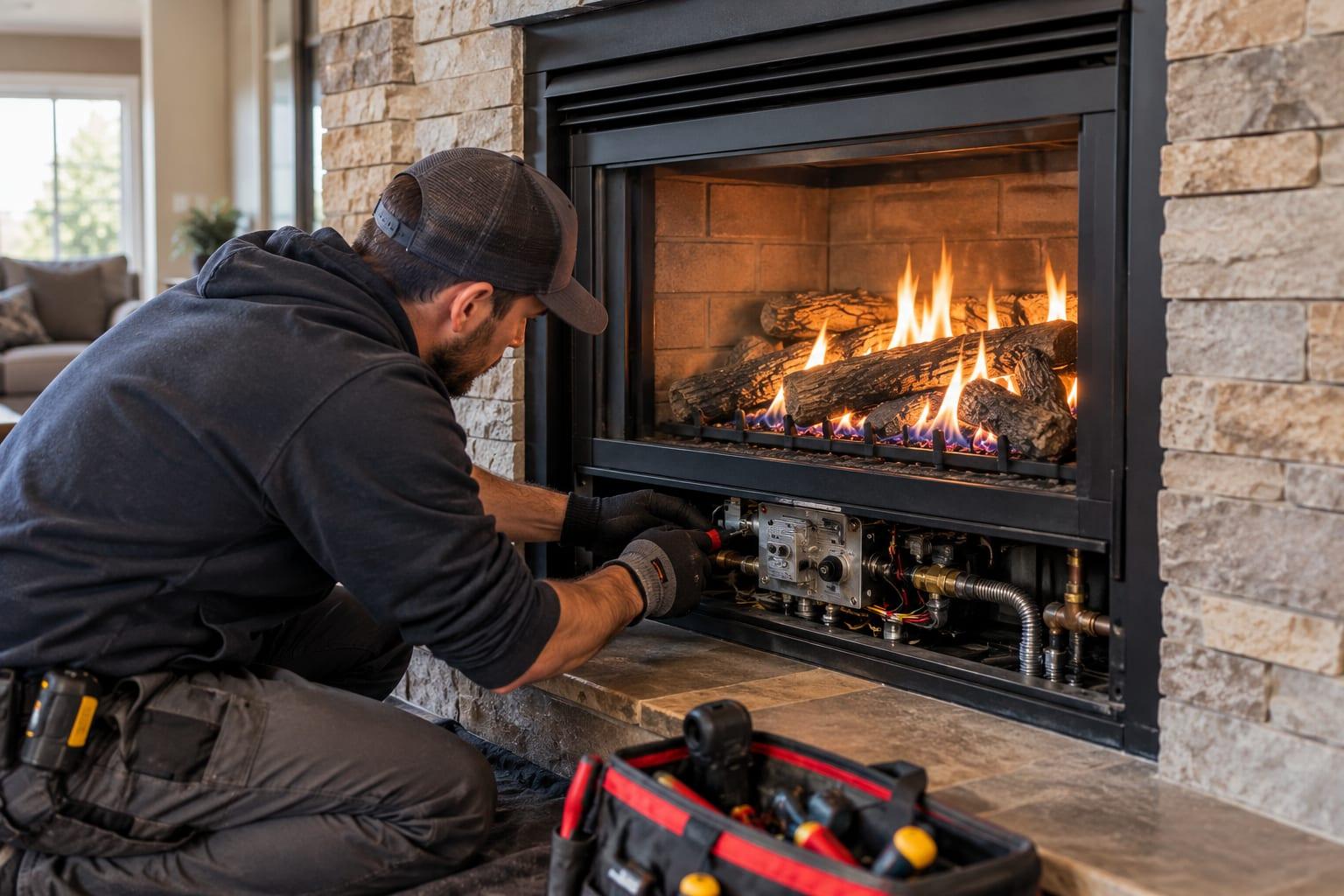
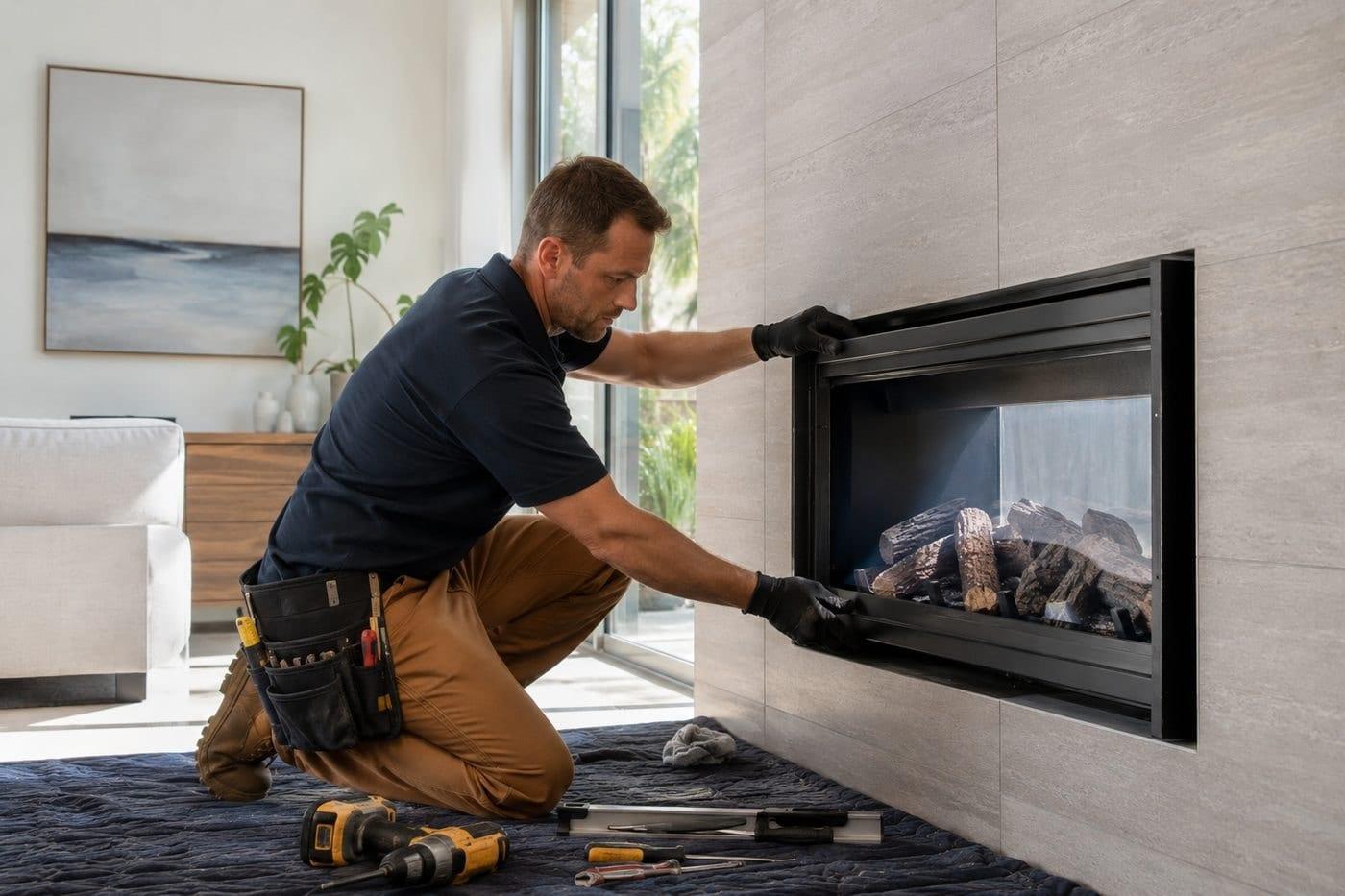
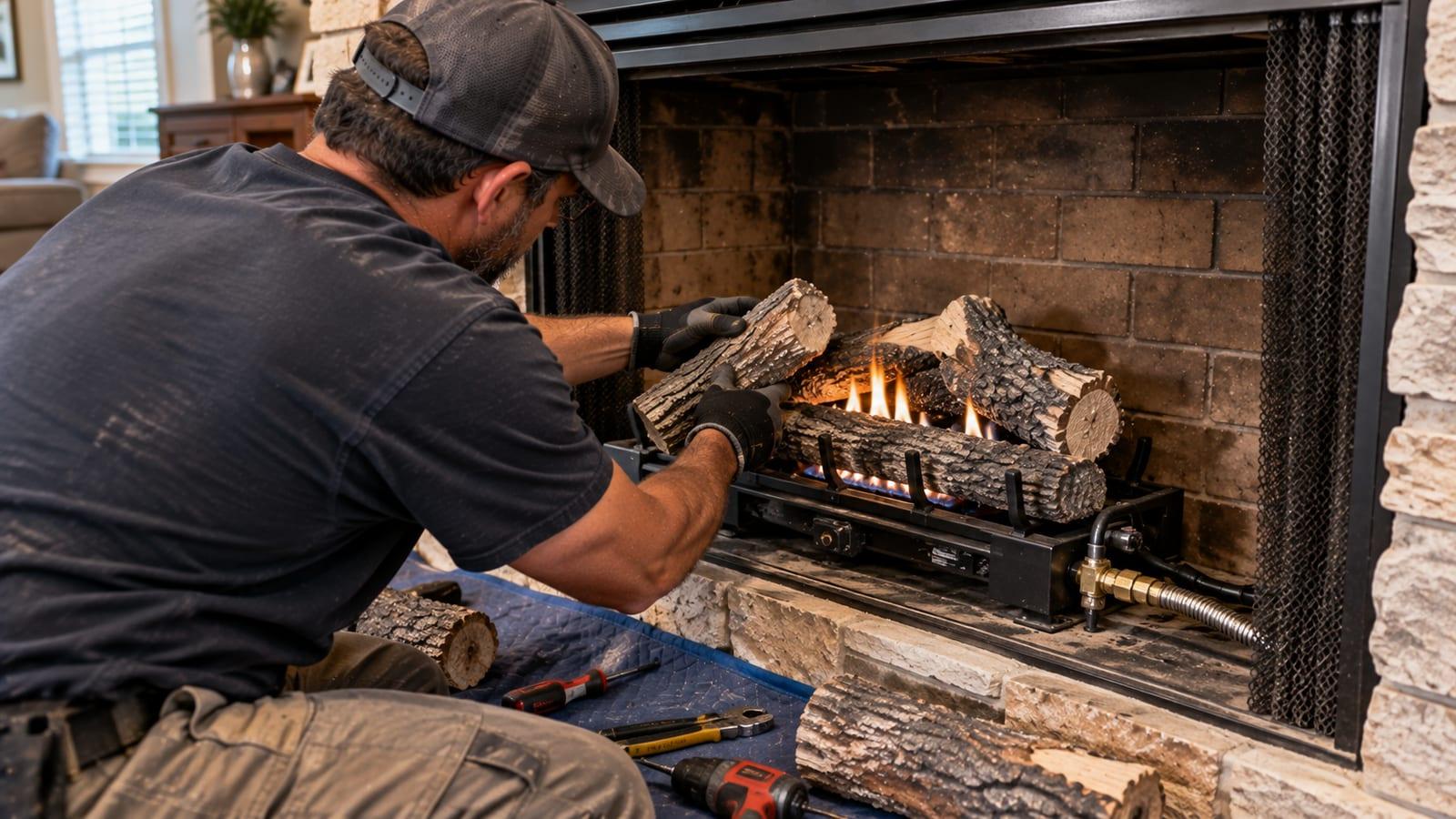
Gas log installation means fitting a burner pan and a set of ceramic or refractory logs into an existing fireplace. The set is connected to a gas supply and adjusted so it lights reliably and burns cleanly. The logs are the part you see, but most of the work is underneath and around them: the burner, the valve and ignition, the gas connection, and the chimney that carries combustion gases out of the house.
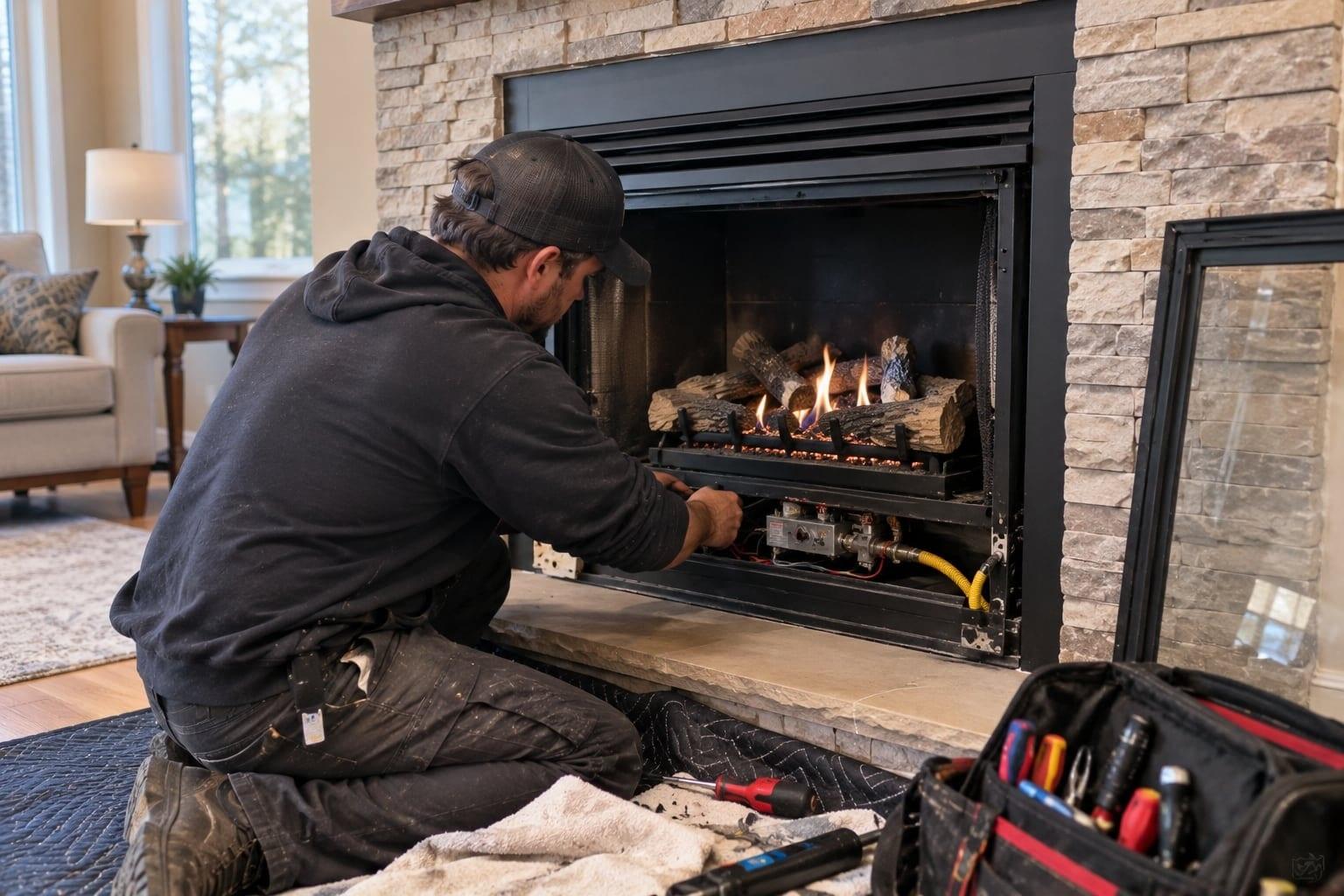
If there is no gas at the hearth yet, that comes first. Our gas line installation service covers running a line to the firebox. If you would rather have a sealed, glass-front appliance than an open log set, gas fireplace installation is the better fit.
If you smell gas
Leave the building right away. Don't use light switches or phones, and don't light any flame inside. Once you are outside, call your gas utility or 911.
When a gas log set makes sense
- You have a sound wood-burning fireplace but seldom use it because of hauling wood, sweeping ash and cleaning up.
- An old log set lights unevenly, leaves soot on the logs or doors, or has a burner that has rusted out.
- You want a fire with the turn of a key or the press of a remote, and you want to keep the look of an open hearth.
- A capped gas stub sits at the hearth and nothing was ever connected to it.
Gas logs aren't the answer for every fireplace. Some problems have to be fixed before a log set goes in, because the set will vent through the same flue:
- Cracked or missing firebrick
- A damper that won't open
- A chimney that hasn't been cleaned since the last wood fire
Vented or vent-free: the choice that shapes the job
| Feature | Vented logs | Vent-free logs |
|---|---|---|
| Flame | Tall, yellow flame that looks like wood | Smaller, bluer, more even flame |
| Chimney | Needs a working chimney, and the damper stays open while the logs burn | Built to burn without a chimney, with strict manufacturer limits on room size |
| Heat | Much of the heat goes up the flue, so these are mostly for looks | More of the heat stays in the room |
| Check first | How the damper is held open under the manufacturer's instructions | Whether vent-free appliances are allowed where you live and in that room |
Flame
- Vented logs
- Tall, yellow flame that looks like wood
- Vent-free logs
- Smaller, bluer, more even flame
Chimney
- Vented logs
- Needs a working chimney, and the damper stays open while the logs burn
- Vent-free logs
- Built to burn without a chimney, with strict manufacturer limits on room size
Heat
- Vented logs
- Much of the heat goes up the flue, so these are mostly for looks
- Vent-free logs
- More of the heat stays in the room
Check first
- Vented logs
- How the damper is held open under the manufacturer's instructions
- Vent-free logs
- Whether vent-free appliances are allowed where you live and in that room
Each set is built for either natural gas or propane, and the burner and valve must match the fuel your house has. Ignition options range from match-lit burners to a standing pilot to electronic ignition with a remote.
What the visit involves
Installing a gas log set
Check the fireplace and chimney
The firebox, damper and flue are checked for damage, creosote and obstructions to confirm the fireplace suits the set you chose.
Confirm the gas supply
We confirm the fuel type, the shutoff location and whether the line can supply the burner.
Set the burner and logs
The burner pan is positioned and the valve connected. The logs are placed exactly as the manufacturer's diagram shows, because their position affects flame contact and sooting.
Leak-check and light
Every connection is tested for leaks. Then the set is lit and the flame and draft are observed.
Walk you through it
You are shown the shutoff valve, the lighting sequence and the correct damper setting.
Safety and upkeep after installation
Gas burns cleaner than wood, but a gas log fireplace still needs care:
- Keep the logs where the manufacturer's diagram puts them. Moving them can push flame into the logs and cause soot.
- Keep the burner ports and ember material clear.
- Keep a working carbon monoxide alarm in the home.
- Have the burner and chimney checked regularly. Our gas fireplace service handles cleaning and adjustment.
Shut the set off and have it checked if you see new soot, if a vent-free set burns with a lazy yellow flame, or if you notice an odor while it runs.
Booking gas log installation
Call or request an estimate. Tell us what kind of fireplace you have, whether there is gas at the hearth now, and whether you're leaning toward vented or vent-free logs. Photos of the firebox and any existing valve help us plan. We work in homes across Greater San Jose, and commercial and property-manager work is offered for rental units and commercial spaces with fireplaces.
Signs it's time for gas log installation
- A worn-out insert or stove
- An open fireplace that sends most of its heat up the chimney
- A switch from wood to gas or electric
- A remodel that adds or moves a fireplace
- A damaged factory-built unit past repair
If you smell gas
Leave the home right away, don't use switches or phones inside, and call your gas utility or 911 from outside.
How to prepare
- Write down what you've noticed and when it happens — smells, smoke, sounds or stains.
- Let the fireplace or stove cool completely — ideally no fire for 24 hours before the visit.
- Make sure the technician can reach the roof or attic access if it's needed.
- Move rugs, photos and anything fragile away from the work area.
What gets checked
- Hearth extension and protection
- Gas supply or electrical needs
- Required clearances to combustibles
- Vent or liner route and length
- Permit requirements
- Opening or framing dimensions