On this page
What gas fireplace installation involves
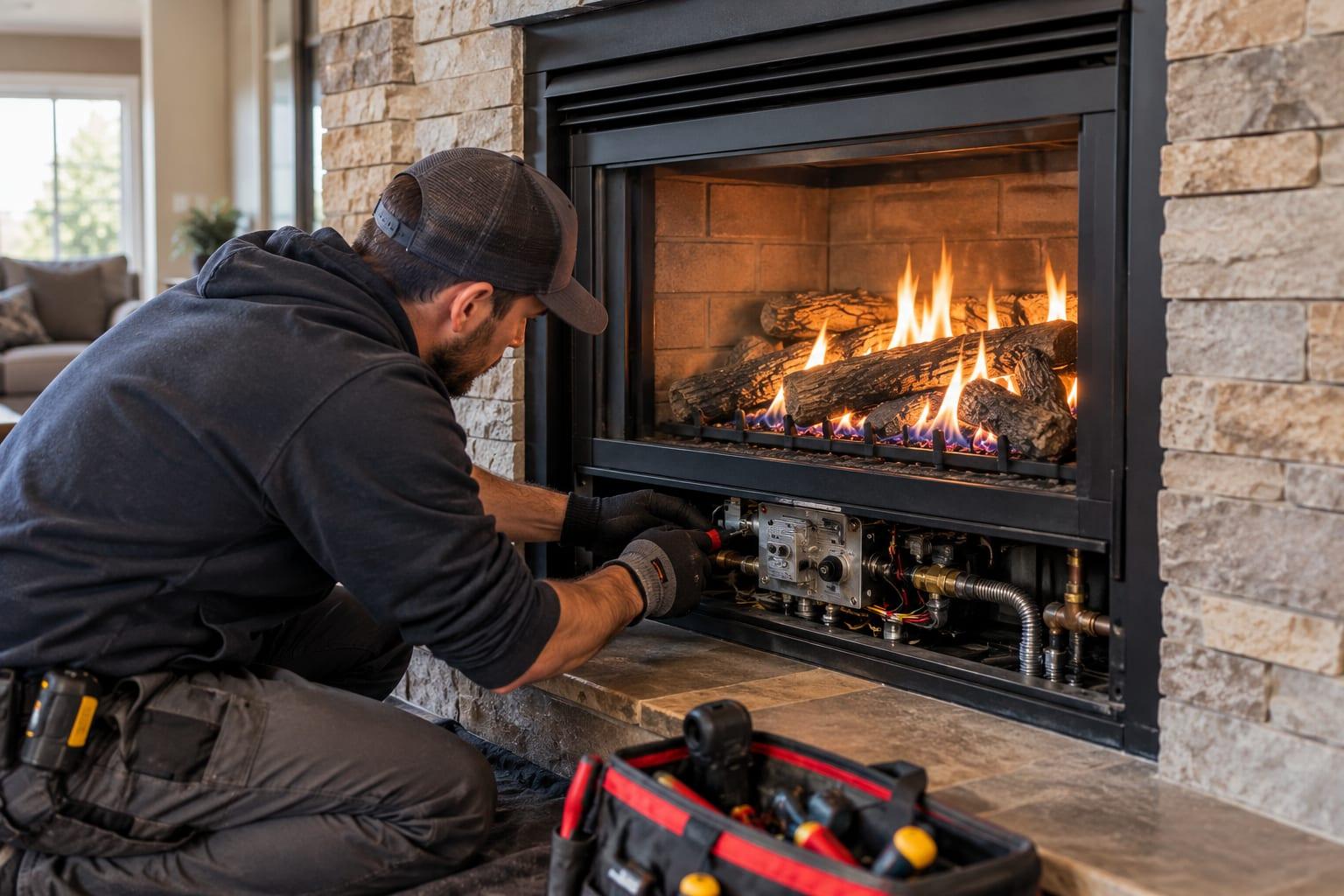
Gas fireplace installation means fitting a gas-burning fireplace or insert and venting its combustion gases safely outdoors. The unit is then connected to a gas supply and checked to confirm it lights and burns correctly. It's a bigger job than adding decorative logs, because the unit, the vent and the gas connection all have to match.
The job covers gas units only. If you're weighing a wood-burning or other non-gas unit instead, look at fireplace installation for other fuel types.
When a new gas fireplace makes sense
- You rarely use your wood-burning fireplace because hauling wood, cleaning out ash and dealing with smoke isn't worth it.
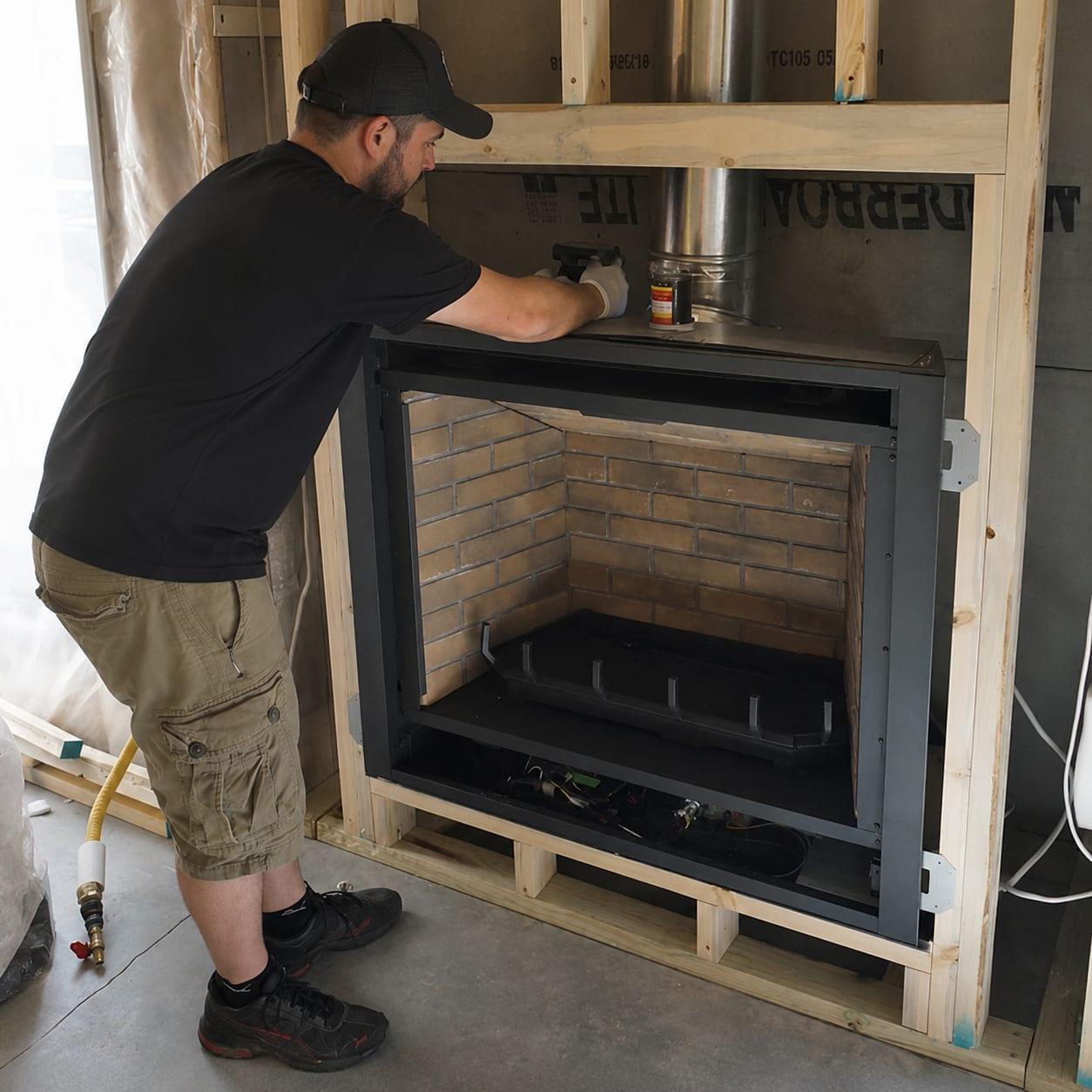
- A room has no fireplace and you want one. Many gas units vent through a wall and don't need a masonry chimney.
- Your existing gas fireplace is old and worn, and replacing it makes more sense than keeping it going.
- You want steady, controllable heat in one room, set with a remote or wall switch rather than built and tended by hand.
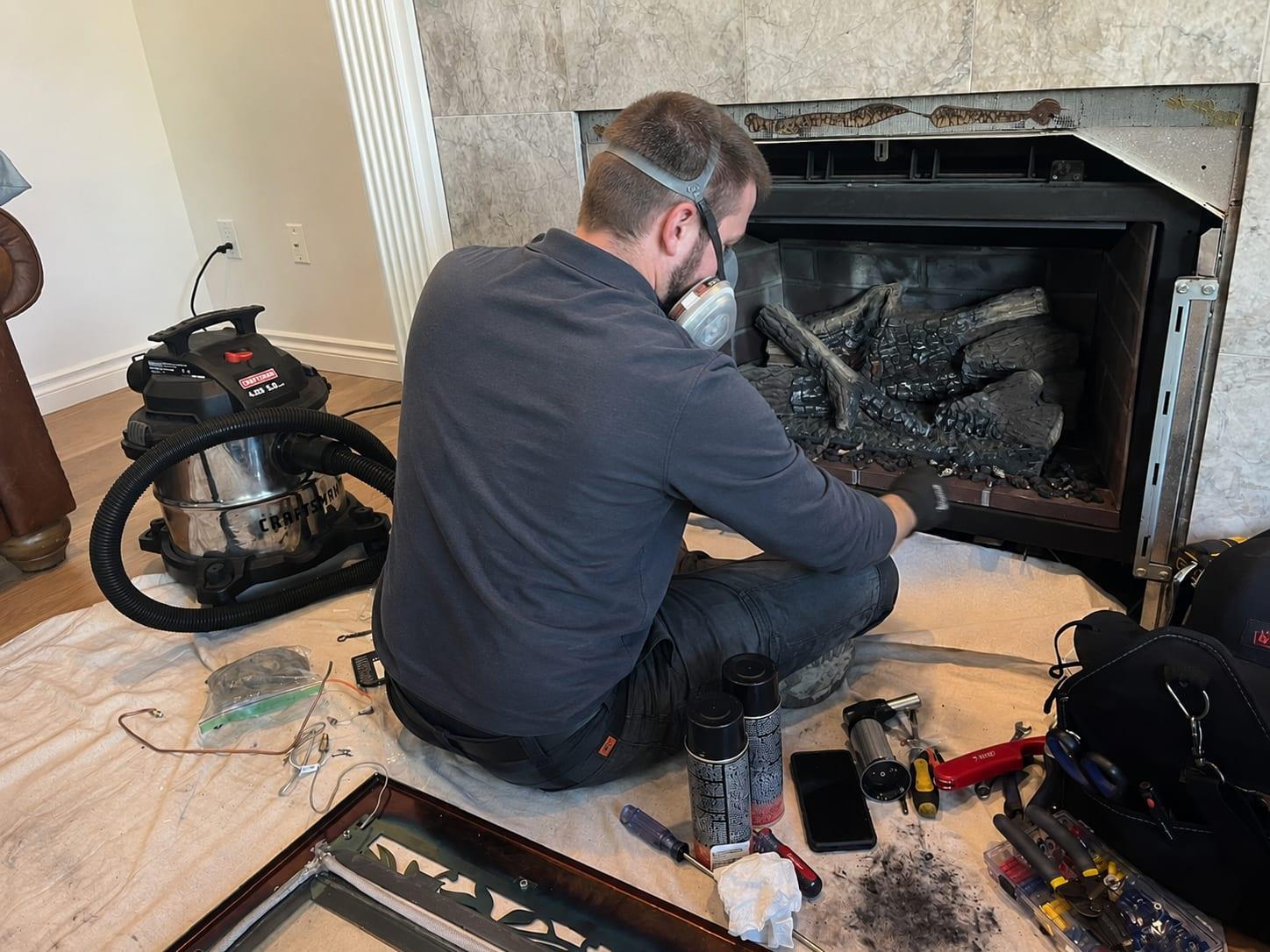
If your current gas fireplace mostly works but won't light, shuts off or burns with a poor flame, repairing the gas fireplace you already have is usually the right first step.
If you only want a gas flame in an existing open fireplace, a gas log set for your current firebox may be all you need.
Gas insert or built-in gas fireplace
| Feature | Gas insert | Built-in gas fireplace |
|---|---|---|
| Where it goes | Inside an existing masonry or factory-built firebox | In a new framed opening, or replacing an old factory-built unit |
| Venting | Usually through a liner run up the existing chimney | Its own vent pipe out through an outside wall or the roof |
| Best for | Turning an underused wood fireplace into an easy gas fire | Adding a fireplace where there isn't one |
| Work involved | Checking the chimney and firebox, fitting the liner and connecting the gas | Framing, venting, gas supply and finishing around the unit |
Where it goes
- Gas insert
- Inside an existing masonry or factory-built firebox
- Built-in gas fireplace
- In a new framed opening, or replacing an old factory-built unit
Venting
- Gas insert
- Usually through a liner run up the existing chimney
- Built-in gas fireplace
- Its own vent pipe out through an outside wall or the roof
Best for
- Gas insert
- Turning an underused wood fireplace into an easy gas fire
- Built-in gas fireplace
- Adding a fireplace where there isn't one
Work involved
- Gas insert
- Checking the chimney and firebox, fitting the liner and connecting the gas
- Built-in gas fireplace
- Framing, venting, gas supply and finishing around the unit
Either way, the vent route and the clearances around the unit follow the manufacturer's installation instructions for that specific model. The location you pick also depends on where a vent can actually exit the house.
How the installation works, step by step
From first look to first fire
Look at the space
We check the room and what's there now: any existing fireplace or chimney, the distance to an outside wall or the roof, and where gas comes into the house.
Choose the unit and vent route
The unit is matched to the room and to a vent path that meets the manufacturer's requirements, whether that's a liner in an existing chimney or a new direct vent.
Plan the gas supply
If there's no gas line near the fireplace location, the job includes running a new gas line to the fireplace.
Install the unit and venting
The insert or firebox is set in place, then the vent pipe or liner and its outside termination are installed to the manufacturer's instructions.
Connect, test and light
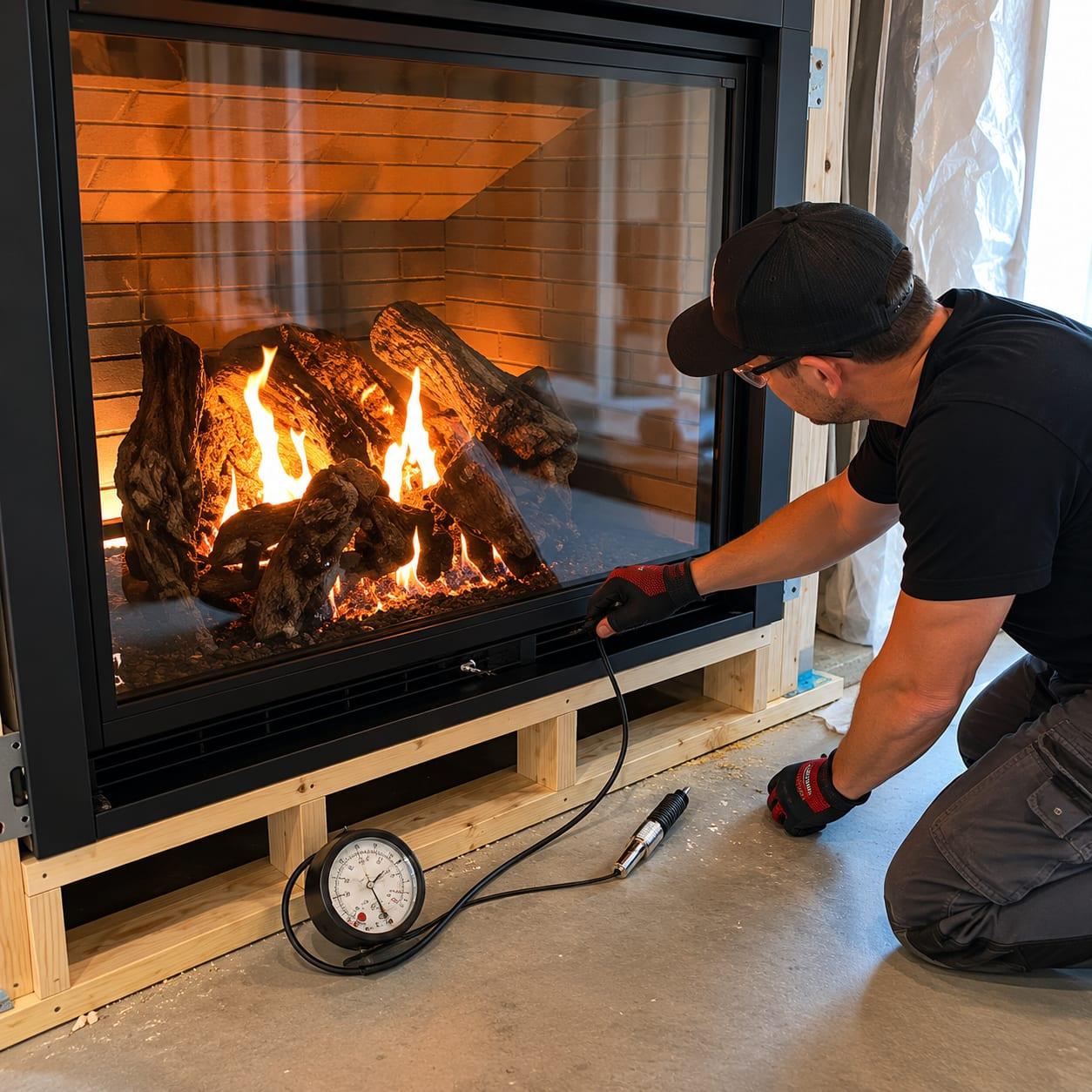
The gas is connected and the connections are checked for leaks. The fireplace is then lit to confirm the ignition, the flame and the controls all work properly.
Show you how to run it
Before we leave, you'll know how to turn it on and off, how to use the remote or switch, and what a normal flame looks like.
Safety and upkeep after installation
If you smell gas
Leave the building right away. Don't use light switches, phones or any flame inside. Once you're outside, call your gas utility or 911.
A gas fireplace still burns fuel, so keep a working carbon monoxide alarm near living areas and bedrooms. The glass front gets hot enough to burn skin, so a safety screen is worth having if there are young children or pets in the house. Keep furniture, decorations and anything flammable back from the unit by the distances in the owner's manual. Don't run the fireplace if the glass is cracked or missing.
A yearly check keeps the burner, ignition, glass seal and vent in good order. Booking routine gas fireplace service is an easy way to stay on top of it.
Booking your gas fireplace installation
Get in touch to request an estimate. A few details make the first conversation more useful: photos of the room and any existing fireplace, whether your home already has gas service, and whether you're leaning toward an insert or a new built-in unit.