On this page
What pellet fireplace installation involves
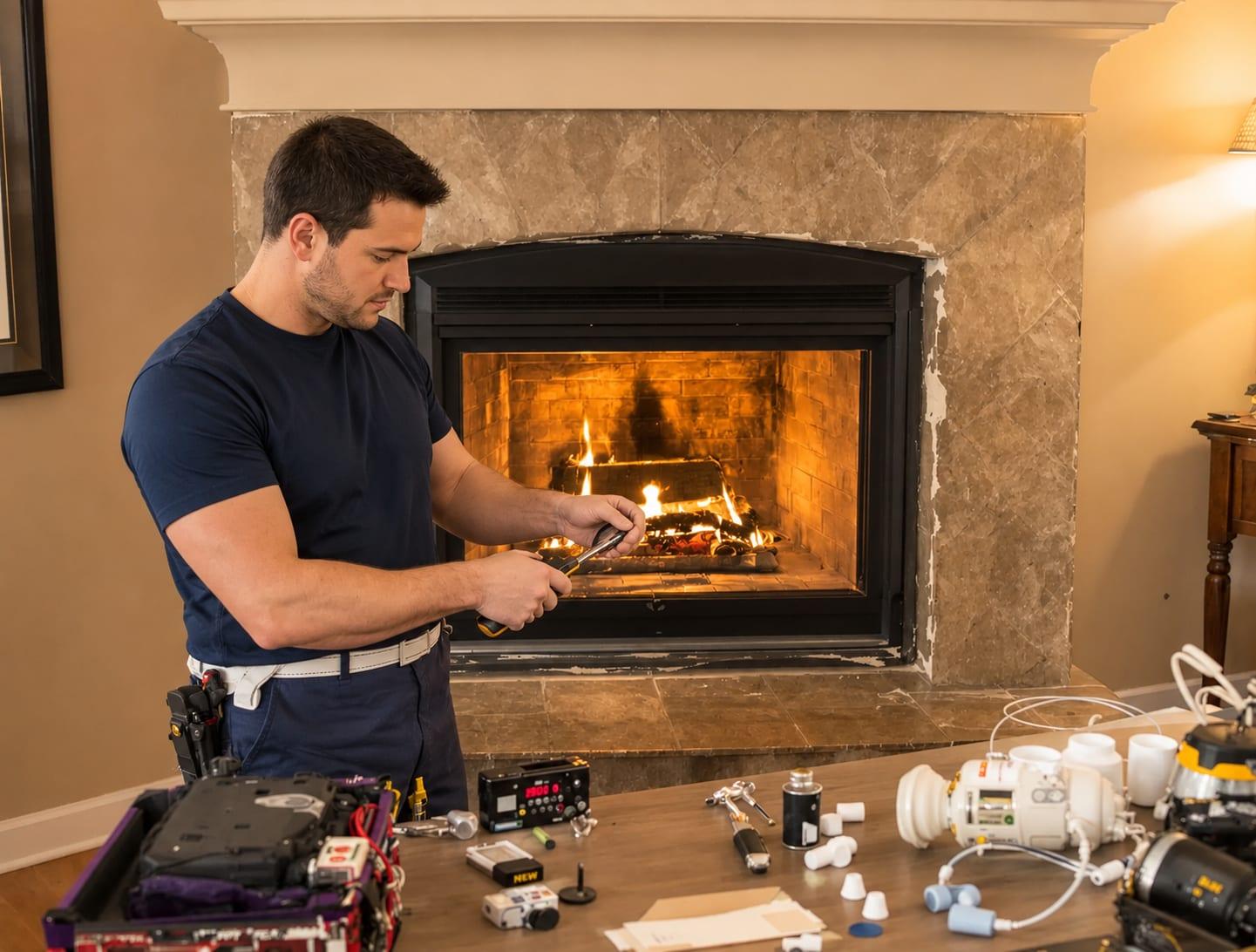
A pellet fireplace comes in two forms. An insert slides into an existing masonry or factory-built fireplace opening. A freestanding pellet stove sits on a hearth pad anywhere a vent can reach the outside. Either way, installation is more than setting the unit in place. The heater needs a vent sized and rated for pellet exhaust, the clearances to combustibles listed by its manufacturer, a noncombustible floor protector, and a nearby electrical outlet. The auger, igniter and fans all run on household power.

If you're still deciding on a heat source, start with our guide to pellet stove vs wood stove. If the question is whether to fill an existing fireplace or add a separate unit, read fireplace insert vs freestanding wood stove.
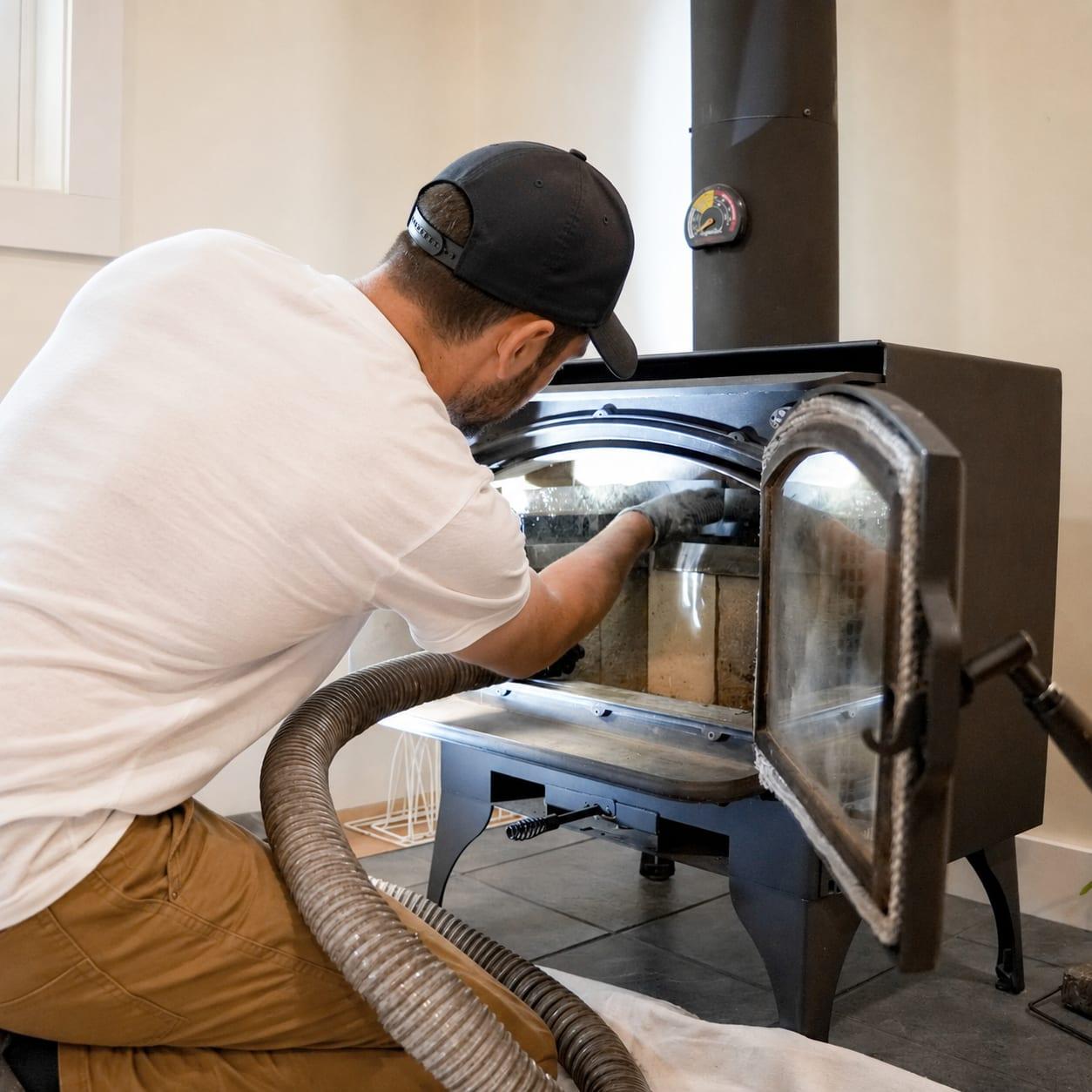
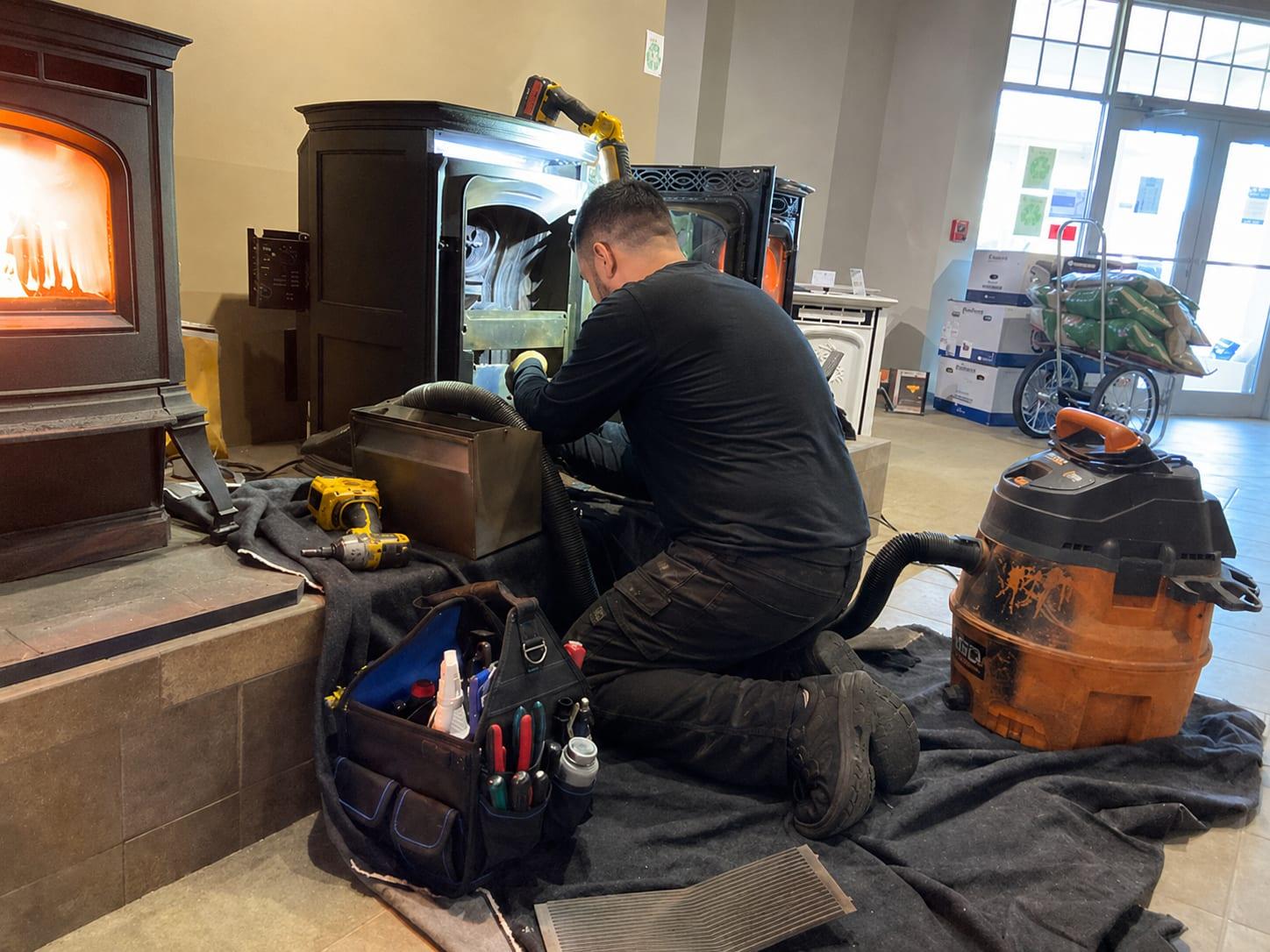
Repair is the other half of this service. Pellet units are mechanical. They have motors, sensors, a control board and moving fuel, so they wear in ways a plain firebox doesn't. We diagnose the cause and fix it rather than swapping parts until something works.
Signs a pellet fireplace is the right fit, or needs repair
When a new installation makes sense
- An open fireplace looks nice but sends most of its heat up the chimney, and the room stays cool.
- You want heat that holds a set temperature without anyone feeding logs every hour.
- You're done splitting, stacking and storing cordwood but have dry space for bagged pellets.
- An older pellet unit keeps breaking down and replacing it makes more sense than another round of repairs.
- You want a heater in a room with no chimney. Many pellet units can vent out through a side wall, depending on the model and the room layout.
When the unit you have needs repair
| What you notice | What usually causes it |
|---|---|
| Won't ignite | Failed igniter, ash-packed burn pot, blocked combustion air intake |
| Lights, then shuts down | Dirty vent or exhaust path, faulty pressure or vacuum switch, sensor or control board fault |
| Pellets stop feeding | Auger jammed with fines or swollen pellets, worn auger motor, hopper bridging |
| Smoke or smell in the room | Worn door or glass gasket, unsealed vent joint, heavy ash buildup |
| Grinding or rattling noise | Worn fan bearings, debris in the combustion or room blower |
| Lazy, dark flame and hard clinkers | Clogged burn pot air holes, poor airflow, low-quality or damp fuel |
How an installation visit runs
From estimate to first fire
Free estimate and walkthrough
We look at the room, the existing fireplace or wall, where power is available, and where a vent can run to the outside.
Choosing the unit and vent route
We help you pick between an insert and a freestanding stove, size the heat output to the space, and decide between a vertical vent up an existing chimney and a horizontal vent through a wall.
Preparing the space
For an insert, we clean the existing firebox and chimney before anything goes in. For a freestanding stove, we set the floor protector and confirm the clearances the manufacturer lists.
Setting the unit and venting it
We place the heater, install and seal the pellet vent or liner, and connect outside combustion air where the unit calls for it.
First fire and handoff
We run the unit and check ignition, feed rate and draft. Then we show you how to fill the hopper, empty the ash and scrape the burn pot.
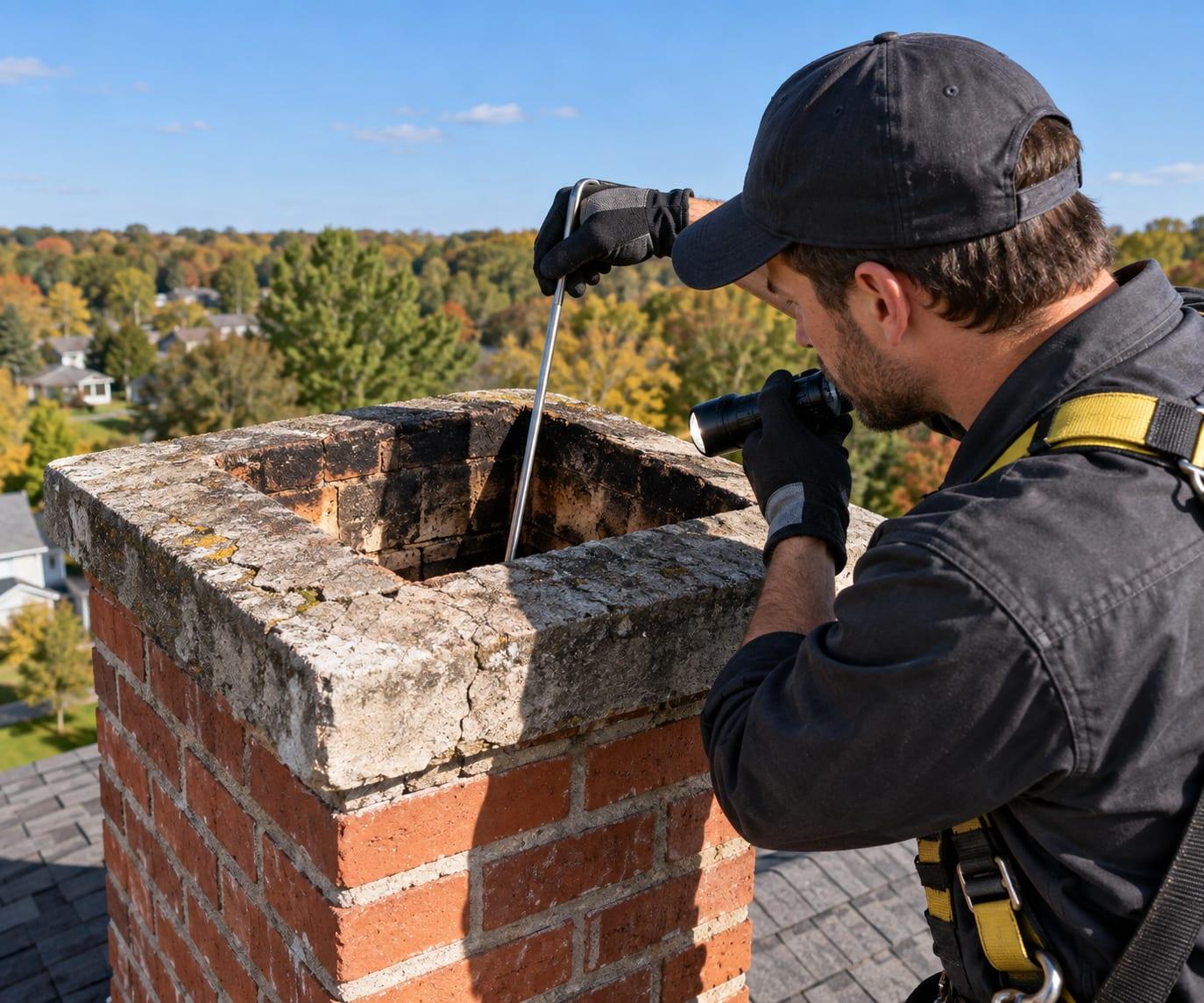
The vent run is often the biggest part of the job, especially when a pellet liner has to go up an existing flue. Our explanation of how pellet stove chimney installation works covers that piece in more detail.
Fuel, vent and parts
Pellets are compressed sawdust, and moisture is their weak point. Damp pellets swell and crumble into fines that jam augers and smother the burn pot, so store bags off the floor in a dry spot. Pellet exhaust is pushed out by a fan under slight pressure, so the vent has to be pipe rated for pellet appliances with sealed joints. Ordinary single-wall stovepipe is not a substitute.
The main working parts we install and service
- Hopper and auger, which store and feed the fuel
- Burn pot and igniter, where the fire starts and burns
- Combustion fan, which pulls air in and pushes exhaust out
- Room blower, which moves heat into the living space
- Control board, thermostat and safety switches
Keeping a pellet fireplace safe and running
Routine care between service visits
- Empty the ash and scrape the burn pot as often as the owner's manual calls for
- Check the door gasket for gaps or flattening
- Keep furniture, bags of fuel and decorations outside the listed clearances
- Test smoke and carbon monoxide alarms
- Book a yearly professional cleaning of the unit and vent, where fine pellet ash collects
Don't keep restarting a unit that shuts down
Repeated restarts can pile unburned pellets in the burn pot. If smoke is entering the room or the unit shuts off again and again, turn it off as the manual directs and call us.
Other fireplace options we install
Pellet heat isn't the answer for every room. We also handle wood-burning and gas units through our fireplace installation service, rebuild and build masonry hearths through brick fireplace repair and installation, and fit style-first units through decorative fireplace installation. Gas fireplace and gas appliance work is offered as well.
Booking pellet fireplace installation or repair
Commercial and property-manager work is offered, so rentals and multi-unit buildings are welcome too. Call or request an estimate, and tell us whether you're adding a new pellet unit or fixing one that already heats your home.