On this page
What a pellet stove chimney installation involves
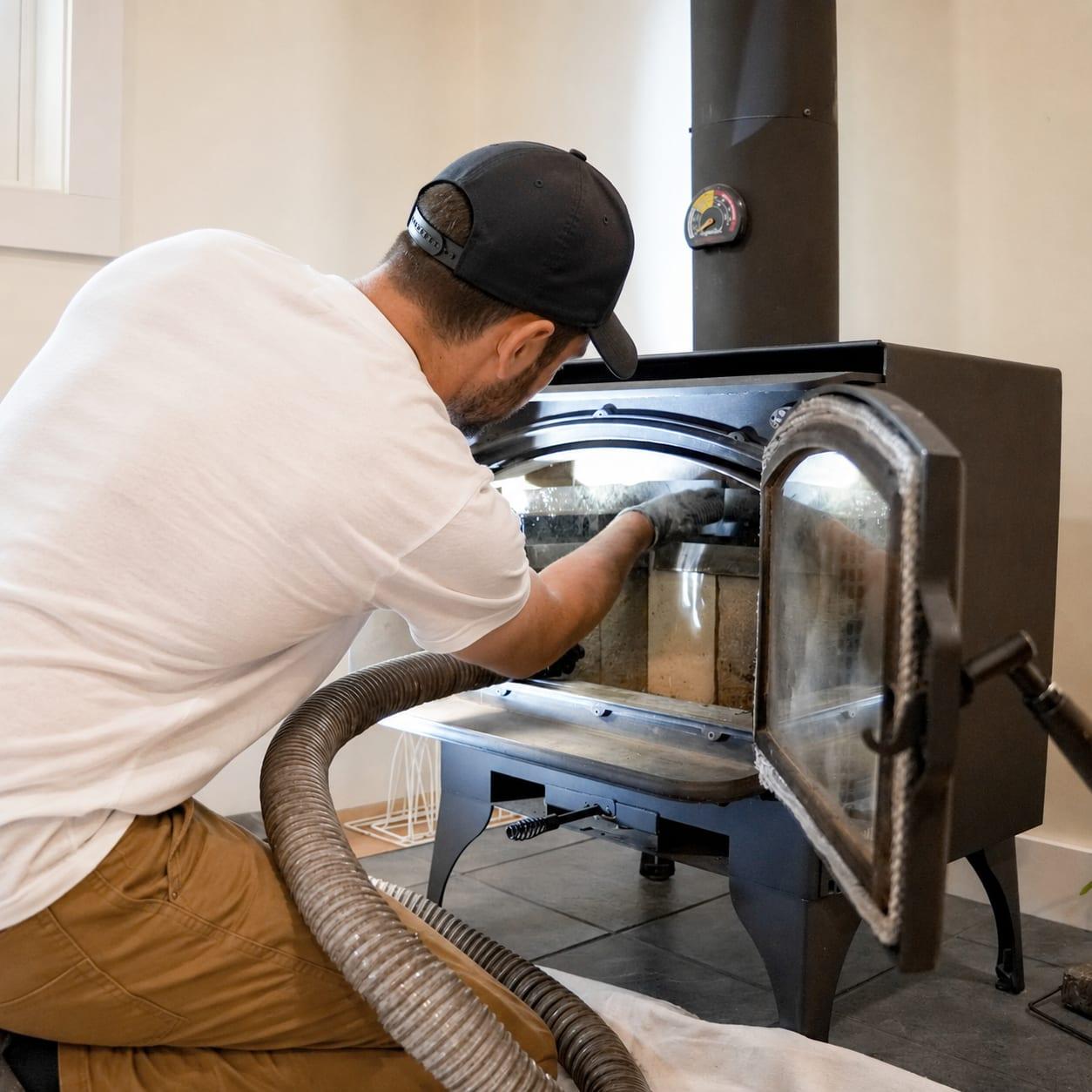
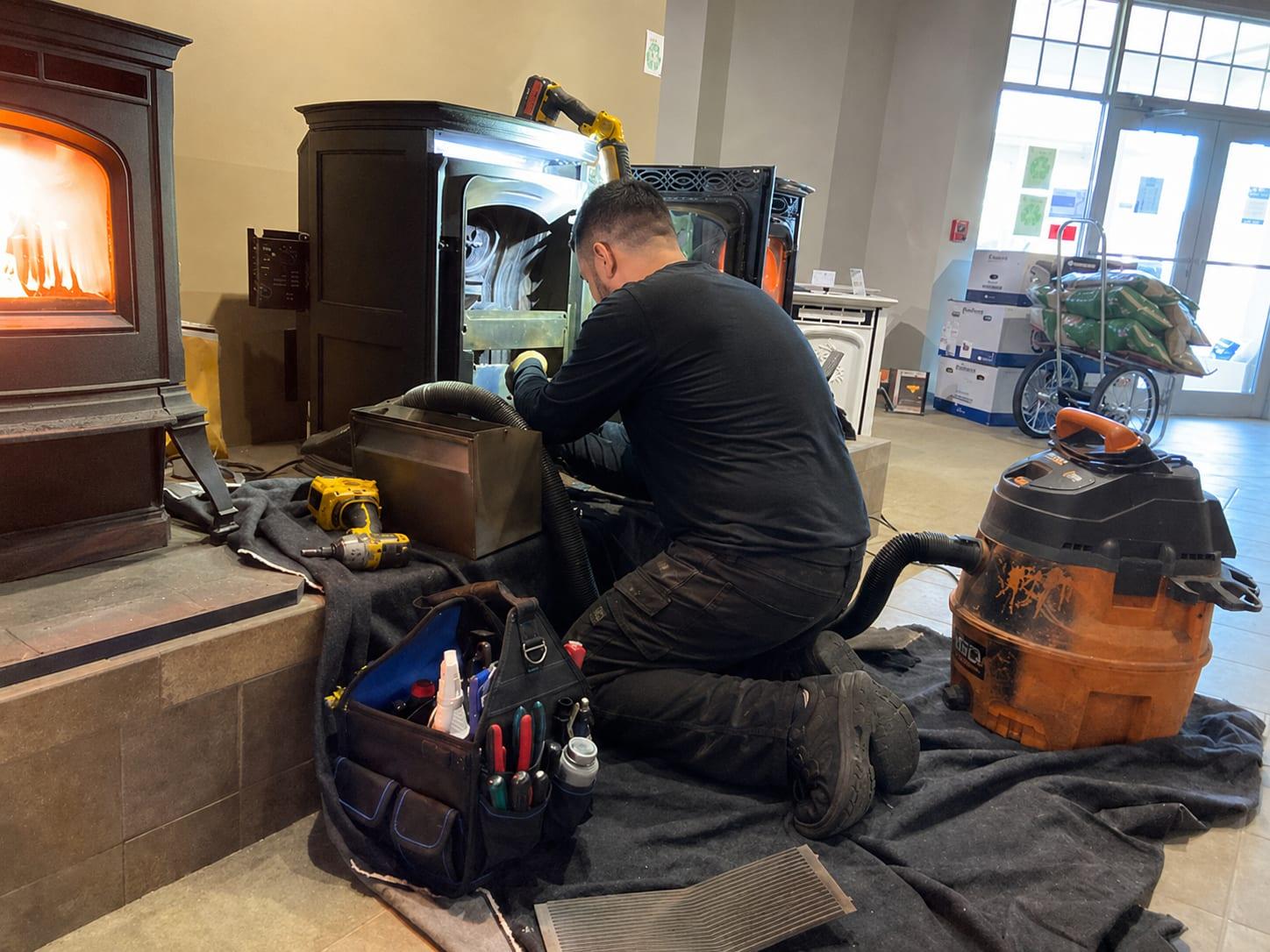
A pellet stove doesn't need a big masonry chimney the way an open wood fire does. It needs a sealed vent built for pellet exhaust. A combustion blower inside the stove pushes the exhaust out under slight pressure, so the vent has to be pellet vent pipe, usually 3- or 4-inch double-wall pipe with locking, sealed joints. Ordinary stovepipe is not built for that pressure.
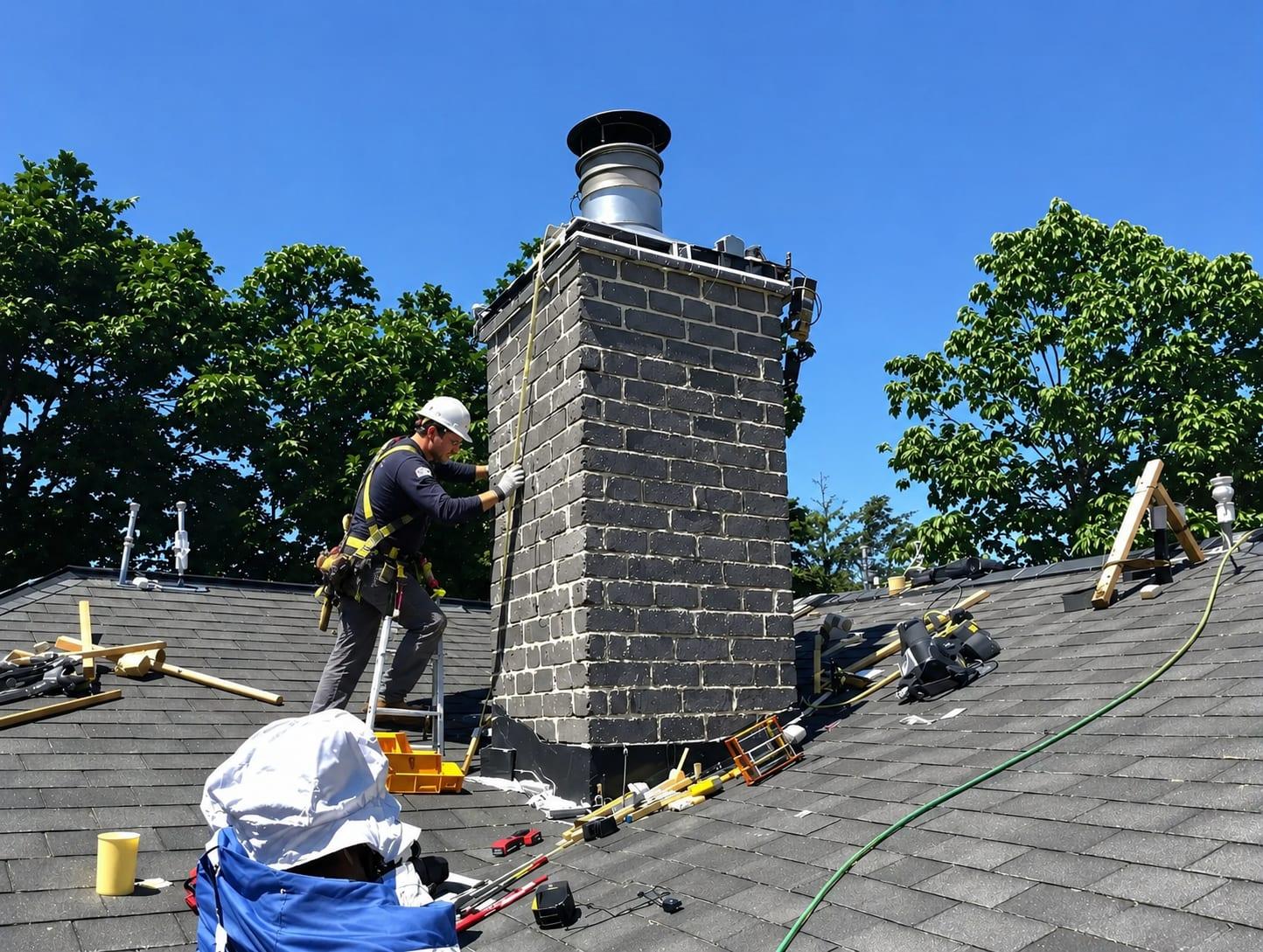
The installation covers choosing the route, fitting the wall or ceiling pass-through, assembling and supporting the pipe, and finishing it with the right cap at a safe distance from windows, doors and walkways. If you haven't settled on the appliance yet, our guide to pellet stove vs wood stove compares fuel, upkeep and day-to-day use. For built-in pellet fireplace units, we also handle pellet fireplace installation and repair.
Signs the home needs a new pellet vent
- You're adding a pellet stove to a room that has no vent or chimney at all.
- You're swapping a wood stove or open fireplace for a pellet unit, and the existing flue is far larger than the pellet stove's outlet. It needs a properly sized liner run inside it.
- The current vent was built with the wrong materials, such as single-wall stovepipe, unsealed joints or flexible ducting that isn't rated for pellet exhaust.
- You smell smoke or exhaust near the stove or the vent joints, or you see soot or ash stains on the wall around the pass-through. A dirty vent can cause this too, and a pellet stove cleaning service visit sometimes fixes it without new pipe.
- Sections of pipe are rusted, dented or pulled apart at a joint, or the outside cap is damaged or missing.
- You're moving the stove to a different wall or room, and the old vent no longer lines up.
How the installation visit works
From first look to test fire
Review the stove and the room
We check the stove model, its outlet size and the venting section of its manual. We also look at clearances to walls and furniture and at the floor protection under the stove.
Choose the route
We decide with you whether the vent goes out through a wall, up through the ceiling and roof, or into an existing chimney with a liner. Each option has trade-offs, which we explain before any work starts.
Fit the pass-through
We install a wall thimble or ceiling support and firestop so the pipe keeps its required clearance from framing and insulation.
Assemble and seal the vent
We lock and seal each section of pellet vent pipe. A cleanout tee goes at the base to collect fly ash, and the run is supported along its length.
Terminate and weatherproof
We fit the cap and seal the wall plate or roof flashing against rain. The termination is placed to meet the stove manufacturer's clearance rules.
Test fire and walkthrough
We run the stove, check every joint for leaks and confirm the exhaust leaves cleanly. Then we show you how to open the cleanout and empty the ash.
Venting routes for a pellet stove
| Route | How it runs | Worth knowing |
|---|---|---|
| Through the wall | Horizontally out an exterior wall, usually with a short vertical rise outside | Often the shortest run. The cap must clear windows, doors and walkways by the distances in the stove's manual. |
| Through the roof | Vertically up through the ceiling, attic and roof | More work, including roof flashing. The vertical rise helps natural draft if the blower stops during a power outage. |
| Inside an existing chimney | A liner sized to the stove's outlet runs up the old flue to the top | Puts an unused chimney back to work. The chimney has to be sound, and the liner must connect tightly to the stove or insert. |
If you're weighing a pellet insert in an existing fireplace against a stove standing on the hearth, fireplace insert vs freestanding wood stove walks through the same layout questions. If you'd rather burn cordwood, how wood stove installation works is a different job with different chimney requirements.
Keeping the vent safe after installation
Pellets burn cleaner than cordwood, but they still leave fine fly ash that builds up in the cleanout tee, elbows and horizontal runs. Stove manuals typically set a cleaning interval for the vent, so follow the one for your model. If the house also has a wood-burning stove, wood stove cleaning keeps that flue in shape too.
Keep a carbon monoxide alarm working
Because a pellet vent runs under pressure, a loose or cracked joint can push exhaust into the room instead of drawing it out. If a carbon monoxide alarm sounds or anyone feels unwell, get everyone outside and call 911. Keep a working carbon monoxide alarm near the stove and outside sleeping areas, and test it regularly.
Booking a pellet vent installation
We work on all major brands of stoves and plan each vent around the model you have. Commercial and property-manager work is offered as well. To get a pellet stove venting safely in your San Jose home, call or request a free estimate.