On this page
What prefab chimney installation involves
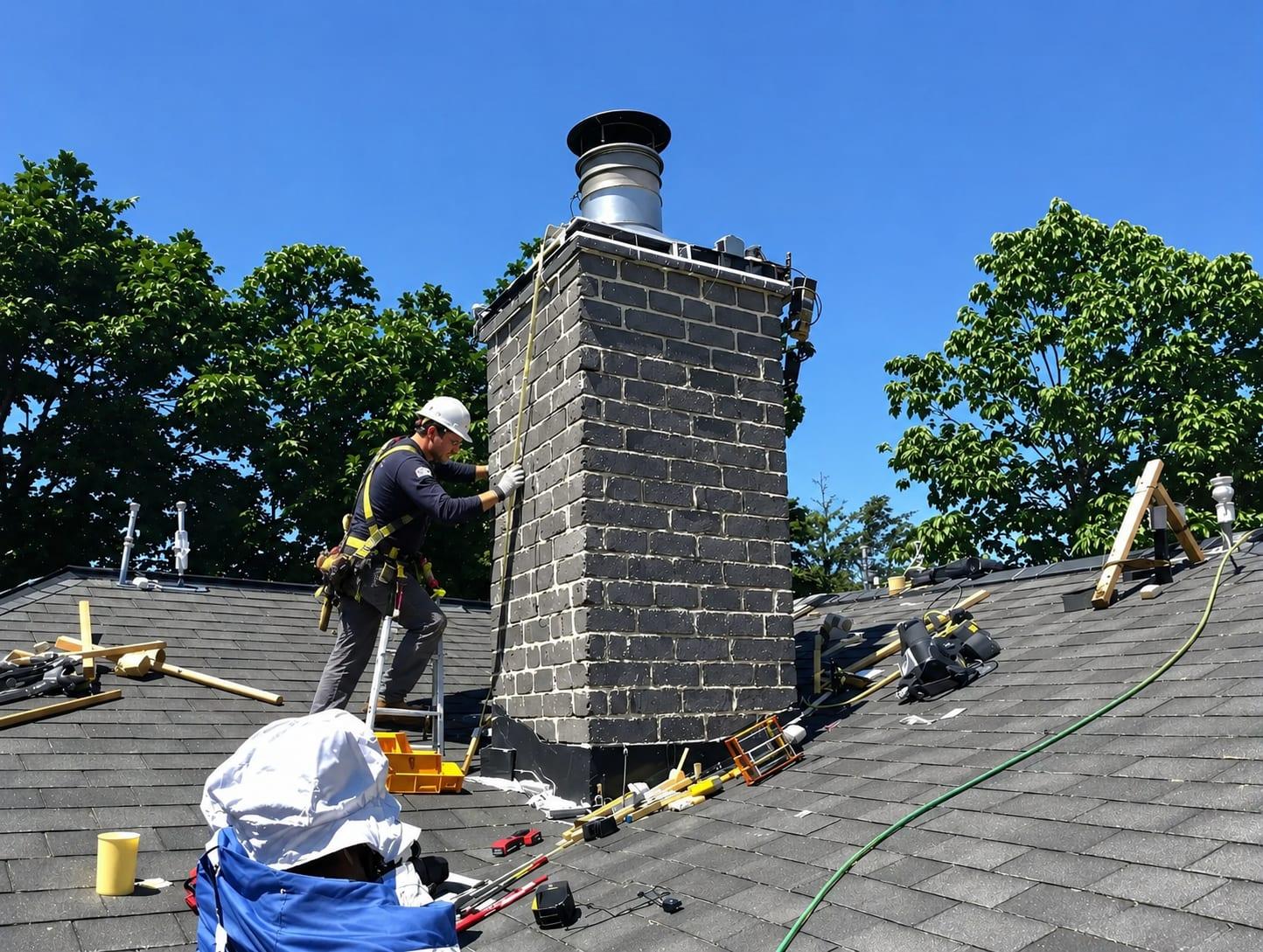
A prefab, or factory-built, chimney is made of metal pipe sections, supports, firestops, roof parts and a cap. These parts are designed to fit together as one system. Nothing is built from brick or block on site. The chimney's safety depends on using the correct parts in the correct order and keeping the clearances the manufacturer specifies. Installation means running that system from the fireplace or stove up through the ceiling and roof, or inside a framed chase, and sealing every point where it passes through the house. For a side-by-side look at how this differs from a brick chimney, read our comparison of masonry and prefab chimneys.

What goes into the system
- Chimney pipe sections: double- or triple-wall pipe made for the type of appliance it serves.
- Ceiling supports and firestop spacers wherever the chimney passes through a ceiling or floor, so framing stays the required distance from the pipe.
- Either roof flashing with a storm collar, or a framed chase with a chase cover on top to keep water out.
- A termination cap at the top, with a screen added where it makes sense. Our spark arrestor installation service covers that add-on.
Signs a home needs a new prefab chimney
- You are adding a factory-built fireplace or a wood stove in a room with no chimney.
- You are replacing a prefab fireplace, and the existing chimney is not made for use with the new unit.
- Pipe sections are rusted, warped or pulling apart at the joints.
- A corroded or failed chase cover has let water run down inside the chase.
- An inspection found damage from an earlier chimney fire. Damaged factory-built pipe gets replaced, not patched.
- A previous installation used missing or mismatched parts from different systems.
Sometimes a new prefab chimney is not the answer. If the chimney itself is sound and only the flue needs a new lining, a stainless steel liner put in may be the right fix instead of a whole new chimney. At the estimate, we tell you which situation you have.
Stop using the fireplace first
Stop using the fireplace or stove and have it checked if you notice any of these: smoke coming into the room, scorched wood or drywall near the pipe, sections that have shifted or come loose, or a pipe too hot to be near. Our article on signs a chimney needs immediate repair lists more warning signs to watch for.
How the installation visit works
From estimate to first fire
Free estimate and assessment
We look at the fireplace or stove, the label that lists what chimney it requires, the route through the house and the roof. We also check whether any existing pipe can stay or has to come out.
Matching the chimney to the appliance
We specify the pipe, supports and roof parts made for your appliance. We also work out the height the chimney needs above the roof.
Preparing the route
We frame the ceiling and roof openings to hold the required clearances and set firestops at each level the chimney passes through.
Assembling the chimney
We lock the pipe sections together, support and align them, and connect them to the appliance.
Sealing the roof or chase
We install flashing and a storm collar on the roof, or build out the chase and top it with a chase cover. Then we put the cap on, the same work as our chimney cap installation.
Final check and walk-through
We check every joint, clearance and connection and confirm the chimney draws properly. Then we show you what to watch for as you start using it.
Keeping a prefab chimney safe after installation
Factory-built chimneys stay safe when they stay as designed. Do not swap in parts from another manufacturer's system. Do not pack insulation around the pipe or box it in tighter than its clearances allow. Keep the cap clear of debris and nests. Wood-burning systems build up creosote like any other chimney, so plan on regular sweeping and an annual inspection, which is when early rust, loose joints or a leaking chase cover tend to get caught.
Booking prefab chimney installation
Estimates are free, and the first visit is where we confirm whether a new prefab chimney, a liner or a repair fits your home. We work on all major brands. Gas fireplace and gas appliance work is offered, and so is commercial and property-manager work across Greater San Jose. Call or request an estimate to get started.