On this page
What fireplace cleaning covers
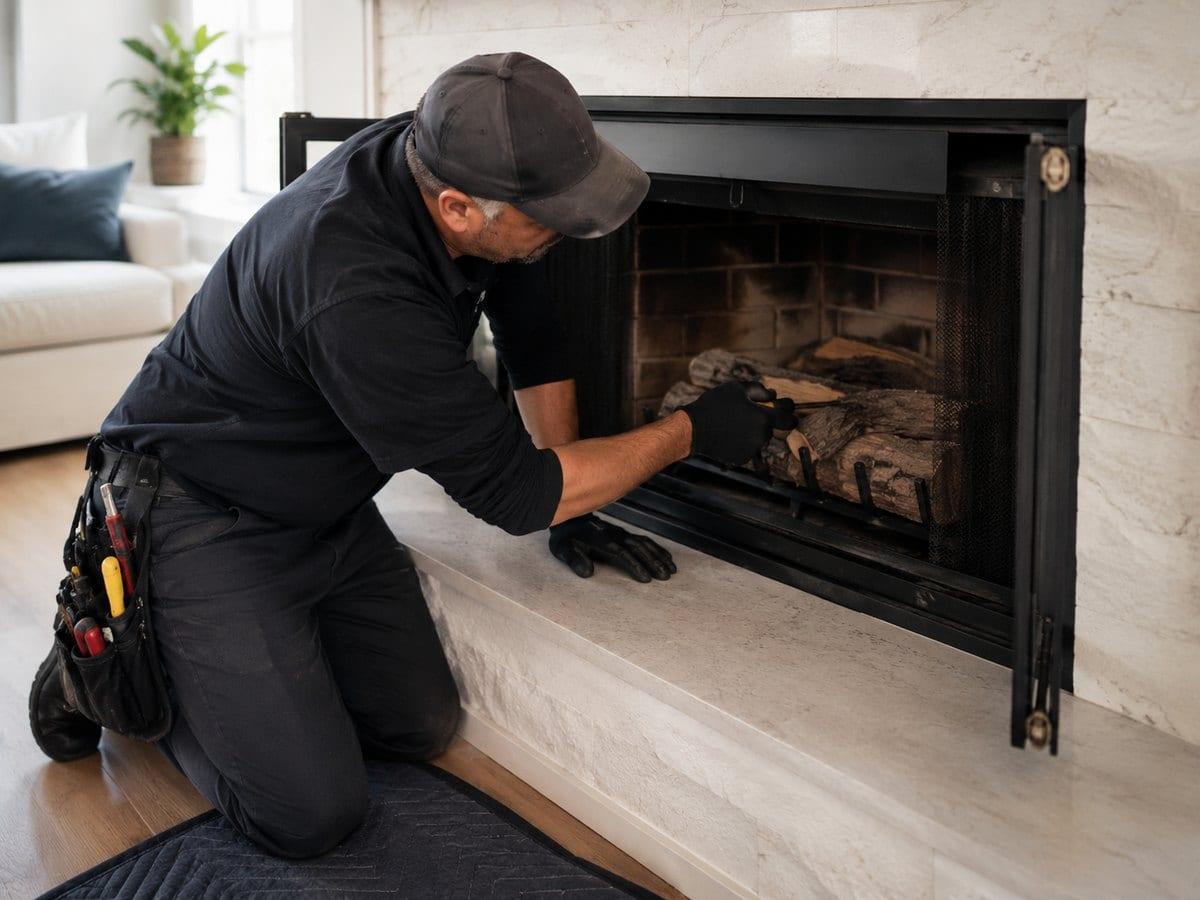
Fireplace cleaning focuses on the firebox and the areas right around it. That means clearing out ash and debris, brushing soot off the back and side walls, cleaning the grate and andirons, and removing creosote from the damper and the smoke shelf just above it. Creosote is the tar-like residue that wood smoke leaves behind. It builds up in layers and it burns, so it matters more than the soot you can see.
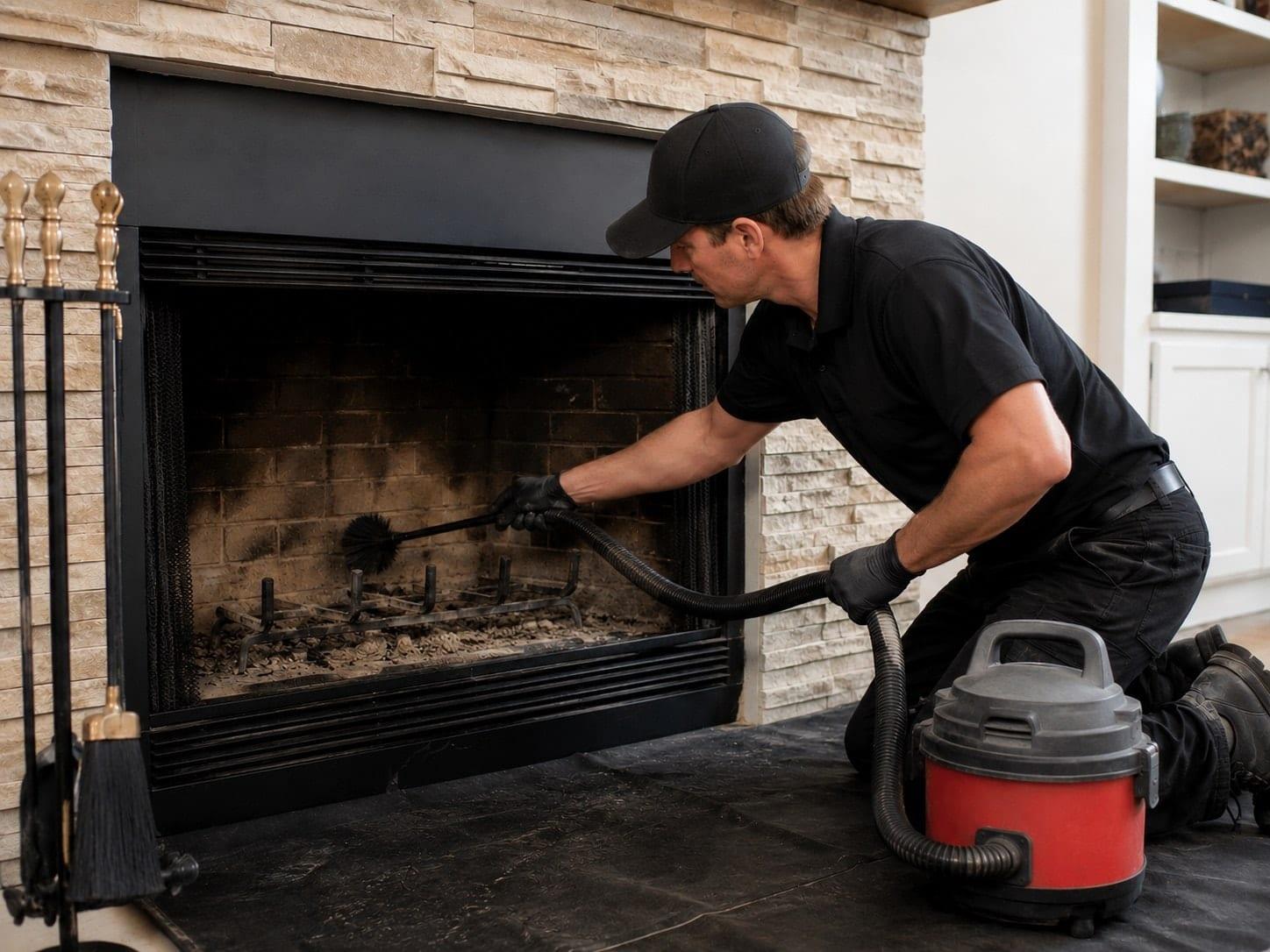
Fireplace cleaning is not the same job as sweeping the full length of the chimney flue. If the flue itself is lined with heavy buildup, that calls for a chimney sweep, and we'll tell you if we see that during the visit.
Signs your fireplace needs cleaning
Common reasons homeowners call
- A smoky or campfire smell in the room, especially on warm or humid days
- Soot streaks on the firebox walls or above the fireplace opening
- Shiny black, flaky or crusty deposits around the damper
- Ash deep enough that it reaches the grate or spills past the hearth
- Smoke drifting into the room instead of going up
- A damper that sticks or grinds when you open and close it
- Bits of debris falling into the firebox
- Glass doors that stay dark or hazy after you wipe them
A heavy, glazed creosote coating is the sign to take most seriously. It is harder to remove than loose soot, and it is the kind of buildup that can catch fire.
What happens during a fireplace cleaning visit
The visit, step by step
Protect the room
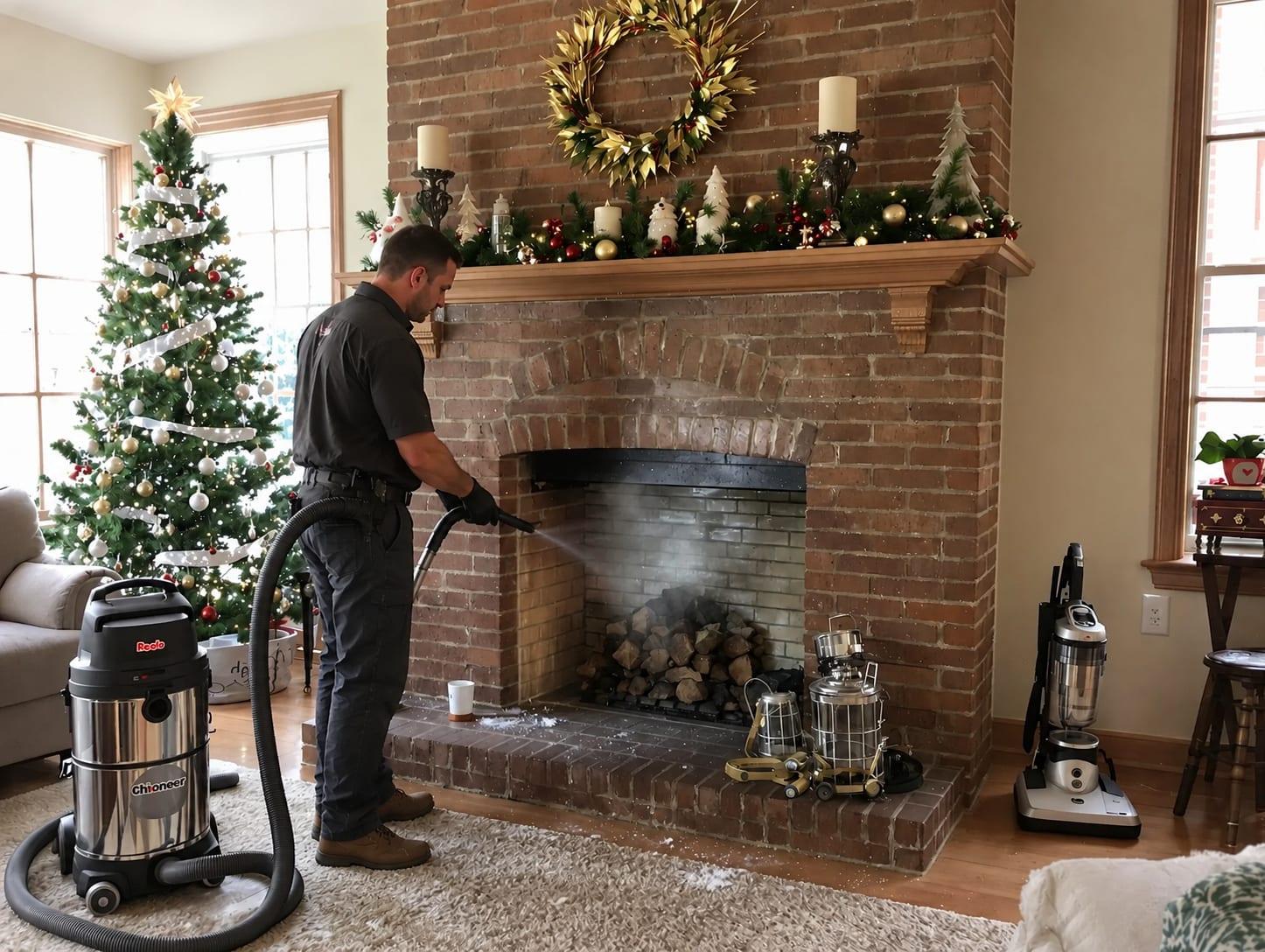
The hearth and the floor in front of it are covered so soot and ash stay contained.
Remove ash and debris
Cold ash, charred wood and loose debris come out of the firebox and off the grate.
Brush and vacuum the firebox
The back, side walls and floor of the firebox are brushed and vacuumed to lift soot.
Clean the damper and smoke shelf
Creosote and debris are cleared from the damper and the shelf area just above it, where buildup tends to collect.
Clean doors and screens
Glass doors, screens and the grate are cleaned so the fireplace looks and works the way it should.
Look over the firebox
With the soot gone, cracks, gaps and worn spots are easier to see. You'll hear about anything that needs attention beyond cleaning.
Wood-burning, gas, inserts and stoves
| Type | What builds up | Main cleaning focus |
|---|---|---|
| Open wood-burning fireplace | Ash, soot, creosote | Firebox, grate, damper and smoke shelf |
| Gas fireplace | Dust, lint, soot film on glass and logs | Burner area, logs, glass and vents |
| Wood-burning insert | Ash, soot, creosote inside the unit | Handled as a separate job: cleaning a fireplace insert |
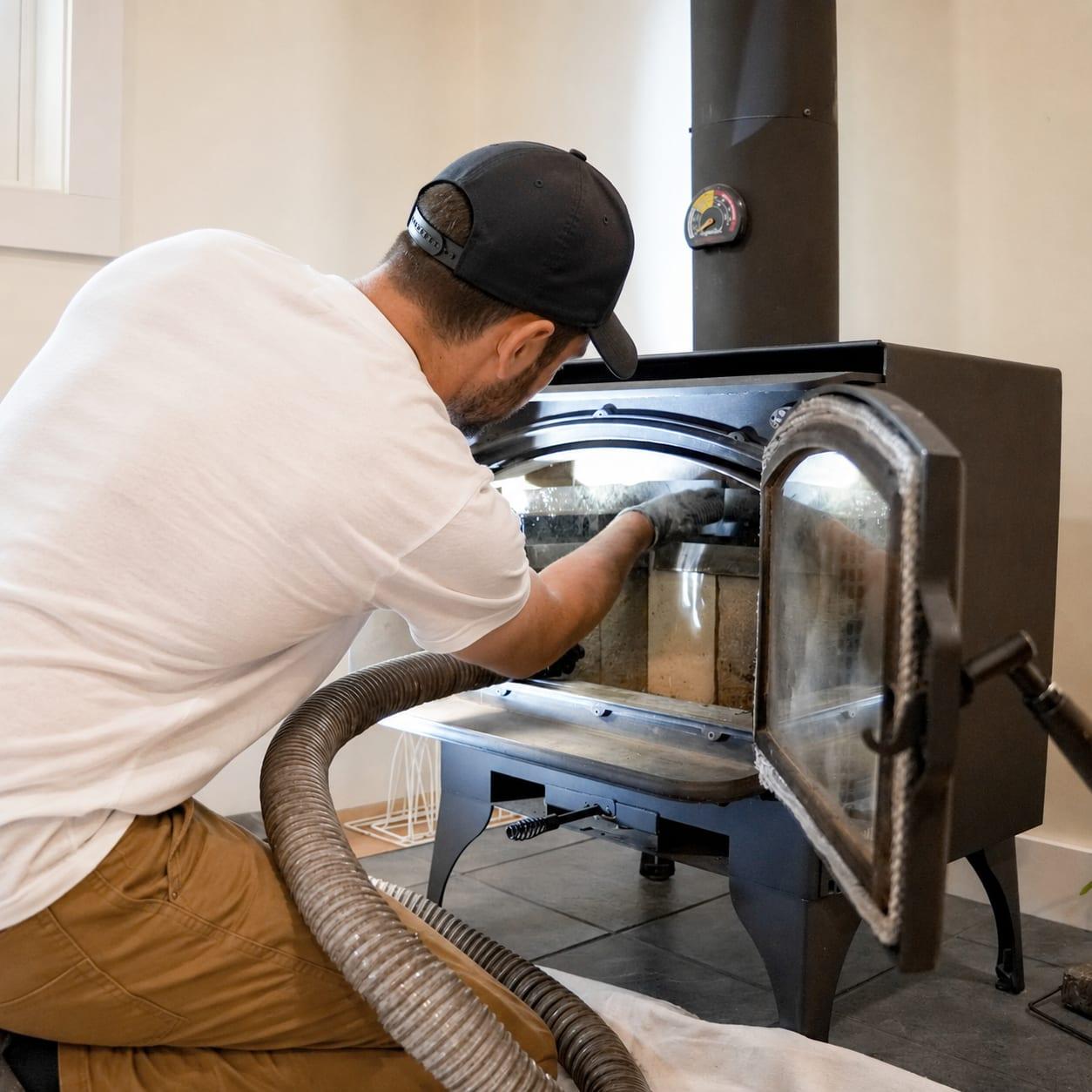
| Freestanding wood stove | Ash, soot, creosote in the stove and pipe | Handled as a separate job: wood stove cleaning and pipe care |
Gas fireplace cleaning
Gas fireplaces don't produce creosote the way wood does, but they still collect dust, lint and pet hair around the burner and logs. Over time the glass front can develop a white or gray film, and logs that have shifted out of position can cause sooting. Cleaning covers the logs, the burner area, the glass and the vents so the flame looks right and air moves freely.
Flames that burn yellow and lazy, heavy soot on the logs, or a pilot that won't stay lit usually point to an adjustment or part problem rather than dirt alone. Those are handled through our gas fireplace service and maintenance or, when a part has failed, gas fireplace repair.
When cleaning turns up something else
A clean firebox often shows problems the soot was hiding. Cracked or missing firebrick and gaps in the mortar joints are a job for firebox repair. Crumbling or rough surfaces above the damper may need repair to the smoke chamber. If you're done hauling wood and want a gas fire instead, a fireplace conversion is the job to ask about.
Safety and upkeep between cleanings
Ashes stay hot longer than they look
Ash can hold live embers for days. Scoop it into a metal container with a tight lid and set it outside, away from the house and anything that burns.
- Burn dry, seasoned firewood; wet wood makes more smoke and more creosote.
- Keep the damper fully open while a fire is burning and until it is completely out.
- Keep rugs, furniture and decorations clear of the hearth.
- Test your smoke and carbon monoxide alarms regularly, whether you burn wood or gas.
- On a gas fireplace, let the glass cool fully before touching or cleaning it, and use a cleaner meant for fireplace glass.
Booking a fireplace cleaning
Get in touch and tell us what kind of fireplace you have, how often you use it and what you've noticed, whether that's a smell, smoke in the room or buildup you can see. That helps us plan the visit. When you're ready, request an estimate.