On this page
What wood fireplace installation involves
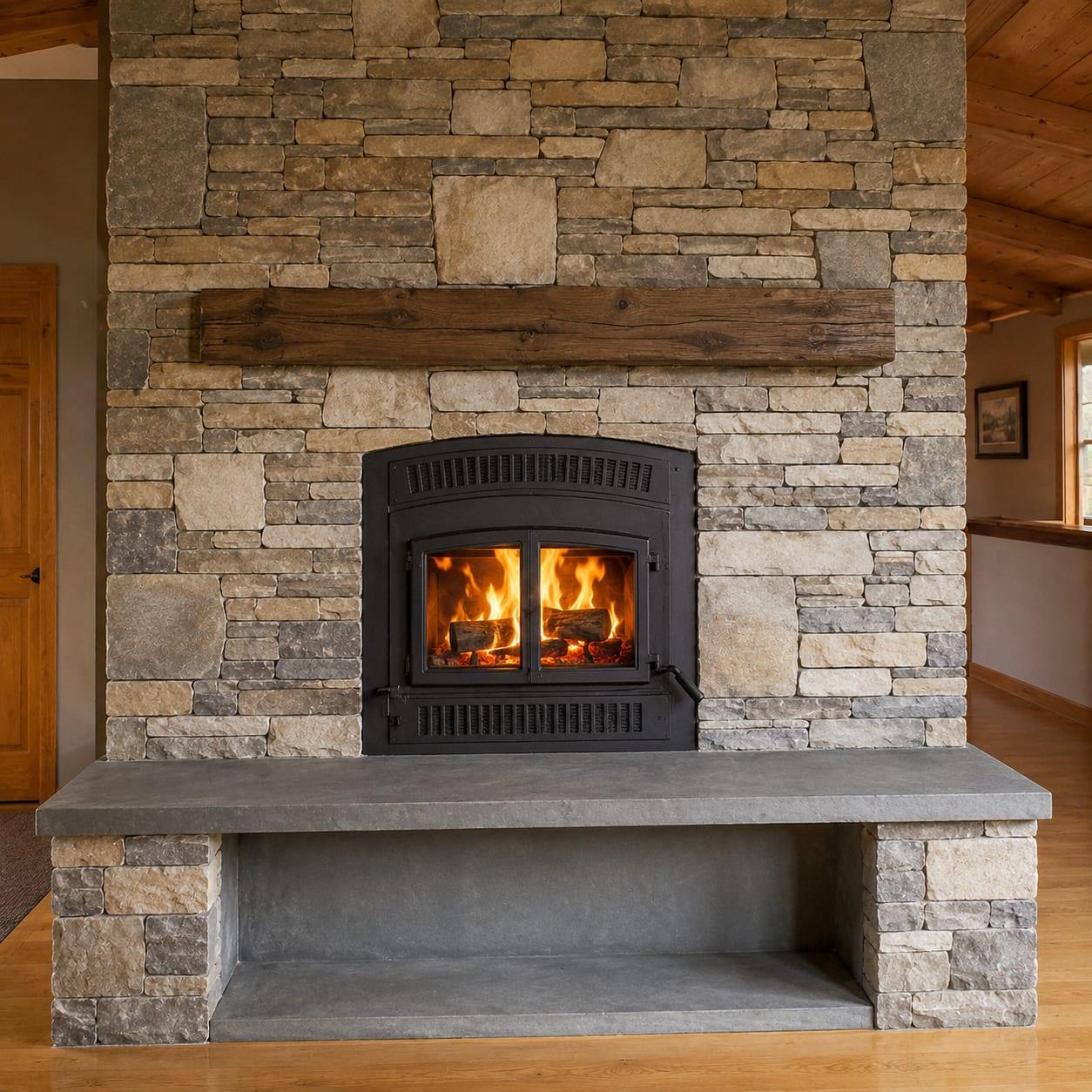
Installing a wood-burning fireplace means three things. A firebox is built or set in place. A non-combustible hearth goes in front of it. The firebox is then connected to a chimney or flue that carries smoke out of the house. The fireplace you see is only part of the job. How well it drafts and how safely it runs depend on the venting, the clearances around it and the materials next to it.

There are two main ways to do it. A masonry fireplace is built on site from firebrick and brick or block, with a smoke chamber and masonry chimney above it. A factory-built (prefab) wood fireplace is a manufactured unit installed with the chimney system it was tested with, usually inside a framed chase. If a traditional build is what you have in mind, our brick fireplace building and repair work covers the masonry side in more detail.
| Feature | Masonry | Factory-built |
|---|---|---|
| How it's made | Built in place from firebrick, brick or block | Manufactured firebox set into framing |
| Venting | Masonry chimney, often with a flue liner | Listed metal chimney system made for that unit |
| Weight | Heavy; needs a footing that can carry it | Much lighter; usually framed in on the existing floor |
| Clearances | Set by how the masonry is built | Set by the manufacturer's installation instructions |
| Look | Custom size, shape and brick or stone finish | Choice of surrounds, facings and doors around a fixed unit |
How it's made
- Masonry
- Built in place from firebrick, brick or block
- Factory-built
- Manufactured firebox set into framing
Venting
- Masonry
- Masonry chimney, often with a flue liner
- Factory-built
- Listed metal chimney system made for that unit
Weight
- Masonry
- Heavy; needs a footing that can carry it
- Factory-built
- Much lighter; usually framed in on the existing floor
Clearances
- Masonry
- Set by how the masonry is built
- Factory-built
- Set by the manufacturer's installation instructions
Look
- Masonry
- Custom size, shape and brick or stone finish
- Factory-built
- Choice of surrounds, facings and doors around a fixed unit
Signs a new wood fireplace is the right project
- The house has no fireplace, and you want a real wood fire rather than a gas flame or an electric unit.
- The existing wood-burning fireplace has cracked, crumbling or badly deteriorated parts, and fixing it no longer makes sense. If the damage is limited, repairing the wood-burning fireplace you already have is often the better first step.
- A factory-built fireplace is worn out: a warped or cracked firebox, damaged refractory panels, or rusted and failing chimney sections.
- A remodel is moving walls or changing a room, and the fireplace needs to go somewhere new or be replaced along with it.
- An old fireplace was closed off years ago, and you want a working fire back in that spot.
An open wood fireplace is mostly about atmosphere and occasional warmth. If steady heat matters more, an insert or a freestanding stove may suit you better, and our breakdown of fireplace inserts vs freestanding wood stoves lays out the differences. If you're still choosing a fuel, compare gas and wood-burning fireplaces or read how pellet stoves stack up against wood stoves before you commit.
How the installation works, step by step
From estimate to first fire
Free estimate and site check
We look at where the fireplace will go: the floor structure, nearby walls, the roofline above, and any existing chimney that might be reused.
Choosing the fireplace and venting
We go over masonry versus factory-built, the size and style you want, and the chimney or flue system it needs.
Preparing the space
This covers framing or a chase where needed, the hearth base, and openings through the ceiling and roof for the chimney.
Setting the fireplace and chimney
The firebox is built or set in place. Then the chimney sections or flue liner go in, topped with a cap and spark arrestor.
Finishing
The hearth extension, surround and any doors or screen are completed so the fireplace looks finished and the combustible materials stay at a safe distance.
Check and walkthrough
We check the damper and draft, then show you how to build the first fires and what upkeep the fireplace will need.
The parts that make up a wood fireplace
- Firebox – the chamber where the fire burns, lined with firebrick or refractory panels.
- Hearth and hearth extension – the non-combustible floor inside and in front of the opening that catches sparks and embers.
- Damper – the plate that closes off the flue when the fireplace isn't in use.
- Smoke chamber – in masonry fireplaces, the tapered space that guides smoke from the firebox into the flue.
- Flue or chimney system – a masonry chimney with a liner, or the listed metal chimney that comes with a factory-built unit.
- Chimney cap and spark arrestor – these keep out rain and animals and help stop embers from leaving the top of the chimney.
- Surround, mantel and doors – the finish materials, which have to respect the clearances to combustibles.
Safety and upkeep after installation
Clearances aren't optional
Mantels, trim, framing and flooring near a wood fireplace must sit at the distances the design or the manufacturer's instructions call for. Moving a mantel lower or adding wood trim later can create a fire risk.
Burn only dry, seasoned firewood. Never burn trash, painted lumber or treated wood, which leave heavy creosote and fumes. Keep working smoke and carbon monoxide alarms in the home. Plan on regular chimney and fireplace inspections and sweeping once the fireplace is in use, because creosote builds up with every season of fires.
Booking a wood fireplace installation
Request one to talk through where a wood fireplace could go in your home, which type fits, and what the chimney side of the job involves.
We also take on commercial and property-manager work, and we work on all major brands. If you'd rather have a gas unit, gas fireplace and gas appliance work is offered too. You can compare the full range of fireplace installation options for homes in San Jose before you decide.