On this page
What outdoor fireplace installation involves
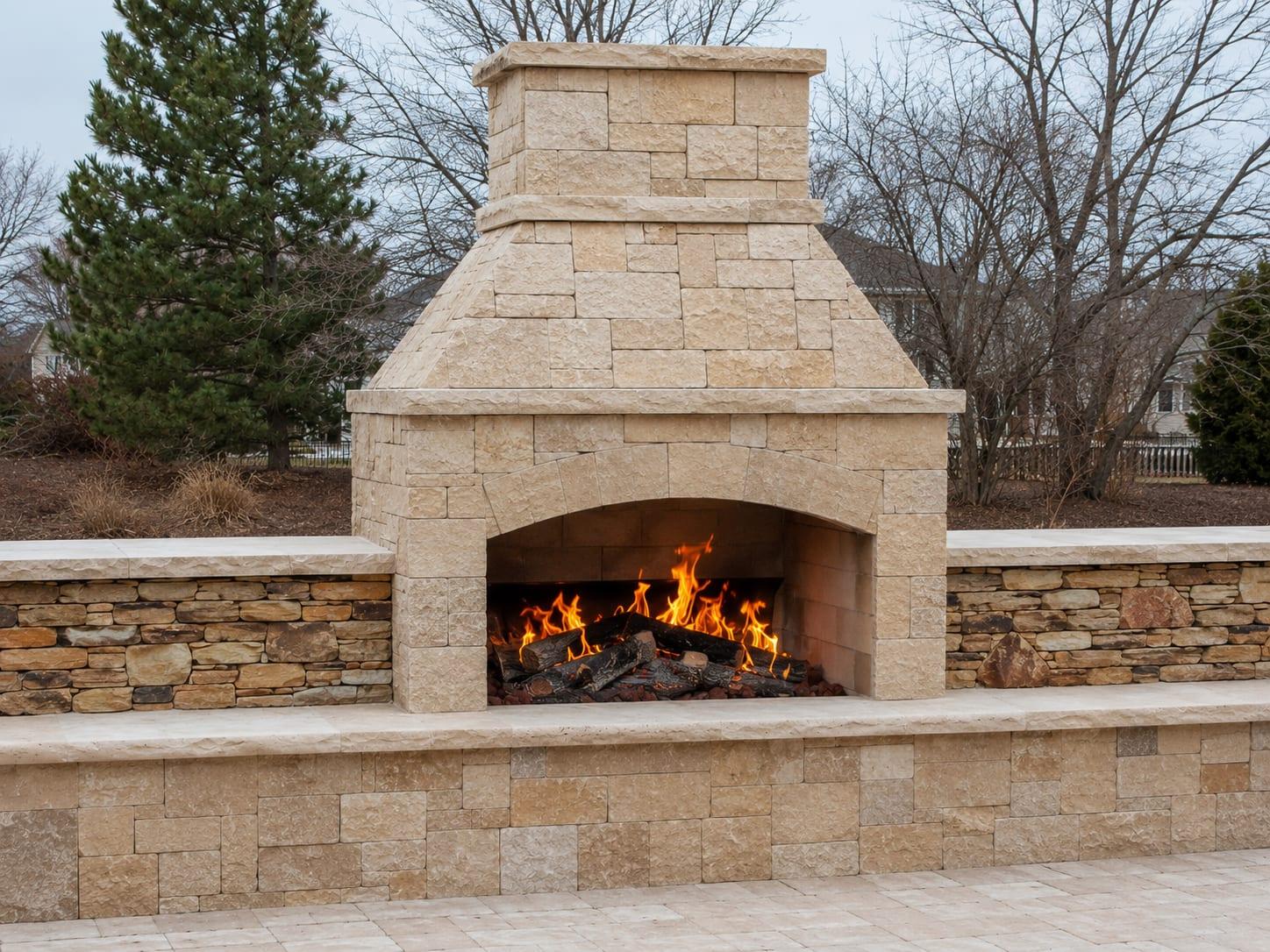
An outdoor fireplace is a built structure, not a portable fire pit. It has a firebox that contains the fire, a chimney or vent that carries smoke or combustion gases up and away from people, and a fuel source: wood, natural gas or propane. Installation means choosing a spot with safe clearances, preparing a solid base, building or setting the firebox and chimney, and, for gas units, running and connecting the fuel line.

The unit can be a masonry build or a prefabricated firebox finished with stone, brick or stucco. If you want a traditional brick look, our brick fireplace repair and installation work covers that construction. If the outdoor unit is meant mainly as a design feature, decorative fireplace installation may also fit what you have in mind.
Signs an outdoor fireplace is the right project
Homeowners usually call about outdoor fireplace installation for one of these reasons:
- You use the patio in the evenings but it gets too cold to stay out long, and a portable heater or fire pit is not doing enough.
- An existing fire pit sends smoke straight into seating areas or toward the house, and you want a chimney to lift it away.
- An old outdoor fireplace is cracked, leaning or no longer drafts, and repair no longer makes sense.
- You want the ambiance of a fire without hauling and storing firewood, so a gas or propane unit appeals.
- You are redoing the yard and want the fireplace planned in from the start rather than added later.
If the fireplace you have in mind is indoors, our fireplace installation service is the better starting point.
Choosing a fuel: wood, gas or propane
| Feature | Wood-burning | Gas or propane |
|---|---|---|
| Feel of the fire | Crackle, smell and real embers | Steady flame at the turn of a valve or switch |
| What it needs | A chimney that drafts well, plus a cap and spark arrestor | A gas line or propane supply, burner and controls |
| Day-to-day work | Hauling wood, clearing ash, regular sweeping | Little cleanup; periodic burner and vent checks |
| Smoke | Produces smoke and sparks | Far less smoke and no flying embers |
Feel of the fire
- Wood-burning
- Crackle, smell and real embers
- Gas or propane
- Steady flame at the turn of a valve or switch
What it needs
- Wood-burning
- A chimney that drafts well, plus a cap and spark arrestor
- Gas or propane
- A gas line or propane supply, burner and controls
Day-to-day work
- Wood-burning
- Hauling wood, clearing ash, regular sweeping
- Gas or propane
- Little cleanup; periodic burner and vent checks
Smoke
- Wood-burning
- Produces smoke and sparks
- Gas or propane
- Far less smoke and no flying embers
We handle gas fireplace and gas appliance work, including the line to the fireplace. If you are weighing fuel choices for an indoor unit too, our guide to electric vs gas fireplace insert lays out the trade-offs.
What the visit involves, step by step
From estimate to first fire
Free estimate and site walk
We look at where you want the fireplace, what is overhead and nearby (eaves, trees, fences, seating), and how fuel would reach it.
Design and fuel decision
We settle on size, fuel type, masonry or prefab construction, and finish, and confirm clearances from the unit's installation instructions.
Base and fuel preparation
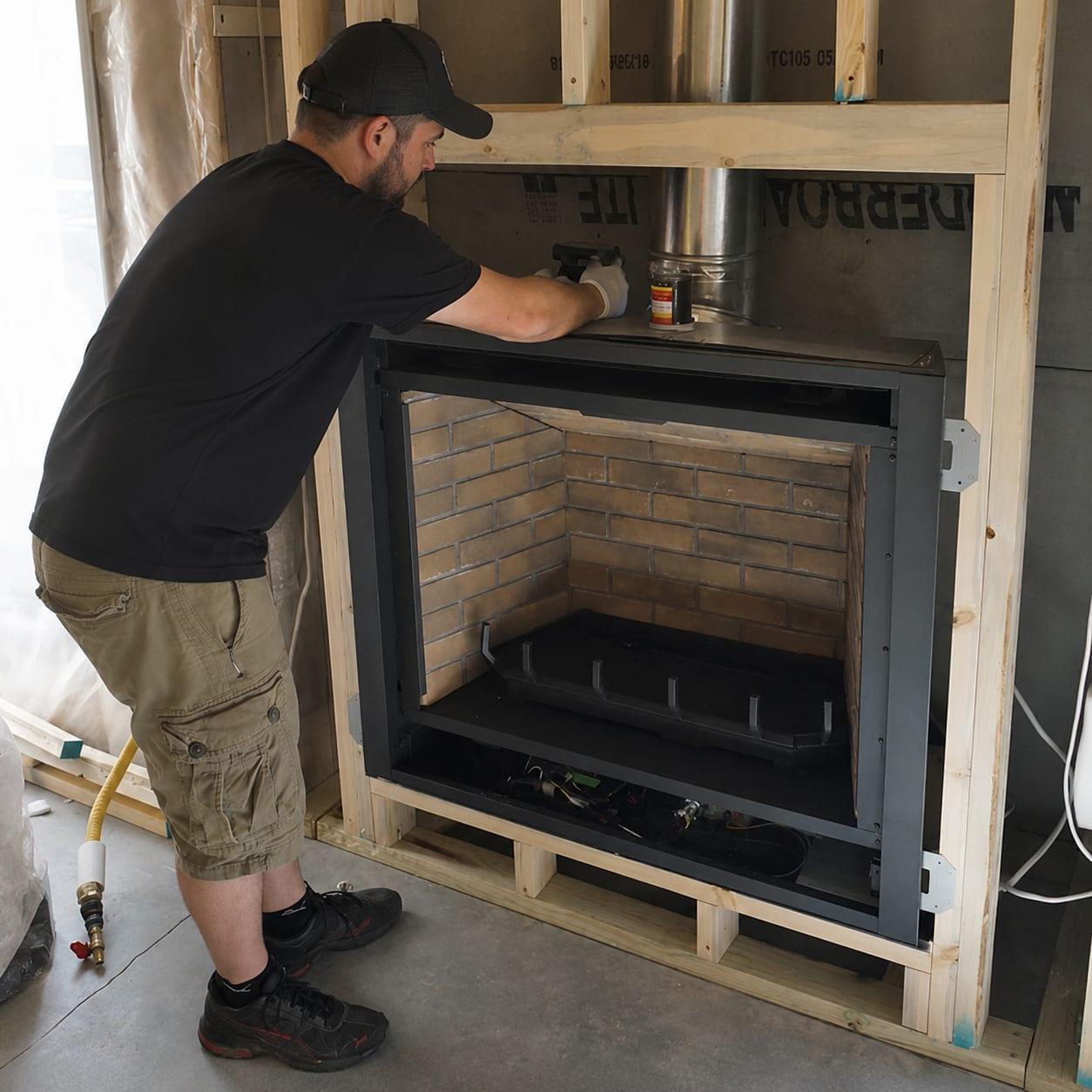
The fireplace goes on a solid, level base sized for its weight. For gas or propane, the supply line is run to the fireplace location.
Building or setting the unit
The firebox and chimney or vent are built or set, then finished in the material you chose. Wood-burning units get a cap and spark arrestor on top.
Testing and walkthrough
Gas connections are checked for leaks and the burner is lit and adjusted; wood units are checked for draft. We show you how to light, operate and shut it down.
Safety and upkeep
Keep it outdoors and open
An outdoor fireplace is designed for open air. Never enclose it under a new roof or inside a screened room without checking that the unit is rated for it, and keep furniture, cushions and plants clear of the firebox opening.
Simple habits that keep it working
- Burn only dry, seasoned firewood in a wood-burning unit, never trash or treated lumber.
- Clear ash once it is fully cold, and keep the chimney cap and spark arrestor free of debris.
- Have the chimney swept when soot or creosote builds up, just as with an indoor fireplace.
- For gas units, call us if you smell gas, the flame looks lazy or yellow, or the burner will not stay lit.
Gas units still need occasional attention; our guide on when a gas fireplace needs cleaning covers the warning signs.
Booking your outdoor fireplace installation
Request an estimate and we will look at your yard, talk through fuel and design, and explain what the installation would involve. Commercial and property-manager work is offered, so restaurant patios and shared outdoor spaces at managed properties are welcome too. We also provide outdoor fireplace installation in Palo Alto and outdoor fireplace installation.