On this page
What pellet stove cleaning covers
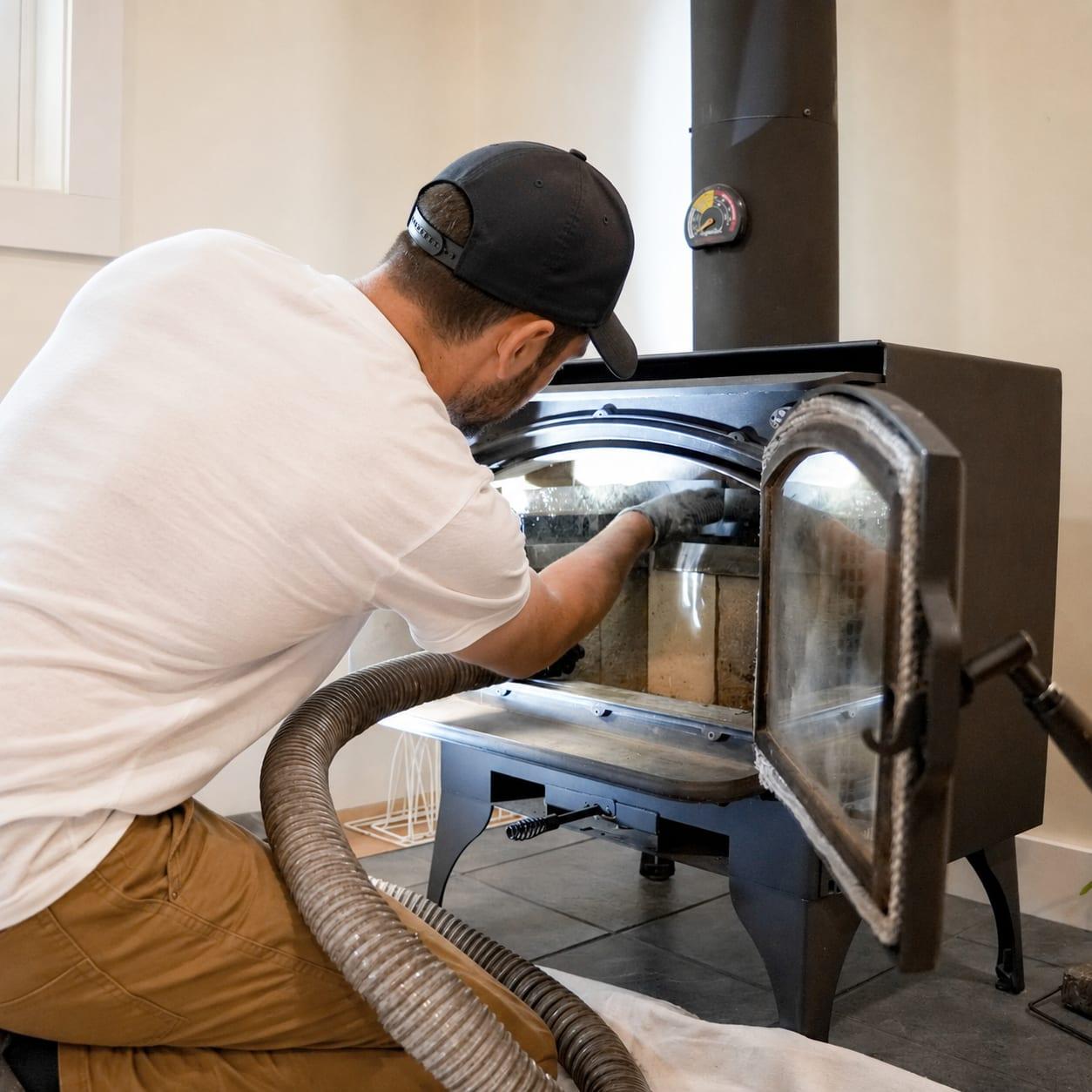
Pellet stove cleaning removes the fly ash, soot and occasional creosote that collect inside the stove and along its exhaust path. Scraping the burn pot and emptying the ash pan keep a stove running from day to day. A full cleaning goes further, into the heat exchanger passages, hidden ash traps, the combustion blower housing and the vent pipe that carries exhaust outside.

Pellet stoves burn cleaner than wood, but their fine ash is light and travels. It settles in narrow passages and horizontal vent runs, and even a thin layer can choke off the airflow that a pellet stove depends on. If you're still deciding which kind of stove suits your home, our comparison of pellet stove vs wood stove explains how the two burn and what each needs. If you burn cordwood instead, the wood stove cleaning service handles the heavier creosote that wood leaves behind.
| Part | What collects there | What it affects |
|---|---|---|
| Burn pot | Ash and hard clinkers that block air holes | Flame quality and ignition |
| Heat exchanger tubes | Fly ash coating the metal surfaces | How much heat reaches the room |
| Ash traps and cleanout areas | Fine ash that drops behind panels | Airflow through the firebox |
| Combustion (exhaust) blower | Ash and soot on the fan blades and housing | Draft, noise and stove shutdowns |
| Vent pipe | Ash in tees and horizontal runs, sometimes creosote | Safe removal of exhaust |
| Door glass and gaskets | Soot film, worn or flattened gasket rope | Visibility and an airtight seal |
Signs your pellet stove needs cleaning
Common signs it's time
- The glass turns dark or brown within hours of cleaning it
- The flame looks lazy, tall and orange instead of crisp and active
- Unburned pellets pile up in the burn pot
- The stove shuts down on its own or shows an error you can't clear
- Less heat comes out than it used to on the same setting
- The exhaust blower sounds louder, or rattles
- You notice a smoky or exhaust smell in the room
- Ash is visible around the outside vent cap or on the wall near it
Smoke or exhaust smell indoors
Shut the stove down, open windows to air out the room and don't restart it until the cause is found. Smoke inside the house points to a blocked or leaking exhaust path, which needs attention before the stove runs again.
What happens during the visit
Pellet stove cleaning, step by step
Confirm the stove is cold
The stove must be fully out and cool. The area around it is covered to protect floors and furniture from fine ash.
Clean the burn pot and firebox
Clinkers and ash are scraped out and the burn pot's air holes are cleared so air can reach the pellets.
Clear the heat exchanger and ash traps
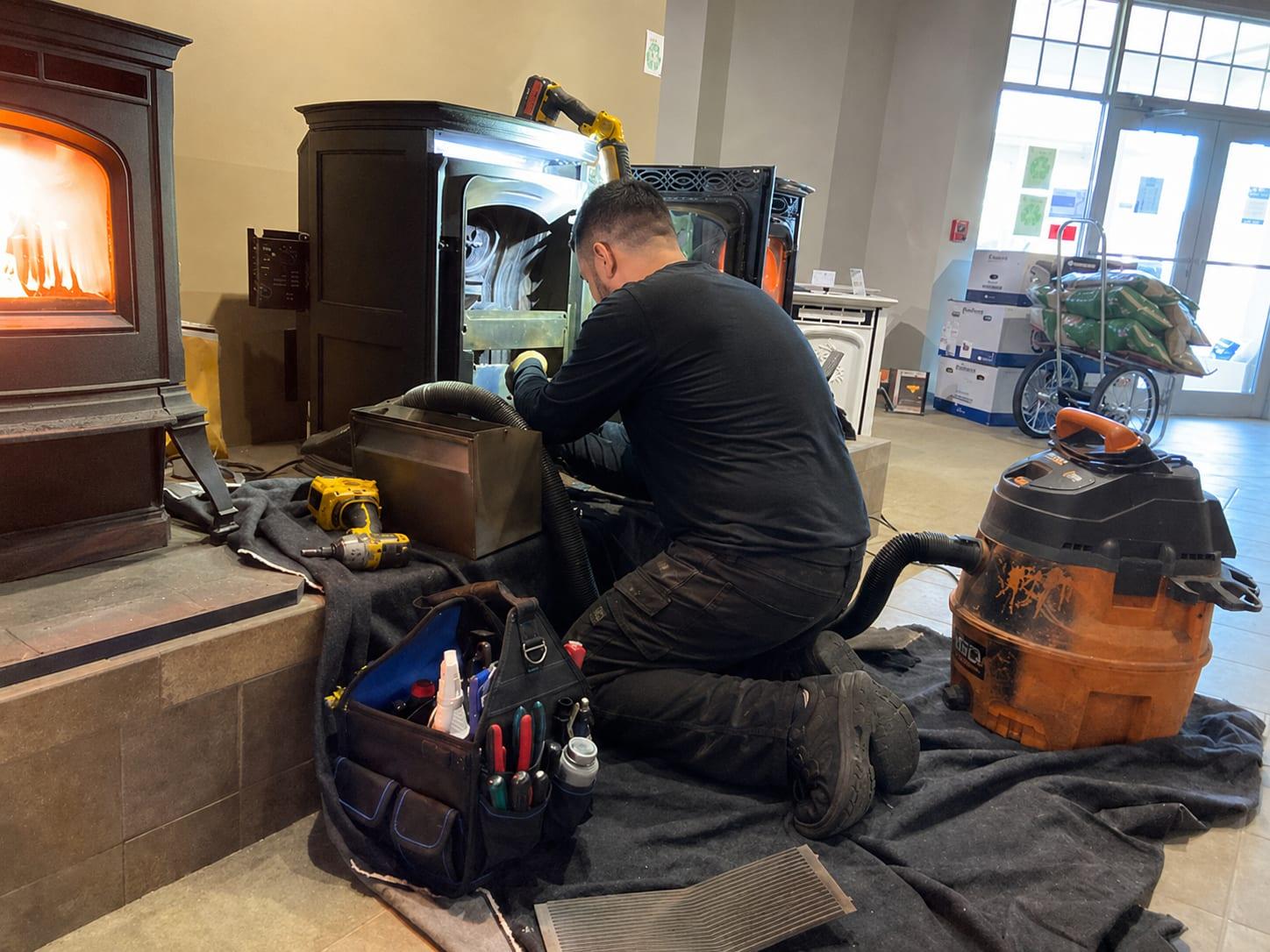
The heat exchanger tubes are scraped or brushed, and the cleanout panels and traps behind them are emptied with an ash vacuum.
Clean the combustion blower
The exhaust blower housing and fan blades are cleared of ash and soot buildup.
Brush the vent
The vent pipe is cleaned from the tee to the termination, paying close attention to horizontal runs where ash settles.
Glass and gaskets
The door glass is cleaned, and the door and ash pan gaskets are checked for wear or gaps.
Reassemble and test
Panels go back on, the stove is started and run to confirm it ignites and drafts properly, and anything that needs repair is pointed out.
The pellet stove chimney and vent
A pellet stove chimney is usually a smaller, sealed vent pipe rather than a masonry flue. It often runs a short distance out through a wall, sometimes with a vertical rise, and the stove's exhaust blower pushes combustion gases through it. Fine ash collects in the tee at the base and along any horizontal section, and a partly blocked vent can trigger shutdowns or push exhaust back into the room. If a carbon monoxide alarm sounds or anyone feels unwell, get everyone outside and call 911.
Cleaning clears these sections, but it can't fix a vent that's damaged, undersized or poorly routed. When the venting itself is the problem, installing a new pellet stove chimney may be the right fix.
Safety and maintenance between cleanings
How often a pellet stove needs a full cleaning depends on how much fuel it burns and the ash content of the pellets. Many manufacturers base the interval on fuel burned, so your owner's manual is the best guide. Between visits, a few habits keep the stove running cleanly:
- Scrape or empty the burn pot as often as your manual recommends, which is often daily during heavy use
- Use only a cold stove and an ash vacuum for ash, because a regular household vacuum lets fine ash through and can be damaged by hot embers
- Put ash in a metal container with a lid, kept away from the house and anything that burns
- Store pellets dry, since damp pellets burn poorly and leave more residue
- Keep the outside vent cap clear of plants, debris and stored items
- Keep working carbon monoxide and smoke alarms in the home
Burn pot care is homeowner work, but taking panels off and cleaning blowers and vents takes more time, tools and care. Our guide on doing it yourself versus hiring a chimney cleaning walks through where that line usually falls.
Booking a pellet stove cleaning
Get in touch to request an estimate. 24-hour service runs seven days a week, and emergency calls are accepted.
The work covers all major pellet stove brands. Commercial and property-manager work is offered, so rental units and business spaces with pellet stoves can be scheduled too. If your home also has an open fireplace, ask about adding a fireplace cleaning to the same visit.