On this page
What fireplace insert cleaning involves
A wood-burning insert burns hotter and tighter than an open fireplace, but its smoke still leaves soot and creosote behind. The buildup collects on top of the baffle plate inside the insert, in the connection where the insert meets the liner, and along the liner up to the cap. Fireplace insert cleaning clears all of those areas. A sweep of the masonry chimney alone can miss them.
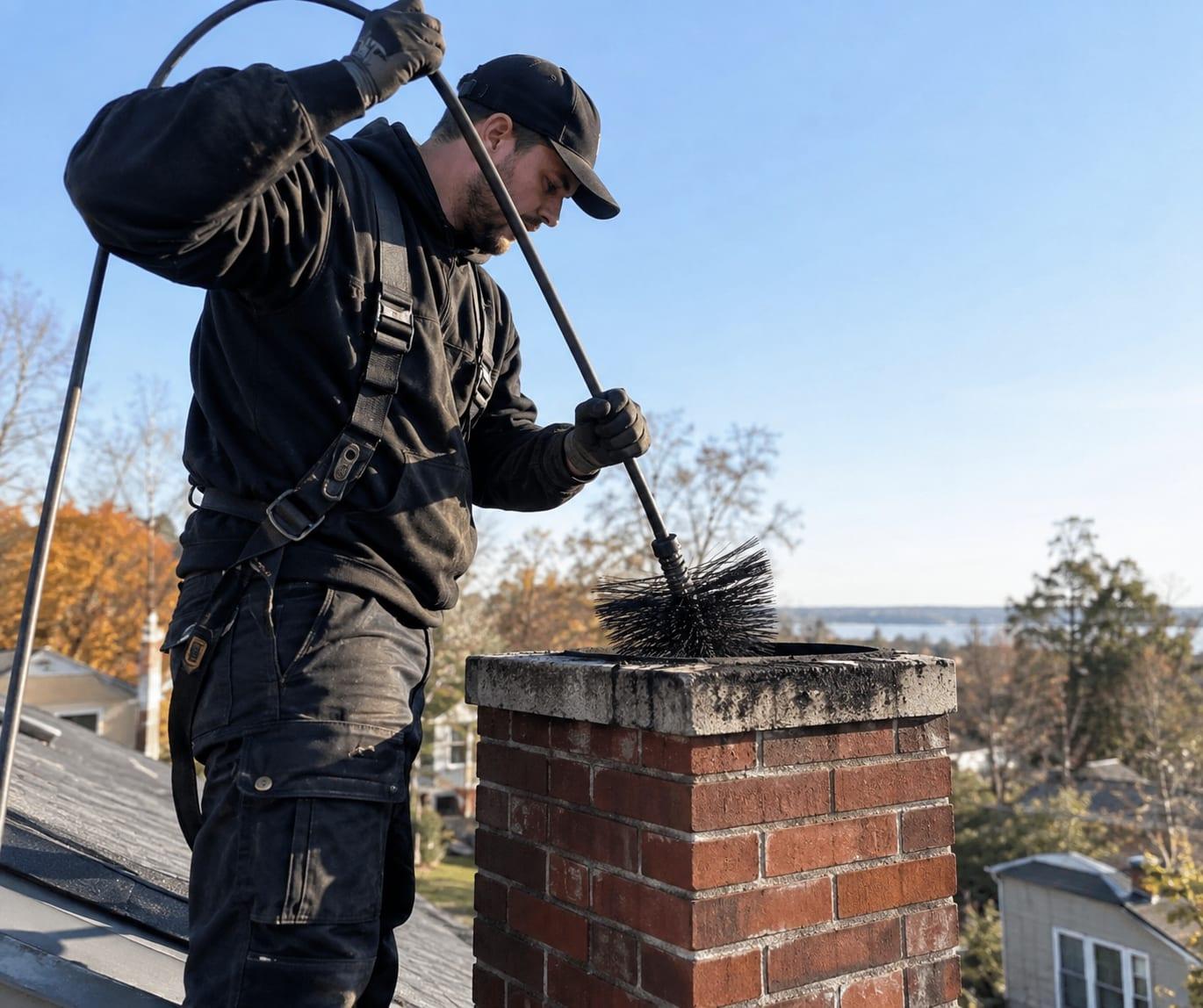
The job differs from cleaning other wood-burning setups. An open masonry firebox without an insert gets standard fireplace cleaning, and a freestanding unit on a hearth pad gets wood stove cleaning. An insert sits between the two. It has a stove's internal parts, and its liner runs up a chimney that may also need a full chimney sweep and flue cleaning.
Checked on every visit
- Surround panel and seal
- Firebrick and baffle on wood units
- Clearances to the mantel and trim
- Burner, pilot and logs on gas units
- Liner connection and condition
- Door or glass gaskets
Getting ready for the visit
- Have the make and model handy; it's usually on a plate on the back or under the ash lip.
- Clear a few feet around the unit and the area under any connector pipe.
- Write down what you've noticed — smoke at the door, a hard-to-control fire, noises or smells.
- Let the stove or insert go out and cool completely — ideally no fire for a full day before the visit.
Carbon monoxide
A stove or insert that vents poorly can push carbon monoxide into the home. If an alarm sounds or anyone feels dizzy or sick near it, get everyone outside and call 911.
Signs an insert is due for cleaning
- Smoke rolls into the room when you open the door to add wood
- Fires are slow to catch and hard to keep burning hot
- The glass blackens quickly even with dry wood
- A heavy, tar-like smell comes from the insert, especially on warm days
- Flaky black or shiny glazed deposits sit on top of the baffle
- The insert hasn't been cleaned since last burning season, or you don't know when it last was
What the visit involves
Step by step
Protect the room
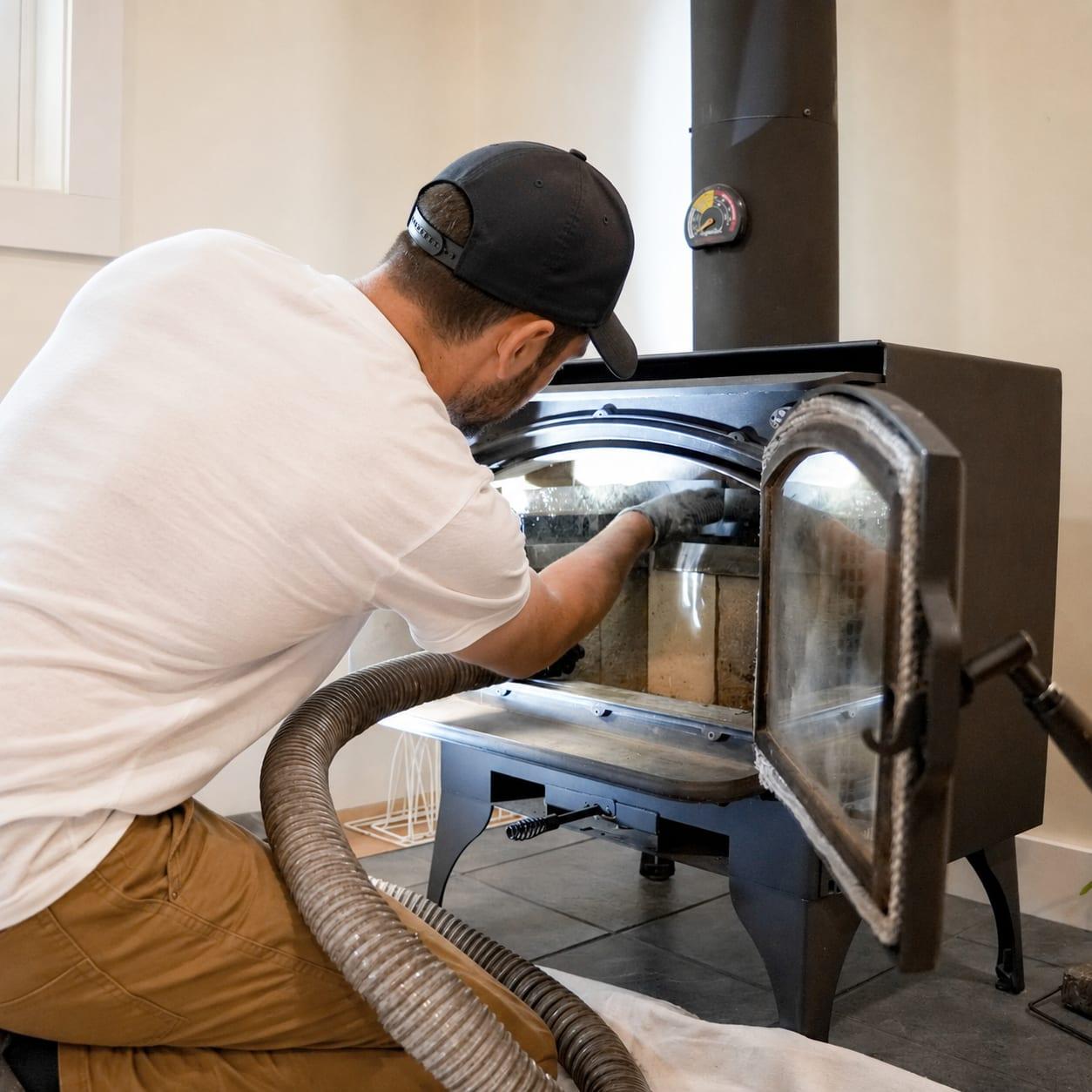
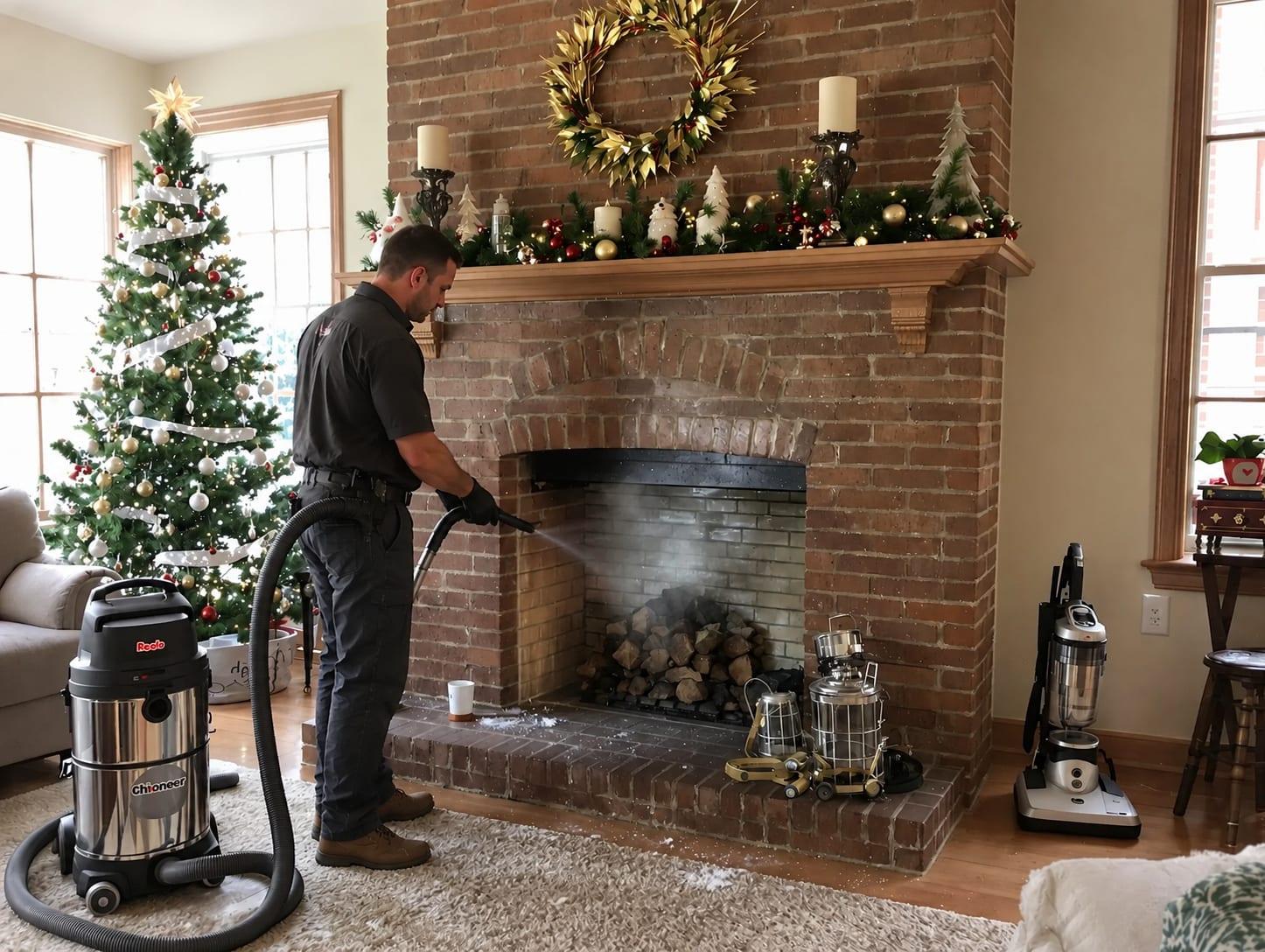
The hearth and the floor in front of the insert are covered, and a vacuum built to handle fine soot is set up.
Open the insert
The ash comes out first. The baffle and any ceramic blanket are lowered or removed where the design allows, so the flue collar and liner can be reached.
Clean the liner
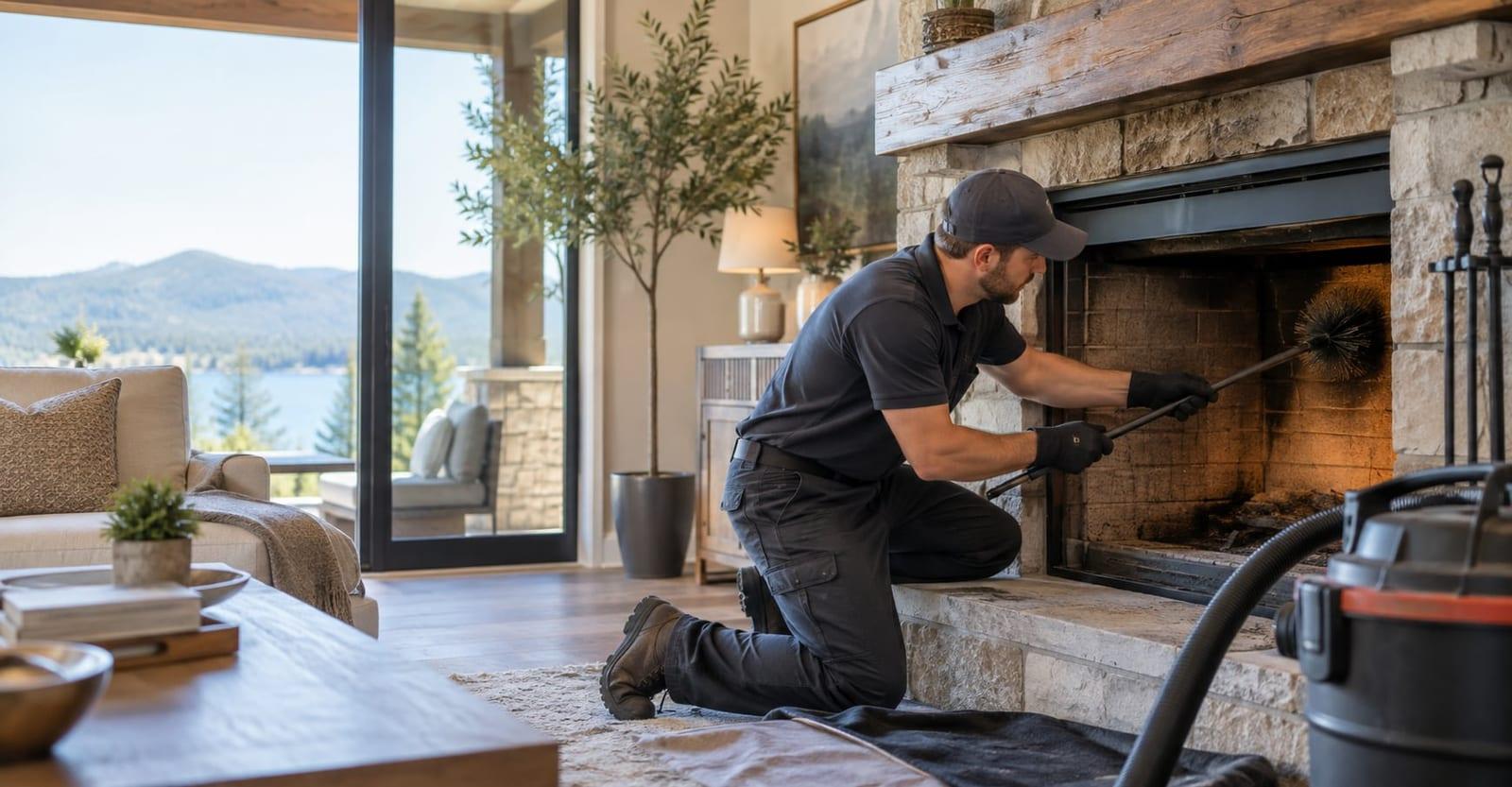
Brushes sized to the liner run its full length. Some inserts have to be pulled forward to reach the connection or clean behind the unit.
Clean the firebox and parts
Creosote is cleared from the baffle and firebox walls, and the debris is vacuumed out.
Check and reassemble
Door gaskets, the baffle, firebricks, the liner connection and the cap are checked. Then the insert is put back together and you hear what was found.
Safety and maintenance between cleanings
Creosote burns, and a fire inside a liner can damage it even when nothing seems wrong in the room. Most wood-burning inserts used regularly need cleaning at least once a year, along with an annual inspection. Heavy use or wet wood shortens that interval. In between cleanings, these habits slow the buildup:
Habits that slow creosote buildup
- Burn only dry, seasoned hardwood, never trash, cardboard or painted wood
- Avoid long, smoldering fires with the air control closed down
- Store ashes in a lidded metal container outside, away from the house
- Keep a working carbon monoxide alarm near the room with the insert
- Let the insert cool completely before any cleaning of your own
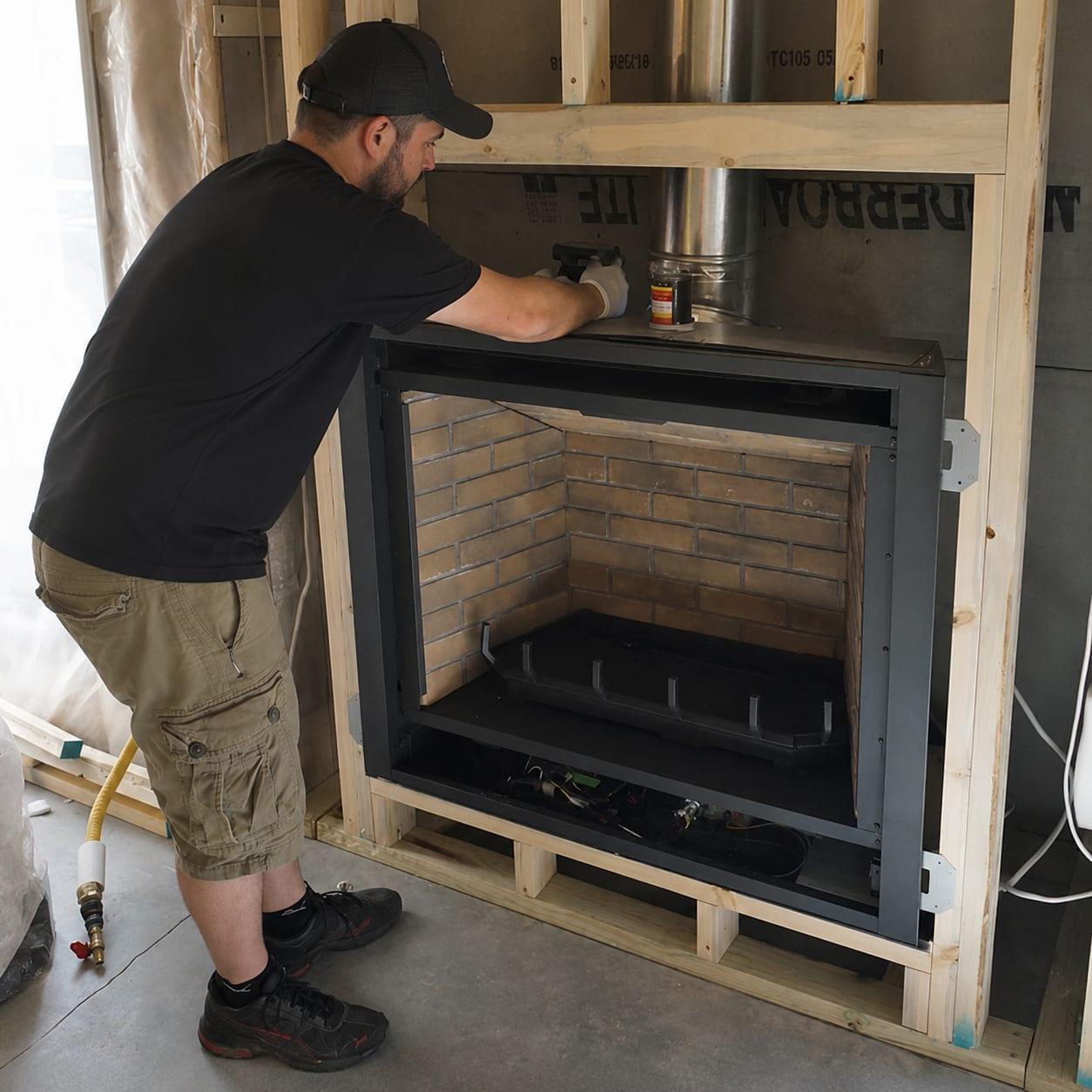
For what's safe to handle yourself, read our guide to DIY vs chimney cleaning. If the insert is cracked, warped or failing, cleaning won't fix it, and fireplace insert installation is the right job.
Booking an insert cleaning
Call or request an estimate. If you know the insert's brand, fuel type and when it was last cleaned, mention them. Commercial and property-manager work is offered, so rental homes and buildings with several inserts can be booked too.