On this page
What wood stove cleaning covers
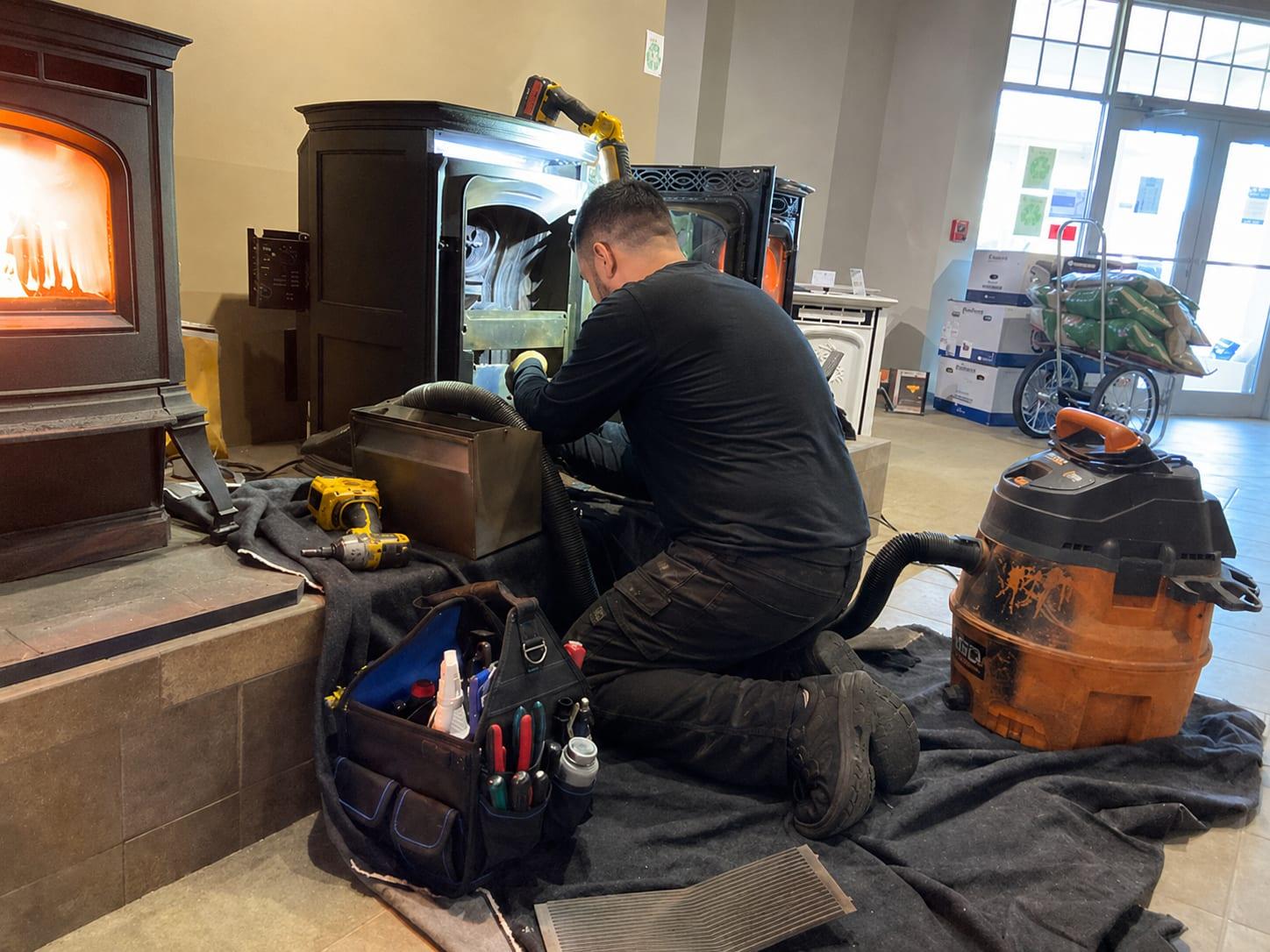
Wood stove cleaning removes the ash, soot and creosote that collect inside the stove and along the path smoke takes out of the house. That path includes the firebox, the baffle area above the fire, the stove pipe and the chimney flue. Creosote is the main concern. It forms when smoke cools and condenses on cooler surfaces, and it is flammable. A clean flue also drafts better, so the stove lights more easily and the smoke goes up the flue instead of into the room.
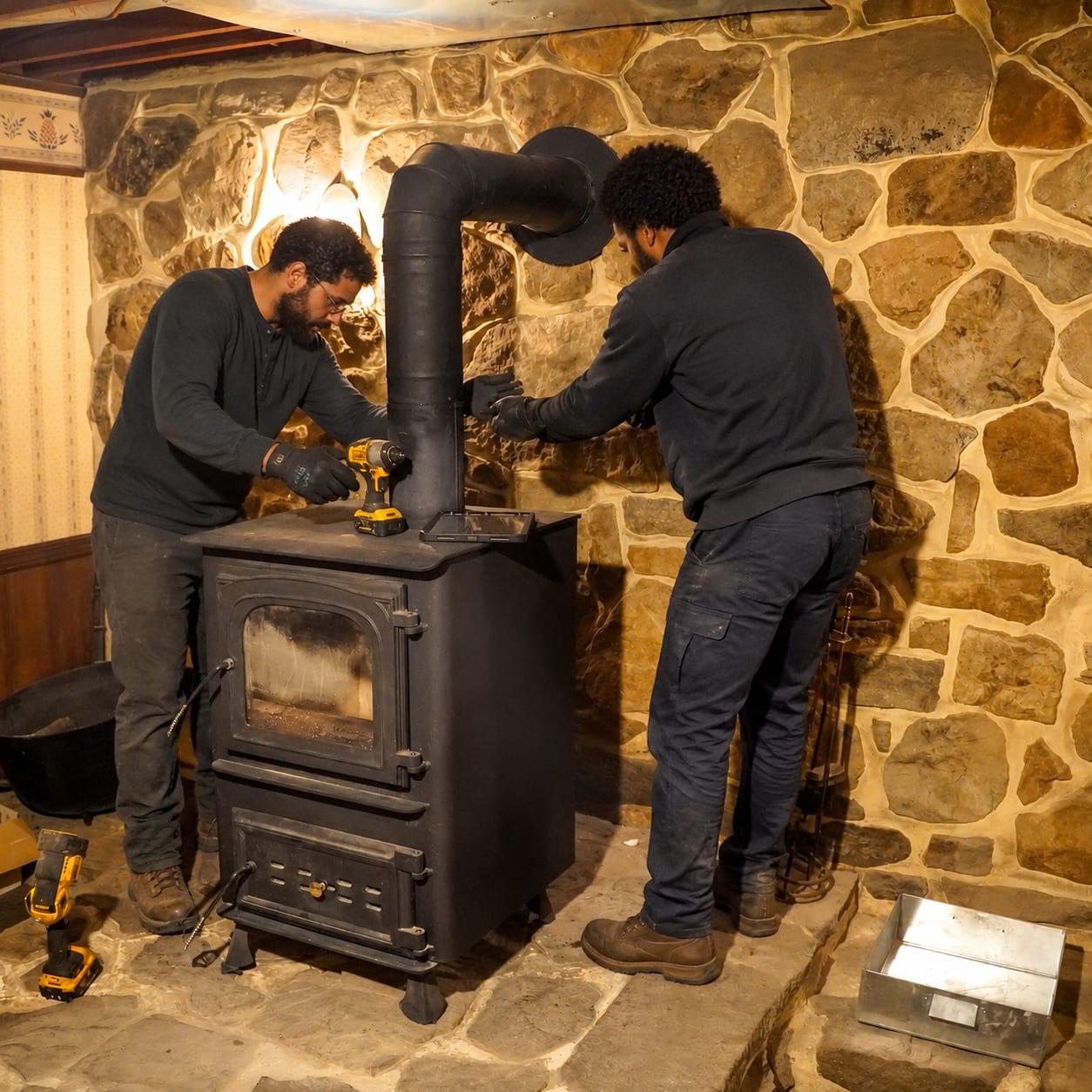
The visit is about cleaning. If it turns up a cracked firebox, a warped baffle or a door that no longer seals, that work is wood stove repair. Adding a stove or replacing an old one is a job for our wood stove installation service, not a cleaning.
Signs a wood stove is due for cleaning
- Smoke rolls into the room when you open the door, or the stove is slow to draw.
- Fires are hard to start or die down even with dry wood.
- The glass turns black soon after you wipe it clean.
- Black flakes or crumbly bits drop into the firebox or onto the stove top from the pipe.
- A sour, smoky smell comes from the stove when it isn't in use.
- With the stove cold, a flashlight shows a thick or shiny layer of buildup inside the pipe.
- The stove and chimney haven't been cleaned since the last heating season.
Possible chimney fire
A loud roaring sound from the flue, dense smoke pouring from the chimney top or a pipe that glows can all mean a chimney fire. If you hear roaring or see flames or sparks from the top of the chimney, get everyone out and call 911. Get everyone out of the house and call the fire department. Don't use the stove again until the flue has been inspected.
How a wood stove cleaning visit goes
The visit, step by step
Look over the stove and venting
We note whether the stove is freestanding or an insert, whether it is catalytic or non-catalytic, and how the pipe connects to the chimney. The stove needs to be out and cold before the work starts.
Protect the room
Drop cloths go down around the hearth and the stove so soot stays contained while we work.
Empty the firebox
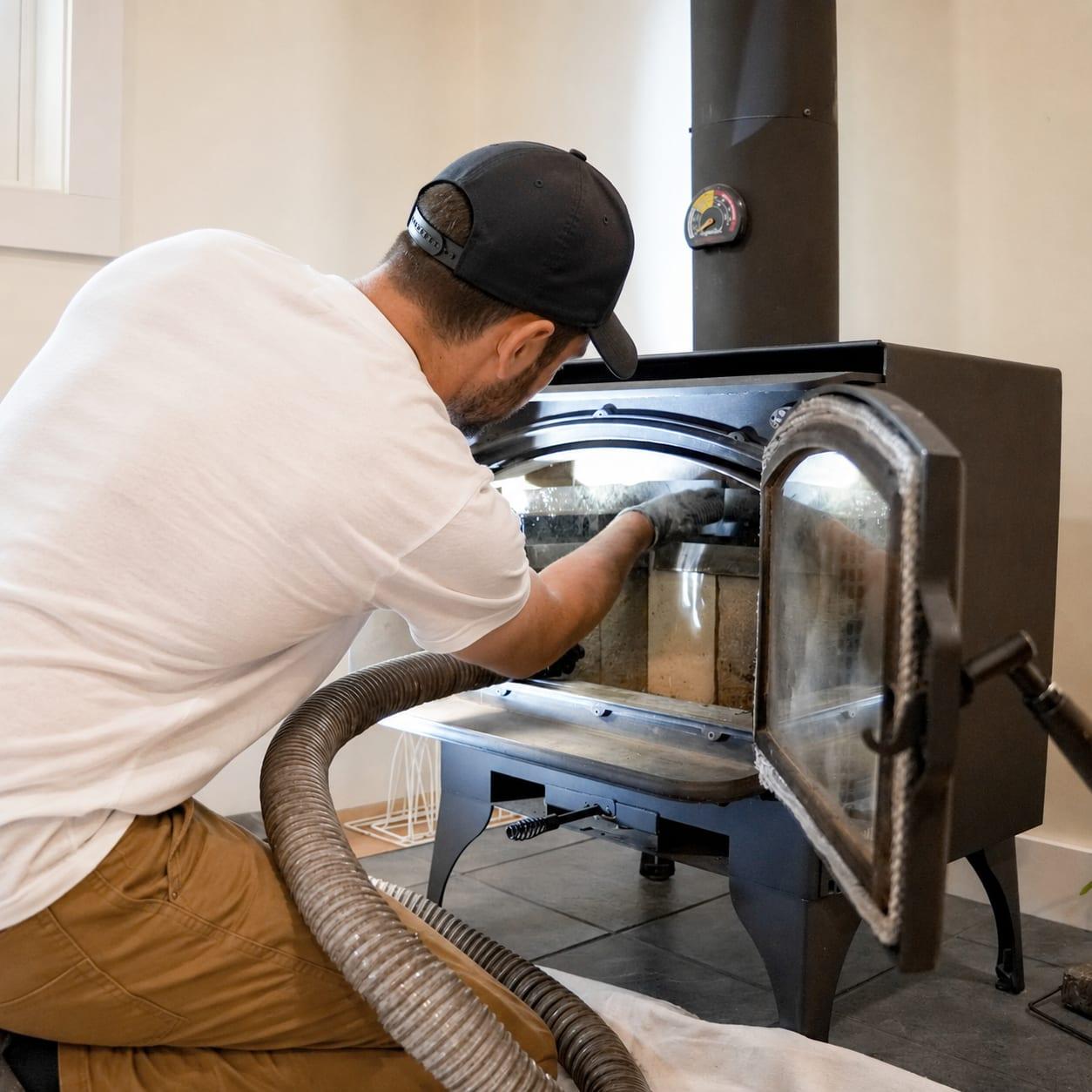
Ash and loose debris come out of the firebox and the ash pan.
Clean the baffle and smoke path
Where the stove's design allows, the baffle is lowered or removed so the top of it and the secondary air tubes can be cleaned. A catalytic combustor gets a gentle cleaning, never hard brushing.
Brush the stove pipe and flue
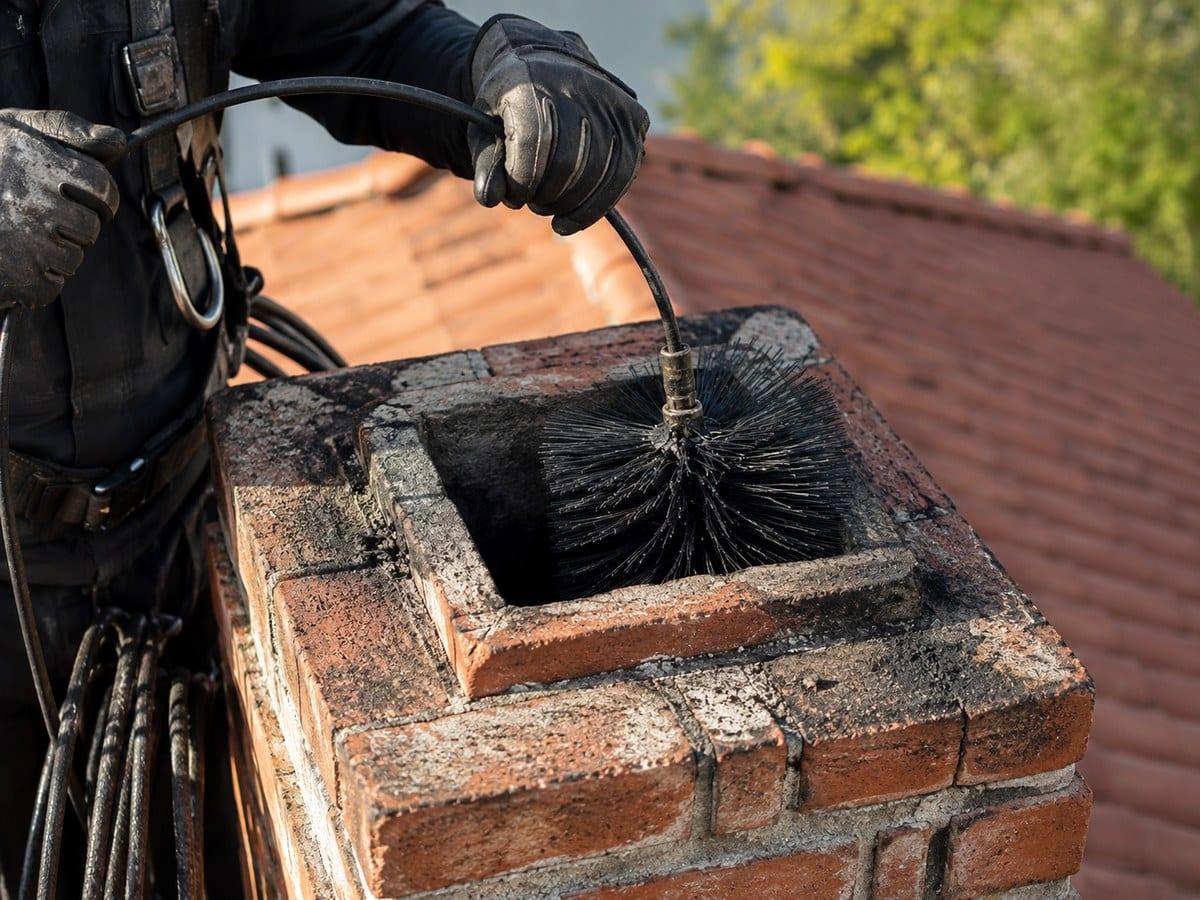
The pipe is disconnected where needed, and the pipe and chimney flue are brushed with a brush sized to the flue, working from the top or the bottom depending on the setup.
Handle stubborn creosote
Hard, tar-like or glazed creosote won't brush off. If we find it, we explain what it will take to remove it before going further.
Put it back together and check it
The pipe and baffle are reseated, the door gasket and glass are checked, and the glass is cleaned.
Go over what we found
You get a plain account of the buildup we removed and anything that needs attention, such as a worn gasket or a damaged liner.
Stove types, parts and fuel
Freestanding stoves
A freestanding stove sits on its own hearth pad and connects to the chimney through a visible stove pipe. The pipe is usually easy to reach, and its elbows and horizontal runs are where creosote tends to pile up.
Wood stove inserts
A wood stove insert sits inside an existing masonry fireplace and vents through a liner run up the old flue. Cleaning one often means sliding the insert partway out or working from the top of the chimney so the liner and its connection can be reached. If you're still weighing the two setups, compare a fireplace insert vs freestanding wood stove before deciding.
Catalytic and non-catalytic stoves
Non-catalytic stoves burn off smoke with a baffle and secondary air tubes, and soot collects on top of the baffle. Catalytic stoves pass smoke through a ceramic or metal combustor that can clog with fly ash. That part is fragile, so it gets careful handling during cleaning.
| Part | What builds up | What cleaning involves |
|---|---|---|
| Firebox and ash pan | Ash, charcoal, debris | Emptied and swept out |
| Baffle and air tubes | Soot and fly ash on top | Lowered or removed where possible, then cleaned |
| Catalytic combustor | Fly ash blocking the cells | Gently cleaned and checked |
| Stove pipe | Flaky or hard creosote, especially at elbows | Disconnected where needed and brushed |
| Chimney flue or liner | Creosote along the walls | Brushed full length |
| Door glass and gasket | Soot film; worn gasket | Glass cleaned, gasket condition noted |
Fuel
Wood stoves burn cordwood, and the wood's moisture affects cleaning more than anything else. Wet or freshly cut wood smolders, makes cooler smoke and leaves more creosote. Pellet stoves work differently and need their own pellet stove cleaning. An open wood-burning fireplace is handled through our fireplace cleaning service.
Keeping the stove safe between cleanings
Habits that slow creosote buildup
- Burn dry, seasoned wood that has been split and stored under cover.
- Never burn trash, cardboard, painted or treated wood, or plastic.
- Avoid long, low, smoldering fires with the air turned all the way down. Cool smoke leaves more creosote.
- Empty ashes into a metal can with a tight lid and keep it outside, away from the house.
- Keep furniture, firewood and other combustibles a safe distance from the stove.
- Keep smoke and carbon monoxide alarms working.
- Have the stove and chimney checked at least once a year, and more often with heavy use, as the national chimney safety standard (NFPA 211) recommends.
Scooping ash and wiping the glass are reasonable owner jobs. Brushing the pipe and flue is a different matter, and our guide to DIY vs chimney cleaning covers where the line usually falls.
Booking wood stove cleaning in San Jose
Call or request an estimate, and tell us the stove type, whether it's an insert, and when it was last cleaned. Emergency calls are accepted, and 24-hour service runs seven days a week. We work on all major stove brands, and commercial and property-manager work is offered. We also handle wood stove cleaning.
Schedule your wood stove cleaning
Get in touch and we'll set up a visit for your stove and flue.