On this page
What wood stove installation involves
Wood stove installation is more than setting a cast-iron box on the floor. The stove needs a venting path that draws smoke up and out, a non-combustible surface beneath it, and enough distance from walls, trim and furniture that nearby surfaces don't overheat. Those pieces depend on each other. A stove that sits in the right spot but vents through an unsuitable flue, or a good flue with a stove too close to a wall, is not a finished installation.
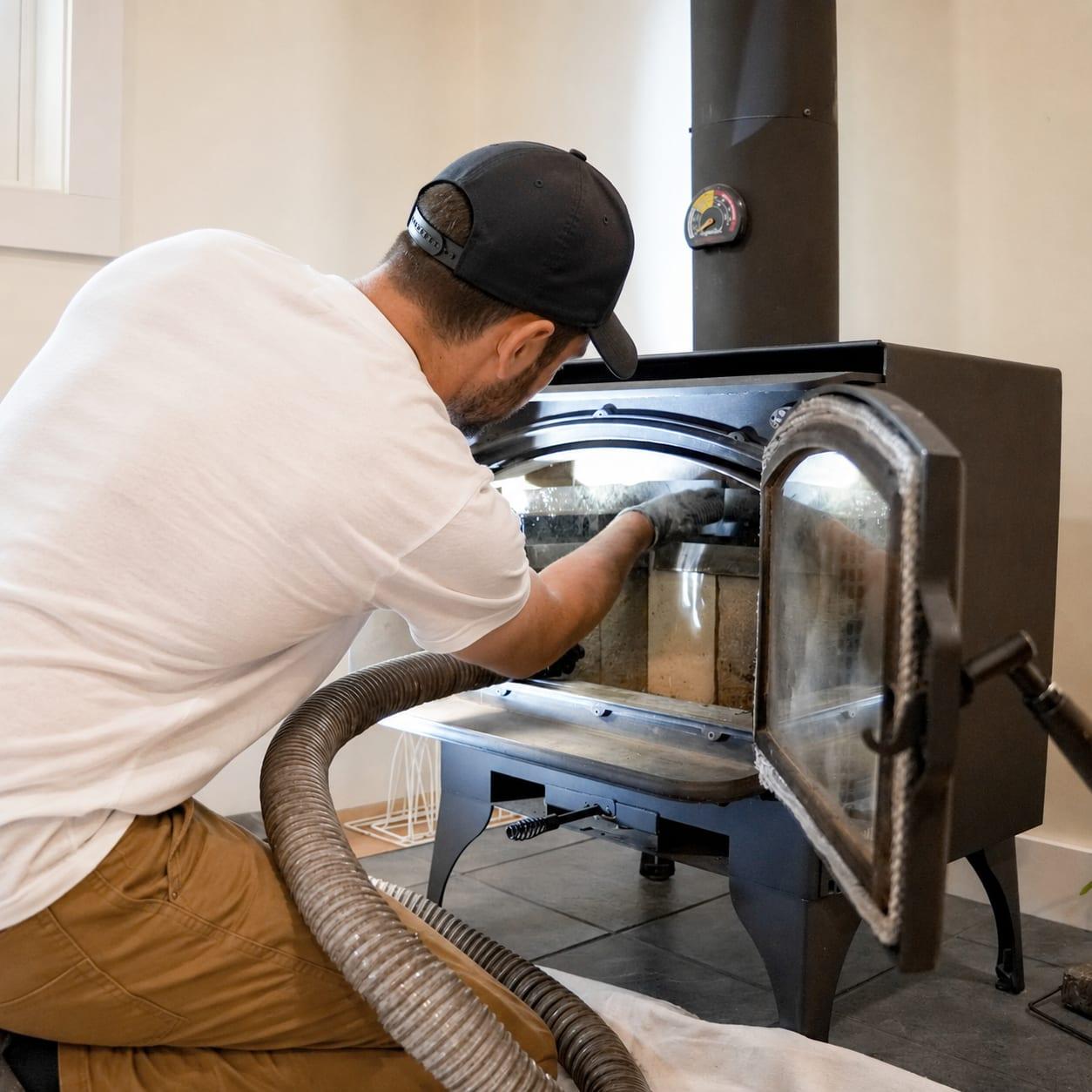
There are two main setups. A freestanding stove sits out in the room on a hearth pad and vents through a connector pipe into a chimney. An insert slides into an existing masonry fireplace and vents through a liner run up the old flue. If you're still choosing between them, our guide to fireplace insert vs freestanding wood stove walks through how each one heats and what each needs.
When a new wood stove is the right job
Homeowners usually call us for an installation for one of these reasons:
- An open fireplace sends most of its heat up the chimney, and you want a fire that actually warms the room.
- You want wood heat in a room or home that has no fireplace or chimney at all.
- An old stove is worn out, cracked or poorly fitted, and you'd rather replace it than keep patching it.
- You're remodeling and want a stove placed where the room layout works, not wherever an old flue happens to be.
- You've weighed the other fuels and decided wood suits how you'll use it. Our comparisons of pellet stove vs wood stove and gas vs wood burning fireplace cover those trade-offs.
If you want an open fireplace rather than a stove, our fireplace installation service is the better fit. If your current stove works but smokes, sticks or won't hold a fire, wood stove repair may solve it without a new stove. If it simply hasn't been cleaned in a while, the wood stove cleaning service is the place to start.
How the installation visit works
From first look to first fire
Look at the room and the venting path
We check where the stove will sit, what the floor and nearby walls are made of, and whether there's an existing fireplace or chimney to use. If there isn't one, we work out where a new chimney can run.
Settle the setup
Together we decide between a freestanding stove and an insert, a stove size that suits the space, and the venting route. The estimate is free.
Prepare the venting
An existing chimney is swept and checked before anything connects to it. Depending on what we find, that can mean installing a liner sized to the stove, repairing the chimney, or putting in a new metal or prefab chimney system.
Set and connect the stove
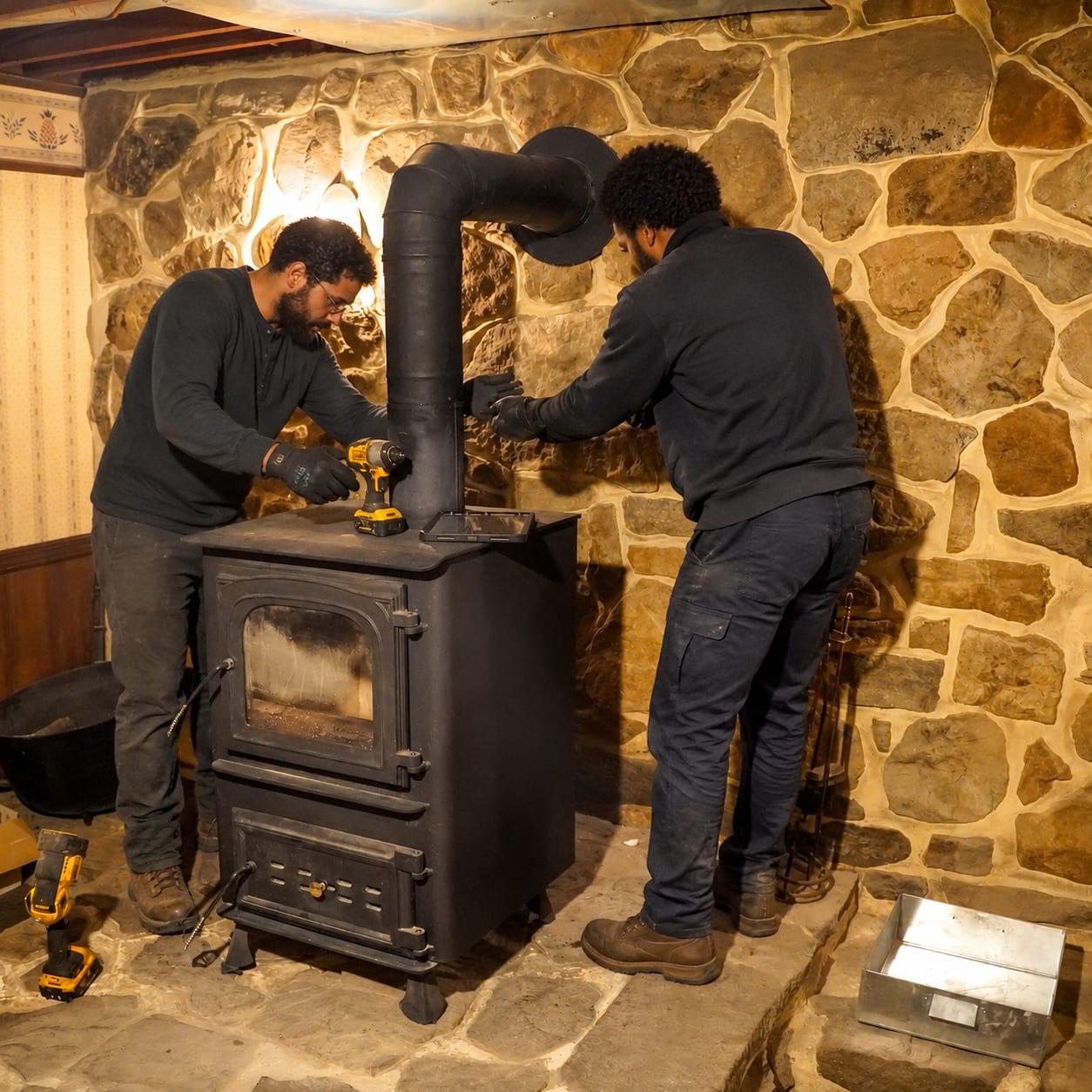
The hearth pad or floor protection goes down, the stove is placed with its clearances to walls and trim, and the connector pipe is fitted to the flue.
Test fire and walkthrough
We light a fire, check that the stove drafts properly, and show you the air controls, how to load it, and what to watch for during the first few burns.
The parts that make up a wood stove setup
| Component | What it does |
|---|---|
| The stove or insert | Burns the wood and puts the heat into the room |
| Connector pipe | Carries smoke from a freestanding stove to the chimney |
| Chimney liner | Gives an insert or stove a properly sized, sealed flue inside a masonry chimney |
| Metal or prefab chimney | Provides the venting where no masonry chimney exists |
| Hearth pad or floor protection | Shields the floor from heat and stray embers |
| Chimney cap | Keeps rain, debris and animals out of the flue |
Living safely with a new stove
Habits that keep a stove working well
Burn only dry, seasoned firewood, because wet wood burns cool and builds up creosote in the flue faster. Keep the clearances around the stove clear of firewood stacks, furniture and drying laundry. Make sure there are working smoke and carbon monoxide alarms in the home, and have the stove and chimney inspected and swept on a regular schedule so buildup and wear are caught early.
Booking your wood stove installation
Get in touch to request an estimate. Our 24-hour service runs seven days a week, and emergency calls are accepted. We also take on commercial and property-manager work, and we handle gas fireplace and gas appliance work if a stove is one part of a larger project.