On this page
What fireplace vent cleaning covers
The vent is the passage that carries exhaust from the firebox to the outdoors. Depending on the appliance, it may be a masonry flue, a metal pipe inside a prefab chimney, a direct-vent pipe that runs through an outside wall, or the vent on a pellet stove. Fireplace vent cleaning removes what collects along that path and clears the cap where the vent ends outside.

The work focuses on the vent itself. If the firebox, grate and ash also need attention, a full fireplace cleaning takes care of those. For a unit set into an existing fireplace opening, cleaning the fireplace insert covers the insert along with its connection to the flue.
Signs the vent needs cleaning
Common signs a fireplace vent is restricted
- Smoke drifts into the room instead of drawing up and out.
- A smoky, sooty or musty smell comes from the fireplace, even when it isn't in use.
- Black soot shows up on the wall, siding or roof around the outside vent cap.
- Gas flames look tall, lazy and yellow, or the fireplace shuts itself off soon after lighting.
- A pellet stove burns poorly, builds ash quickly or sounds an alarm.
- You can see leaves, a nest or a damaged cap where the vent ends outside.
- You hear scratching or chirping inside the vent.
- The fireplace has seen a season or more of regular use since the vent was last cleaned or checked.
Glass that clouds over again soon after professional fireplace glass cleaning often points back to the vent. Poor draft leaves more soot in the firebox, and some of it settles on the glass. Gas units tend to show subtler signs than wood fireplaces, and our guide to knowing when a gas fireplace needs cleaning walks through what to look for.
How a vent cleaning visit works
The visit, step by step
Talk through the symptoms
We ask what you've noticed, such as smells, smoke, soot or shutoffs, and when the unit was last used and serviced.
Make the unit safe
The fireplace must be cool. On gas units, the gas is shut off at the appliance valve before anything is opened.
Protect the room
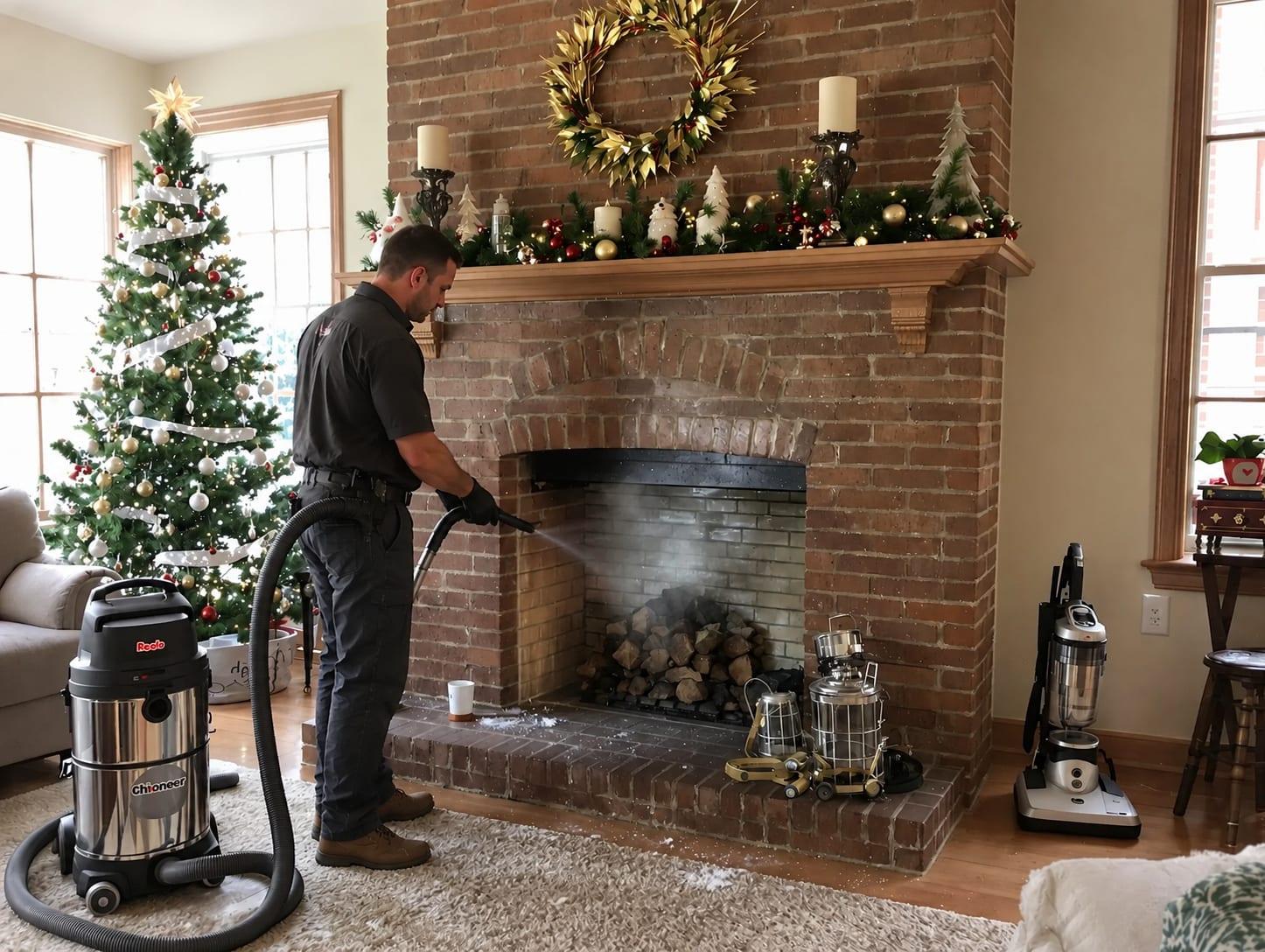
We cover the hearth and nearby flooring. On gas fireplaces, the glass front and logs or media are removed and set aside.
Check the outside termination
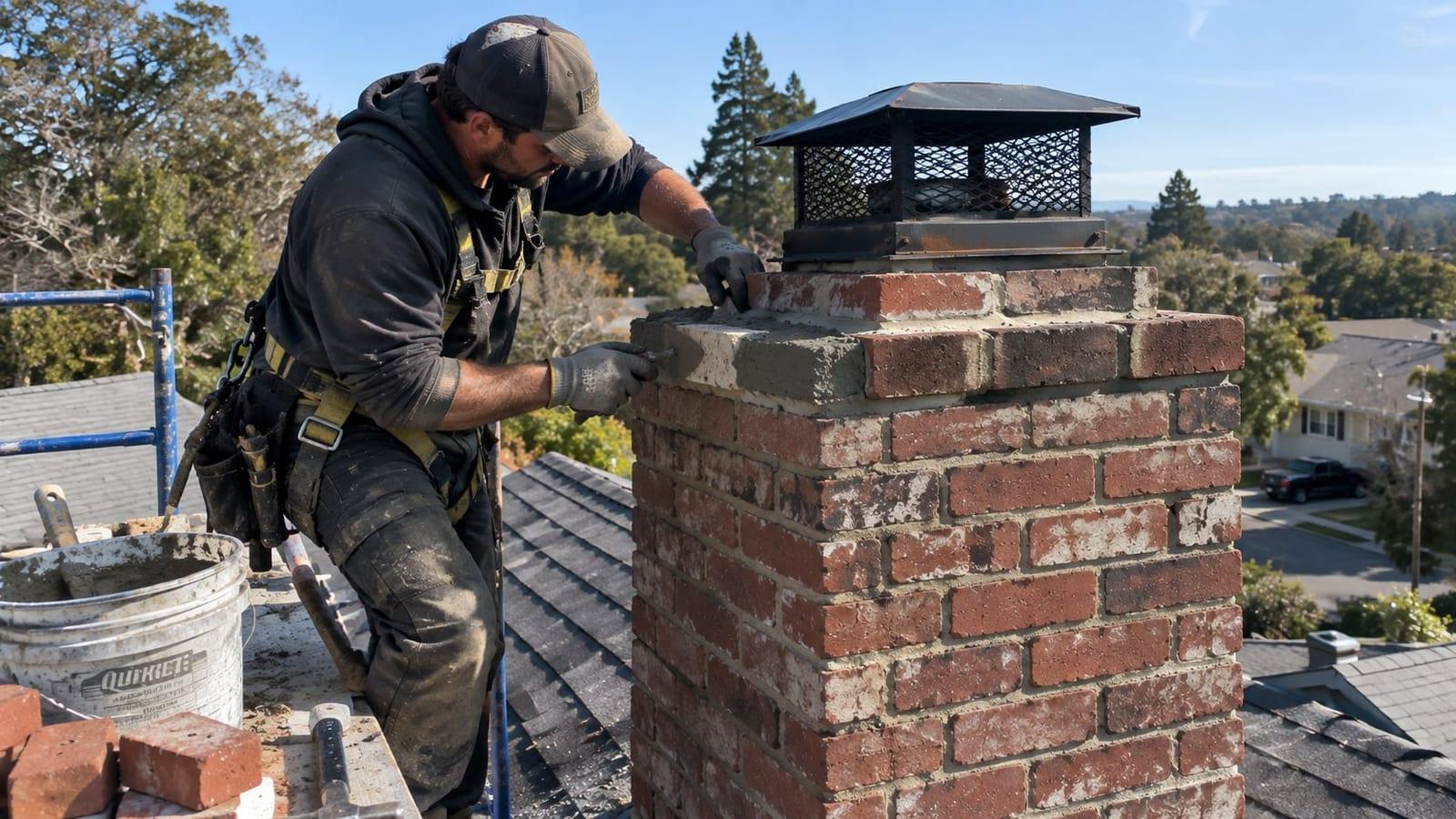
We look at the cap or vent hood for nests, debris, soot staining and damage, and clear any blockage at the outlet.
Clean the vent run
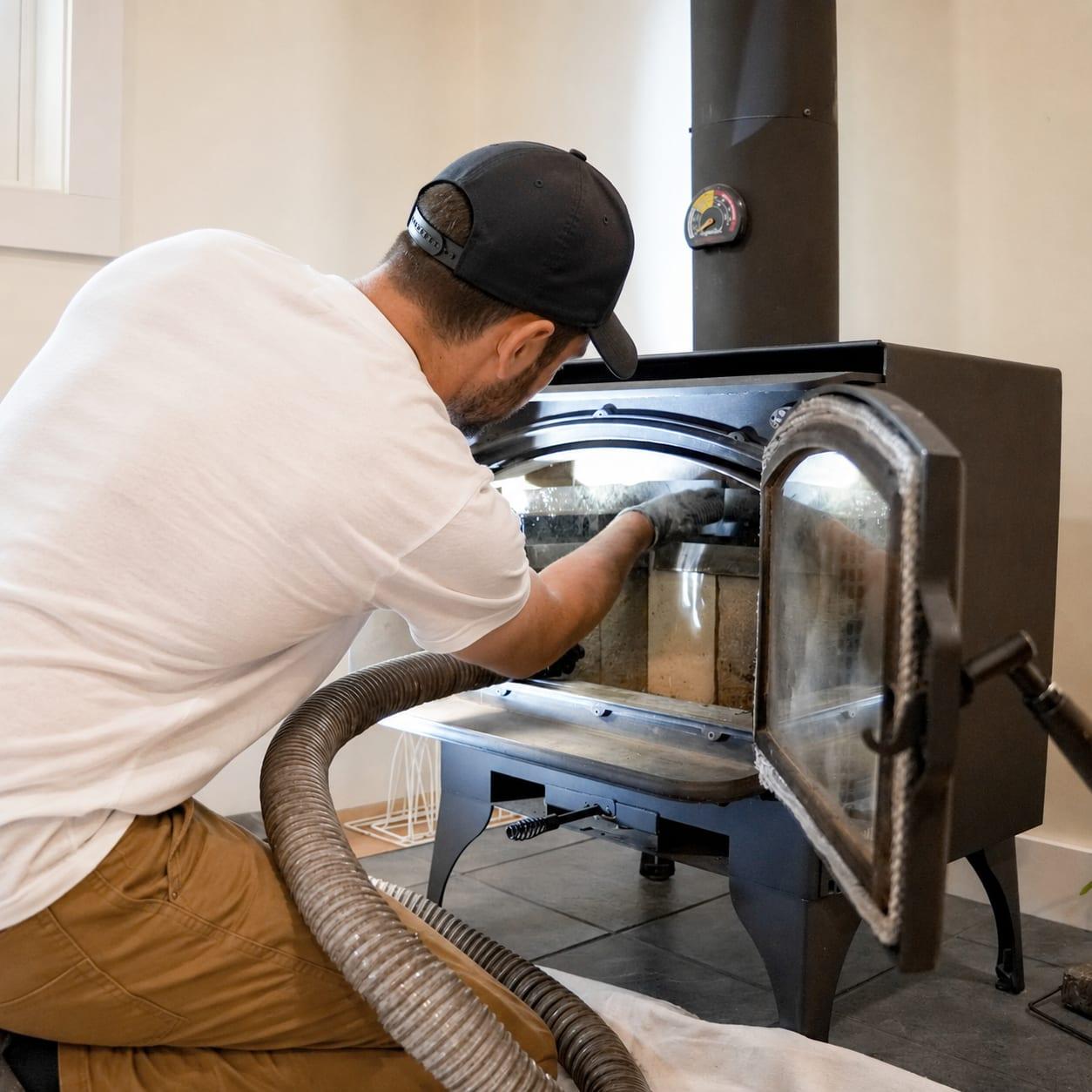
We brush and vacuum the flue or vent pipe to remove soot, creosote, fly ash and debris along its length.
Reassemble and test
We put the logs, glass and gaskets back in place, relight gas units, and watch the flame and draft to confirm the exhaust is moving out.
Explain what we found
You hear what came out of the vent, along with anything that looked worn or damaged, such as a loose connection, a cracked cap or a gasket that won't seal.
What builds up depends on the fuel
| Fuel | What builds up | What the cleaning focuses on |
|---|---|---|
| Wood | Soot and creosote, which is flammable and can harden into a glaze | Brushing the full flue and removing loose and hardened deposits |
| Gas (natural or propane) | Light soot, dust, spider webs, nests and debris at the cap | Clearing the vent pipe and termination, and making sure glass and gaskets reseal |
| Pellet | Fly ash and fine soot, often heaviest at bends and tees | Vacuuming the vent run and clearing ash from cleanout points |
Safety and upkeep between cleanings
If you smell gas
Don't light the fireplace or flip any switches. Leave the house, then contact your gas utility or emergency services from outside. Book a vent cleaning or repair only after the gas has been made safe.
A restricted vent can push smoke and carbon monoxide back into the living space instead of sending them outdoors. Working carbon monoxide detectors on each level of the home, and near sleeping areas, are a sensible safeguard for any home with a fuel-burning fireplace.
- Keep the outside vent cap clear of plants, stored items and leaf piles.
- Burn only dry, seasoned wood in a wood fireplace. Wet wood leaves more creosote in the flue.
- Don't run a gas fireplace with the glass front off or a gasket out of place.
- Book a check before the first fire of the season if the unit sat unused for a long time.
Some homeowners try to clean the vent themselves. Before you do, read our comparison of DIY and professional chimney cleaning. Sealed gas units depend on gaskets and glass that have to go back exactly right.
Booking a fireplace vent cleaning
Get in touch to request an estimate. Our 24-hour service runs seven days a week, and emergency calls are accepted.
We handle gas fireplace and gas appliance work, and we work on all major brands. Outside San Jose, we also provide vent cleaning and fireplace vent service in Hayward.